
Expert Guide on Creating ISO 14001 Documentation

ISO 14001 Compliance Documentation: Key Requirements & EMS Records
Environmental management depends on rigorous documentation that demonstrates policy commitments, regulatory adherence, and continual improvement. Creating ISO 14001 documentation starts with defining your Environmental Management System (EMS) structure, listing mandatory records, and mapping processes to each clause of the ISO 14001:2015 standard. This guide helps IT directors, business leaders, and founders understand core requirements, follow step-by-step creation methods, and integrate environmental records with ISO 9001 quality systems. You will learn:
- Core documentation requirements and record-keeping essentials
- Practical steps for developing policies, registers, and procedures
- A complete checklist for objectives, monitoring, and audits
- Strategies for integrating EMS and QMS documentation to boost efficiency
- Tools, templates, and consultancy options that streamline compliance
By following this structured overview, organizations can produce compliant EMS records that satisfy auditors, satisfy key clients, and unlock strategic benefits from an integrated ISO 9001 and ISO 14001 system.
The Importance of Environmental Management Systems - in English
Research highlights the significance of Environmental Management Systems (EMS) in enhancing environmental performance and ensuring regulatory compliance. Effective EMS implementation, including robust documentation, leads to improved resource efficiency, reduced environmental risks, and better stakeholder relations. This is achieved through the establishment of clear policies, procedures, and records, as outlined in standards like ISO 14001.
International Organization for Standardization, ISO 14001:2015 Environmental management systems — Requirements with guidance for use (2015)
This source directly supports the article’s emphasis on the importance of documentation within an EMS framework.
What Are the Core ISO 14001 Documentation Requirements for Compliance?
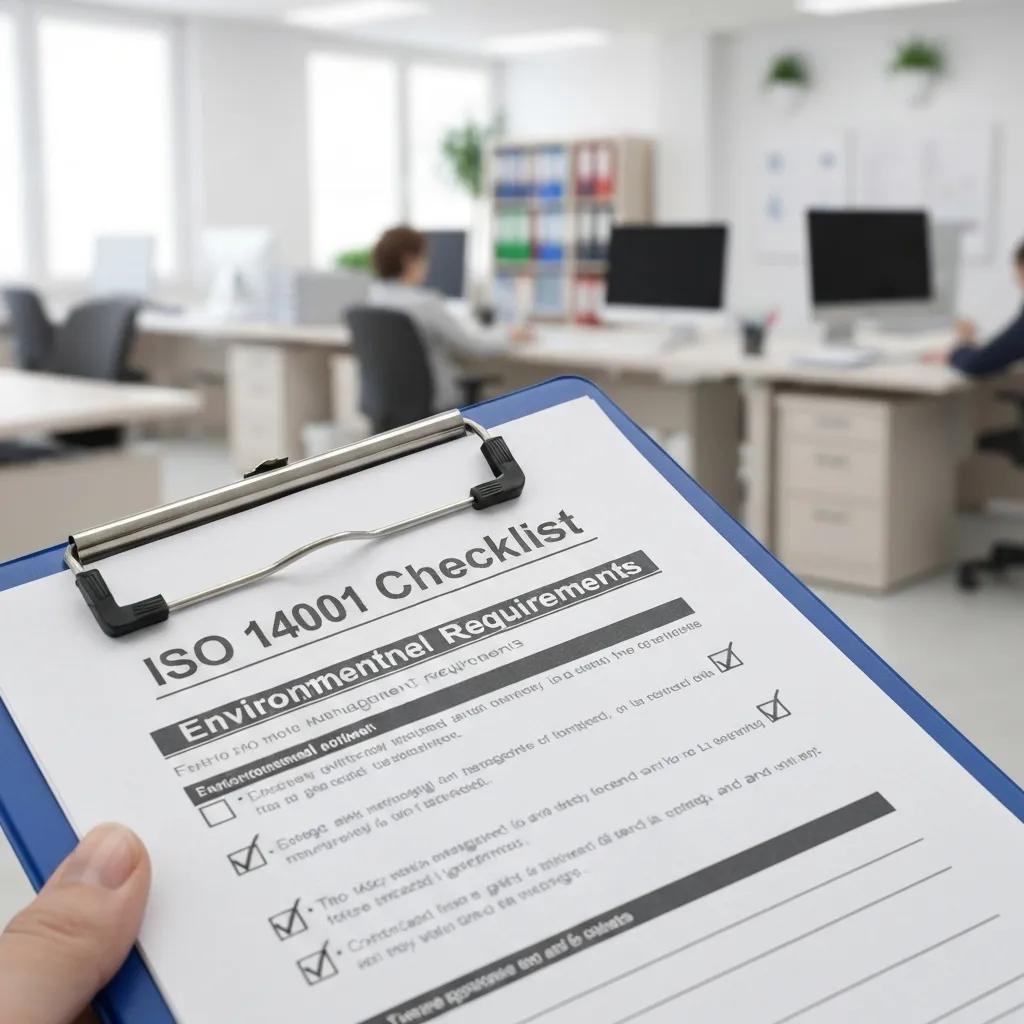
Core ISO 14001 documentation requirements define the essential records and procedures that underpin an effective EMS. Establishing these documents ensures transparent policy communication, consistent process control, and verifiable performance evaluation. For example, a documented register of environmental aspects enables clear identification of risks and improvement opportunities.
Which Mandatory Documents Does ISO 14001 Require?
ISO 14001 requires a set of mandatory documents and records to demonstrate compliance. Organizations must maintain:
- Environmental Policy – A formal statement of commitments to legal compliance, pollution prevention, and continual improvement.
- Scope of the EMS – Defined boundaries and applicability of the EMS within organizational context.
- Aspects and Impacts Register – Identification and evaluation of environmental aspects and their impacts.
- Legal and Other Requirements Register – Documented obligations arising from environmental regulations and stakeholder needs.
- Objectives, Targets, and Programs – Specific, measurable environmental goals and action plans.
- Operational Control Procedures – Procedures to manage activities with significant environmental impact.
- Emergency Preparedness and Response Procedures – Defined processes for environmental incidents and emergencies.
- Competence, Training, and Awareness Records – Evidence of personnel qualifications, training sessions, and awareness initiatives.
- Communication Procedures – Internal and external communication records regarding EMS topics.
- Monitoring and Measurement Records – Data logs and calibration records for environmental performance metrics.
- Evaluation of Compliance Records – Results of periodic compliance checks against legal and other requirements.
- Internal Audit Reports – Reports documenting EMS conformance and non-conformities.
- Management Review Records – Minutes and inputs from top management reviews of EMS performance.
- Nonconformity and Corrective Action Records – Records of incidents, root-cause analyses, and corrective measures taken.
Maintaining these documents ensures transparent demonstration of compliance and forms the foundation for continual environmental improvement.
How Does Environmental Management System (EMS) Documentation Support Compliance?
EMS documentation structures organizational data into a coherent framework that links policy, processes, and performance. By specifying roles, controls, and records, documentation:
- Defines environmental responsibilities and authority levels
- Establishes consistent procedures to control significant aspects
- Provides evidence for audits and regulatory inspections
This framework reduces risk of non-compliance by enabling rapid verification of commitments and controls while guiding corrective actions when deviations occur.
What Are the Key Principles of ISO 14001 Document Control?
Effective document control secures the integrity and currency of EMS records. Key principles include:
| Document Control Element | Requirement | Compliance Impact |
|---|---|---|
| Identification | Unique numbering and titles | Prevents confusion and misapplication |
| Approval and Review | Formal authorization by competent personnel | Ensures accuracy and strategic alignment |
| Version Control | Revision dates and change logs | Guarantees use of current procedures |
| Access and Distribution | Controlled distribution lists | Provides stakeholders with correct documents |
| Retention and Disposal | Defined retention periods | Meets legal obligations and limits storage risks |
Implementing these controls enhances traceability, prevents outdated procedures from circulating, and supports audit readiness.
With robust document control in place, organizations can proceed to create or update individual EMS documents.
How Do You Create ISO 14001 Documents Step-by-Step?
Creating ISO 14001 documentation involves systematic planning, content development, and procedural roll-out. A clear strategy ensures each record aligns with standard clauses and supports the organization’s environmental objectives.
How to Develop an Effective Environmental Policy Document?
An Environmental Policy articulates commitment to compliance and continual improvement. To develop one:
- Define Scope and Context – Describe business activities, products, or services covered by the EMS.
- State Commitments – Include pollution prevention, legal compliance, and resource efficiency objectives.
- Assign Responsibilities – Identify management roles for policy approval and implementation.
- Ensure Accessibility – Communicate the policy to all employees and make it publicly available.
A well-structured policy document demonstrates leadership engagement and sets the tone for all EMS activities.
What Is the Process for Identifying Environmental Aspects and Impacts?
Identifying environmental aspects and impacts requires systematic evaluation:
- Step 1: Map Activities — List business processes, products, and services.
- Step 2: Identify Aspects — Determine how activities interact with the environment (e.g., emissions, effluents).
- Step 3: Assess Significance — Evaluate each aspect by severity, frequency, and regulatory impact.
- Step 4: Record in Register — Document aspects, impacts, and selected control measures.
This register guides operational controls and prioritizes improvement efforts based on significant impacts.
How to Establish Legal and Other Compliance Requirements Documentation?
Documenting legal requirements ensures continual adherence to regulations:
- Research Applicable Laws – Identify environmental statutes, permits, and stakeholder commitments.
- Create a Compliance Register – List each requirement with source reference, applicability, and review date.
- Assign Responsibility – Designate owners for monitoring regulatory changes.
- Review Periodically – Conduct scheduled reviews to capture amendments or new obligations.
A maintained compliance register reduces risk of violations and supports audit evidence.
How to Implement Operational Control and Emergency Preparedness Procedures?
Operational control and emergency procedures formalize critical EMS processes. Key elements include:
| Control Activity | Procedure Element | Compliance Benefit |
|---|---|---|
| Waste Handling | Segregation, storage, and disposal | Reduces pollution risk and meets legal standards |
| Resource Consumption | Monitoring energy and water usage | Drives efficiency and cost savings |
| Spill Response | Emergency response team roles | Mitigates environmental damage |
| Incident Reporting | Notification and investigation steps | Ensures rapid corrective actions |
Documenting these procedures provides clear guidance during normal operations and emergencies, keeping risks controlled.
What Records Are Needed for Competence, Training, and Communication?
Maintaining records of personnel competence and communication enhances EMS effectiveness:
- Training attendance logs and competency test results
- Signed awareness acknowledgments for EMS policy and objectives
- Meeting minutes for internal and external EMS communications
These records demonstrate that staff are equipped to fulfill environmental responsibilities, setting the stage for performance evaluation.
What Is Included in the ISO 14001 Compliance Checklist for Documentation?
A comprehensive checklist ensures no EMS element is overlooked. The following snapshot highlights key document categories that must be in place.
Which Documents Cover Objectives, Targets, and Programs?
Objectives and targets documents define measurable environmental goals and action plans tailored to significant aspects. For instance, a target to reduce energy consumption by 10% would include timelines, responsible parties, and monitoring indicators.
What Monitoring, Measurement, and Evaluation Records Are Required?
Monitoring, measurement, and evaluation generate quantitative evidence of EMS performance:
- Emission monitoring logs
- Calibration certificates for measurement instruments
- Compliance evaluation reports
These records confirm progress toward objectives and provide data for management review.
How Are Internal Audits and Management Reviews Documented?
Internal audits and management reviews require structured records:
- Audit Program – Schedule, scope, and criteria.
- Audit Reports – Findings, nonconformities, and recommendations.
- Review Minutes – Top management discussion points and decisions.
Documented reviews drive continual improvement and strategic alignment with environmental commitments.
What Are the Requirements for Nonconformity and Corrective Action Records?
Recording nonconformities and corrective actions ensures systematic resolution:
- Description of nonconformity and root-cause analysis
- Corrective and preventive actions planned and implemented
- Verification of action effectiveness
These records close the loop on EMS failures and strengthen future compliance.
How Can ISO 14001 Documentation Be Integrated with ISO 9001 for Efficiency?

Integrating EMS and Quality Management System (QMS) documentation leverages overlapping processes, reduces duplication, and accelerates certification for both standards.
Integrating ISO 14001 and ISO 9001 for Efficiency - in English
Studies demonstrate that integrating ISO 14001 and ISO 9001 can streamline processes, reduce costs, and improve overall organizational performance. Common documentation elements, such as policy statements, internal audit programs, and document control procedures, can be leveraged across both systems. This integration leads to reduced duplication, streamlined training, and more efficient audits.
Casadesús, M., & Karapetrovic, S., Integration of management systems: a review and some practical guidelines. The TQM Magazine (2005)
This citation supports the article’s discussion of the benefits of integrating EMS and QMS documentation.
What Are the Common Documentation Elements Between ISO 14001 and ISO 9001?
| Document Type | ISO 14001 Role | ISO 9001 Role |
|---|---|---|
| Policy Statements | Environmental commitments | Quality commitments |
| Objectives and Targets | Environmental performance goals | Quality improvement goals |
| Internal Audit Program | EMS conformance checks | QMS process audits |
| Management Review Records | EMS performance evaluation | QMS effectiveness assessment |
| Document Control Procedures | EMS document management | QMS document management |
How Does Integrated Documentation Improve Compliance and Cost Efficiency?
An integrated EMS–QMS system:
- Eliminates duplicate procedures and records
- Streamlines training by combining quality and environmental criteria
- Reduces audit time through consolidated reviews
These benefits translate into lower certification costs and faster implementation.
What Are Best Practices for Managing Integrated EMS and QMS Documentation?
- Align Clause Structures – Map ISO 14001 and ISO 9001 clauses side by side.
- Use a Common Document Control System – Single platform for version control and approvals.
- Cross-Functional Teams – Engage quality and environmental leads in joint document reviews.
- Consolidated Management Reviews – Address both environmental and quality objectives together.
Applying these practices maximizes synergies and fosters holistic management.
What Tools and Resources Help Manage ISO 14001 Documentation Effectively?
Digital tools and expert support accelerate document creation, control, and continual updates to maintain compliance.
Which Software Solutions Support EMS Documentation Management?
| Software Solution | Key Feature | Benefit |
|---|---|---|
| Document Control Platforms | Centralized version control | Ensures currency and audit readiness |
| Compliance Management Tools | Regulatory requirement tracking | Automates legal register updates |
| Audit Management Software | Workflow and corrective action tracking | Provides real-time visibility into nonconformities |
Where Can You Find ISO 14001 Documentation Templates and Kits?
Numerous sources offer ready-to-use templates:
- Official ISO publications for policy and manual outlines
- Industry bodies such as BSI or UKAS for registers and checklists
- Consultancy providers offering editable EMS document kits
Using templates accelerates initial documentation while ensuring alignment with standard requirements.
How Can Expert Consultancy Services Assist with Documentation Compliance?
Professional consultants guide organizations through document creation, gap analysis, and audit preparation. For comprehensive support, explore “ISO 14001 Certification: Stratlane’s Guide for 2025” which details end-to-end EMS development, audit readiness, and integrated ISO 9001 alignment.
Engaging expert services reduces implementation risk and builds confidence in audit outcomes.
What Are Common Questions About ISO 14001 Documentation?
Organizations frequently seek clarity on mandatory records, control processes, and document scope. The following section addresses these typical inquiries to reinforce understanding and readiness.
What Are the Mandatory Documents for ISO 14001 Certification?
Mandatory documents include the Environmental Policy, Scope, Aspects and Impacts Register, Legal Requirements Register, Objectives and Programs, and records of operations, emergency response, training, communication, monitoring, audits, reviews, and corrective actions.
How Do I Prepare and Control ISO 14001 Documentation?
Preparing and controlling documentation involves defining document hierarchy, establishing approval workflows, assigning revision responsibilities, and distributing controlled copies to relevant stakeholders.
What Is the Scope of ISO 14001 Documentation Requirements?
The scope defines which facilities, processes, and services fall under the EMS boundary. It sets clear applicability and exclusions, ensuring auditors understand where and how the EMS applies.
What Records Must Be Maintained for ISO 14001 Compliance?
Key records include training logs, calibration certificates, audit reports, performance monitoring data, management review outputs, and corrective action evidence—each demonstrating conformity and continual improvement.
How Does Effective ISO 14001 Documentation Provide Competitive Advantage and Compliance Assurance?
Well-structured EMS records not only satisfy auditors but also strengthen market credibility, reduce environmental risks, and showcase organizational responsibility.
How Does Robust Documentation Reduce Risks of Non-Compliance?
Clear procedures, registers, and record-keeping prevent oversights that could lead to regulatory breaches, fines, or reputational damage by ensuring every requirement is monitored and controlled.
How Does Certification Enhance Market Position and Reputation?
ISO 14001 certification signals environmental stewardship to customers, investors, and regulators. It differentiates organizations in tender processes and supports supplier qualification by demonstrating structured EMS performance.
What Are Real-World Examples of Documentation Success in ISO 14001 Certification?
A UK manufacturer reduced energy costs by 12% after implementing a documented aspects register and operational controls. An IT services firm achieved dual ISO 14001 and ISO 9001 certification in eight months through an integrated document management platform.
Stratlane’s guidance and audit expertise help organizations create compliant, efficient EMS documentation that drives both environmental performance and business growth. Continuous improvement through standardized records positions companies to meet rising stakeholder expectations and regulatory demands.