
Top Benefits of ISO Certification for Business Growth

How ISO Certification Drives Growth: Competitive Advantage, Operational Excellence, and Measurable Results
ISO certification is third-party validation that an organization’s management systems meet internationally recognized requirements—and it delivers measurable business effects: stronger credibility, leaner operations, and broader market access. This guide shows how core standards—ISO 9001, ISO 14001, ISO 27001 and the emerging ISO 42001—translate into better customer trust, operational improvements, reduced risk and new commercial opportunities. Many firms struggle with procurement roadblocks, inconsistent processes and compliance gaps; ISO certification fixes those problems by defining repeatable processes, controls and audit trails buyers and regulators trust. You’ll learn why certification is a trust signal, how management-system practices boost throughput and outcomes, and how AI-assisted audits speed evidence collection and deepen assurance. We compare standards, map risks to controls, and give practical steps to use certification as a competitive lever. By the end, you’ll be able to build the business case for ISO and evaluate AI-enabled certification partners that support growth.
How Does ISO Certification Enhance Business Credibility and Reputation?
ISO certification provides independent confirmation that your management systems follow recognized requirements. That external verification makes it easier for customers, partners and regulators to trust your processes because it ties documented procedures, records and audit trails to real outcomes—quality, environmental stewardship or information security. A third-party certificate becomes a repeatable credibility signal in procurement and partner assessments, reducing friction during supplier qualification. Accredited certificates amplify that effect by linking your compliance to established conformity assessment frameworks many buyers require. The practical payoff: fewer qualification delays and clearer positioning versus competitors—starting with the role of ISO 9001 in building customer trust.
ISO 9001 helps make quality predictable and verifiable. The standard requires documented processes, traceability, corrective actions and customer-focused objectives, which together reduce defects and standardize results. Buyers see a certified QMS as evidence you manage variation and continuously improve—shortening qualification cycles and improving win rates. Examples include formal complaint handling that prevents repeat issues and process mapping that removes root causes, both of which increase delivery reliability. That operational predictability drives higher customer satisfaction and strengthens your claims during tender evaluations—especially when audit evidence is robust.
How Does Stratlane's AI-Driven Auditing Strengthen Certification Credibility?

Stratlane applies AI to audit workflows to improve evidence collection, surface patterns and increase consistency across assessments—delivering deeper, more repeatable certification outcomes. AI helps auditors correlate management-system records, spot anomalies in trends and flag inconsistent practices that manual sampling can miss, strengthening the evidence base for certification decisions. By combining automated analysis with human review, audits use broader data samples while preserving expert judgment. The result: stronger confidence in certificate integrity, fewer administrative delays and richer audit reports that simplify re‑assessment and market scrutiny.
In What Ways Does ISO Certification Improve Operational Efficiency?
ISO certification reduces waste and variability by codifying processes, aligning KPIs and embedding continuous improvement cycles. Standardized procedures remove ad hoc workarounds, speed onboarding, clarify responsibilities and create measurable process performance managers can optimize. Those mechanics provide a repeatable framework to find inefficiencies, implement corrective actions and sustain gains. Paired with AI-driven audit tools, evidence collection and systemic issue detection happen faster—shortening improvement cycles and external audit timelines. The table below compares typical impacts from ISO 9001, ISO 14001 and AI-assisted audits to highlight operational benefits.
| Standard / Service | Attribute | Typical Impact |
|---|---|---|
| ISO 9001 (QMS) | Process standardization and KPI alignment | Lower variation and higher first‑pass yield |
| ISO 14001 (EMS) | Resource and waste efficiency controls | Reduced operating costs and better regulatory readiness |
| AI-driven audit service | Automated data correlation and anomaly detection | Faster audits and earlier detection of systemic issues |
Quality and environmental systems target different inefficiencies, while AI auditing accelerates detection and evidence gathering—together they help teams realize operational improvements faster. Below are practical examples of how ISO 9001 and ISO 14001 work in practice.
How Do ISO 9001 and ISO 14001 Standards Optimize Business Processes?
ISO 9001 drives consistency by requiring documented workflows, defined roles and measurable performance—reducing rework and variation. ISO 14001 focuses on environmental aspects that lower resource use and regulatory exposure. Implementing ISO 9001 typically starts with mapping core processes, setting KPIs and adding control points to prevent defects. ISO 14001 spurs projects like material substitution, energy efficiency and waste reduction that cut costs and support sustainability goals. Together they create complementary levers: quality controls boost product or service consistency while environmental controls reduce inputs and compliance burdens. Examples include lower scrap rates after QMS changes and reduced office energy use from EMS initiatives—both of which AI can help accelerate.
How Does AI-Driven Auditing Accelerate and Enhance Audit Accuracy?
AI-driven auditing speeds evidence gathering by automating sampling, linking records across systems and surfacing anomalies for auditors to investigate. That reduces manual review time and increases sample depth—enabling analysis of transaction logs, maintenance records and test results instead of small manual samples. Broader data analysis improves detection of systemic patterns and root causes, driving earlier corrective actions and more focused improvement plans. The stronger audit trail and repeatable analysis also improve management reporting and support continuous compliance across audit cycles.
How Can ISO Certification Boost Customer Satisfaction and Loyalty?
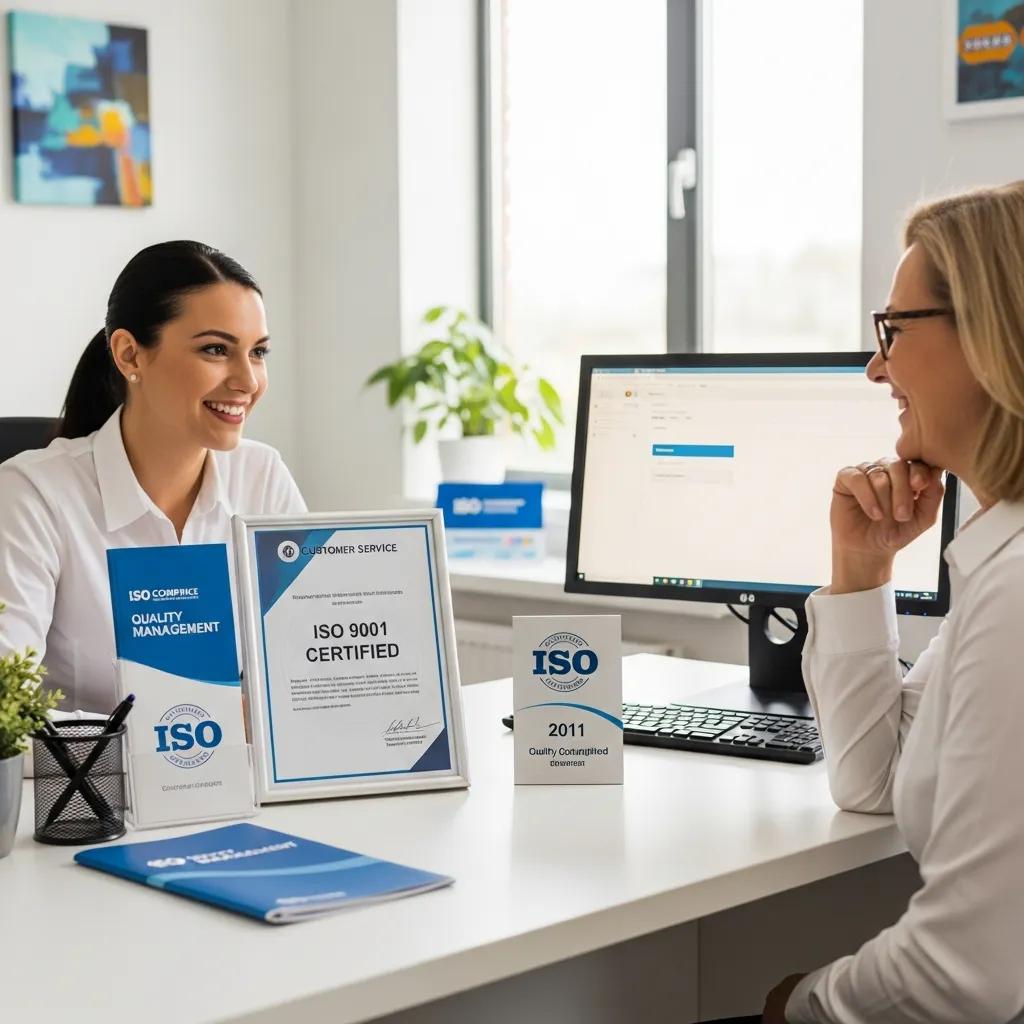
ISO certification raises customer satisfaction by ensuring consistent delivery, formalizing feedback loops and enabling faster resolution through documented corrective actions. Consistency reduces defects and variability, which cuts complaints and increases perceived reliability. Required feedback mechanisms create structured responses and measurable improvements customers can see over time. That reliability builds brand trust, drives repeat business and generates referrals—because clients experience fewer surprises and clearer remediation when issues arise. Next, we look specifically at the customer-facing benefits ISO 9001 delivers.
ISO 9001 produces tangible customer benefits through quality management practices. Organizations that implement the standard typically see fewer defects, shorter lead times and more reliable delivery thanks to documented controls and processes. The standard’s customer-focused objectives and complaint-handling turn incidents into improvement opportunities—lifting NPS and reducing churn. By embedding corrective and preventive actions, teams convert isolated failures into system-level gains that strengthen customer loyalty and lower the cost of poor quality. With quality benefits clear, we’ll examine how consistent compliance further improves the customer journey.
What Benefits Do Businesses Gain from ISO 9001 Quality Management Systems?
ISO 9001 gives teams a framework to cut defects, standardize service levels and capture customer feedback in structured corrective cycles that improve satisfaction. Its emphasis on documentation and measurement helps teams trace deviations, find root causes and verify fixes over time—reducing rework and improving first‑time‑right delivery. Contract review and formal requirement capture help ensure deliverables meet expectations, lowering disputes and late deliveries. Those improvements raise CSAT and retention, and they strengthen your position during procurement where quality controls are examined.
How Does Consistent Compliance Impact Customer Experience?
Consistent compliance removes friction by ensuring policies and procedures are applied the same way across customer touchpoints, reducing variability and making outcomes predictable. When onboarding, fulfillment or support follow documented standards, customers see faster resolutions and fewer surprises—reducing escalations and improving satisfaction scores. Traceability helps teams quickly find and fix root causes and communicate transparently with customers. Clear corrective actions and accessible records reassure customers that issues are addressed systematically, reinforcing long‑term relationships. With these customer benefits established, certification also unlocks market and competitive advantages described next.
What Competitive Advantages and Market Access Does ISO Certification Provide?
ISO certification creates market advantages by meeting procurement requirements, speeding partner acceptance and providing globally recognized evidence of capability. Many tenders and supplier evaluations list specific standards as prerequisites or scoring factors; certified firms often skip parts of vendor qualification and shorten sales cycles. International recognition of ISO reduces duplicated assessments when entering new markets, cutting time and cost for exports. Certification also increases investor and partner confidence by showing auditable controls over quality, environment and security—making certified organizations more attractive for strategic partnerships and supply chains. The table below maps typical market outcomes by mechanism.
| Market | Mechanism | Outcome |
|---|---|---|
| Domestic procurement | Tender qualification and scoring | Quicker bidder acceptance and less pre‑qualification delay |
| International export | Cross‑border recognition of standards | Lower market entry barriers and simpler partner onboarding |
| Sector partnerships | Supplier trust and audit evidence | Faster approvals and smoother joint projects |
How Does ISO Certification Open New Domestic and Global Markets?
Certification clears domestic and international pathways by meeting procurement specs, reducing onboarding friction and signaling operational maturity to buyers and regulators. In domestic tenders, documented systems meet many pre‑qualification checks and give buyers objective evidence to assess suppliers quickly. For international expansion, familiar accreditation and audit frameworks shorten due‑diligence and speed negotiations. In sector partnerships, certification creates a common baseline that enables faster integration and collaboration. Together these effects reduce time‑to‑contract and commercial friction—and set the stage for ISO 42001’s role in AI offerings.
Why Is ISO 42001 Certification Key for AI-Driven Business Innovation?
ISO 42001, currently in development, aims to set governance and risk‑control expectations for AI systems—requiring organizations to document development practices, monitoring and mitigation measures that address algorithmic risk and ethics. The standard covers model governance, data quality, transparency and performance monitoring to reduce biased or unsafe outcomes and build stakeholder trust. For businesses commercializing AI, ISO 42001 certification will signal responsible AI management, support customer acceptance and help with regulatory readiness. Codifying AI controls makes it easier to scale AI solutions into sensitive markets with confidence.
How Does ISO Certification Help Mitigate Risks and Ensure Regulatory Compliance?
ISO standards map directly to common business risks by prescribing controls, audit trails and continuous monitoring that lower incident likelihood and impact. ISO 27001 targets information‑security risks with confidentiality, integrity and availability controls; ISO 14001 addresses environmental risk; and ISO 42001 (when published) will cover AI governance and ethics. These standards require documented risk assessments, treatment plans and periodic audits that give regulators and stakeholders evidence of effective controls. A systematic approach to risk management shortens remediation times and improves oversight. The table below links common risk types to ISO mechanisms that mitigate them.
| Risk Type | ISO Standard / Mechanism | Mitigation |
|---|---|---|
| Data breach | ISO 27001 — ISMS controls | Encryption, access controls and incident response plans |
| AI model bias or malfunction | ISO 42001 — AI governance (in development) | Model monitoring, validation and accountability frameworks |
| Environmental incidents | ISO 14001 — EMS controls | Impact assessments and controls on emissions and waste |
What Risk Management Benefits Are Offered by ISO 27001 and ISO 42001?
ISO 27001 establishes an information‑security management system organized around confidentiality, integrity and availability—reducing the chance and impact of breaches through risk assessments and treatment plans. It mandates regular audits, incident response procedures and continual improvement to keep controls aligned with evolving threats. ISO 42001, once available, will complement this by setting governance for AI systems—monitoring model behavior, ensuring data quality and clarifying accountability—mitigating bias, drift and unintended harms. Together these standards provide layered protections for digital assets and AI capabilities, simplifying regulator and customer assurance.
How Does Stratlane's AI Auditing Support Compliance and Risk Reduction?
Stratlane’s AI‑assisted audits aggregate evidence, surface trends and create structured audit trails that simplify regulatory reporting and speed corrective cycles. By correlating logs, records and management‑system documents, our tools highlight systemic nonconformities and recurring risk patterns manual reviews might miss—helping teams prioritize remediation where it matters most. Automated evidence aggregation preserves audit history and supports certificate workflows from quote to issuance and surveillance. Combined with our global auditor network and accreditation, AI insights are validated by expert judgment to deliver compliance‑ready outcomes regulators and partners can trust.
Why Choose Stratlane Certification for AI-Driven ISO Certification Services?
Stratlane blends AI‑enabled audit tools, global accreditation and an experienced auditor network to deliver an end‑to‑end certification path—from quotes to audits, issuance and ongoing certificate management. We’re accredited across more than 27 countries and have professional auditors in 29+ countries, supporting international acceptance and consistent methodologies. Our primary offerings align to ISO 9001, ISO 14001, ISO 27001 and ISO 42001 (on release), so organizations can address quality, environmental, information‑security and AI governance needs through a single partner. This integrated approach reduces vendor complexity, clarifies timelines and centralizes certificate administration. Key differentiators to consider:
- AI‑driven audit tools that consolidate evidence and highlight systemic issues for targeted remediation.
- Global accreditation and auditor coverage that support international recognition and consistent assessments.
- End‑to‑end services covering quotes, audits, certificate issuance and ongoing certificate management.
What Makes Stratlane's AI-Driven Auditing Unique and Cost-Effective?
Our AI‑driven auditing increases audit scope and consistency by automating sampling and surfacing anomalies for expert review—reducing time‑to‑certify and admin overhead. We preserve human oversight while extending the evidence considered during assessments, improving audit quality without replacing auditor judgment. Global auditor coverage minimizes logistical delays across jurisdictions and centralized certificate management lowers post‑certification costs. Together these features make certification faster, more predictable and more scalable for organizations seeking reliable audit services.
How Does Global Accreditation and Industry Expertise Benefit Your Business?
Global accreditation plus sector‑specific auditor experience produce certificates stakeholders—corporates, regulators and partners—recognize and accept, easing procurement and partnership steps. Industry‑aware auditors bring relevant context, making audits more focused and efficient and reducing time spent explaining domain practices. Accredited certificates also cut the need for repeat assessments in new markets, simplifying international expansion. These benefits speed commercial decisions, strengthen partner confidence and reduce administrative friction for regulated procurement and market entry.
Frequently Asked Questions
1. What is the process for obtaining ISO certification?
Certification typically follows a few stages: assess current processes against the standard, implement required changes, and document your management system. When ready, engage a certification body for a formal audit. Auditors evaluate compliance and, if successful, issue the certificate. After certification, regular surveillance audits ensure ongoing compliance and continuous improvement.
2. How long does it take to achieve ISO certification?
Timing depends on organization size, process complexity and existing maturity. For some organizations it can take a few months; others may need a year or more. Companies with established management practices move faster, while those starting from scratch require more time for documentation and implementation.
3. What are the costs associated with ISO certification?
Costs vary by organization size, operational complexity and the specific standard. Expect fees for the certification body, internal preparation (staff time, training) and possible consultancy support. Ongoing costs include surveillance audits and continuous‑improvement activities. Budget for both initial certification and long‑term maintenance to capture full value.
4. Can small businesses benefit from ISO certification?
Absolutely. Small businesses gain credibility with customers and partners, improve internal efficiency, and become eligible for contracts that require certified suppliers. Certification helps smaller teams standardize operations, reduce waste and compete more effectively in target markets.
5. How does ISO certification impact employee engagement?
Certification often improves engagement by creating clearer roles, responsibilities and processes. Involving staff in implementation builds ownership and pride in outcomes. When employees see that their work drives measurable improvements, job satisfaction and collaboration tend to rise.
6. What role does management play in the ISO certification process?
Leadership is critical. Management must set the quality or security policy, allocate resources, and champion the program. Their commitment signals priorities across the organization and is essential for embedding a culture of continuous improvement.
7. How can organizations ensure ongoing compliance after certification?
Maintain an internal audit program, provide continuous training, and monitor performance against objectives. Use management reviews to address trends and update processes. Timely corrective actions and ongoing documentation keep your system aligned with the standard.
Conclusion
ISO certification delivers clear business value: stronger credibility, greater operational efficiency and improved customer outcomes that support sustainable growth. Standards like ISO 9001 and ISO 14001 help organizations reduce risk, streamline processes and gain market advantage. Working with a trusted partner—one that combines AI‑enabled audits, global accreditation and experienced auditors—simplifies the path to certification and helps you realize those benefits faster. Learn how Stratlane’s AI‑driven auditing can accelerate your certification journey today.