
ISO 9001:2015 Management Review: Performance Evaluation Tips

Best Practices for Effective ISO 9001:2015 Management Reviews
Management review under ISO 9001:2015 is a formal, documented assessment by top management that checks whether the Quality Management System (QMS) is suitable, adequate and delivering results. In practice: gather the right inputs — audit results, customer feedback, performance and risk data — analyse them, and agree clear outputs that drive improvement and align QMS aims with strategy. Reviews happen at planned intervals or when significant change occurs, and they link performance oversight to visible leadership commitment and continual improvement. This guide explains Clause 9.3, sets out a step‑by‑step review process, identifies the key inputs and outputs, and shows how modern analytics — including AI-assisted auditing — make reviews faster, evidence-based and actionable. You’ll also find EAV-style tables, sample agendas and checklists to run robust management reviews, plus advice on leadership engagement and preparing for the expected ISO 9001:2025 focus on digitalisation, resilience and sustainability.
What Are the ISO 9001 Management Review Requirements?
ISO 9001:2015 requires a recorded process through which top management evaluates the QMS to confirm continued suitability, adequacy and effectiveness. Reviews turn performance data and business context into management decisions that affect objectives, resourcing and the QMS design. They must consider specified inputs, produce documented outputs with assigned responsibility, and occur at planned intervals or after significant changes. In short, management reviews are a governance routine that drives continual improvement and demonstrates leadership’s commitment to quality.
The mandatory review inputs and typical outputs include these core items:
- Audit results: Findings from internal and external audits and trend analysis.
- Customer feedback: Complaints, satisfaction scores and market signals.
- Process performance: KPIs, nonconformities and trending process data.
- Corrective actions: Status updates and effectiveness checks.
- Changes: Internal or external changes that affect the QMS.
- Resources: Infrastructure, staffing, competence and support adequacy.
Those inputs inform outputs such as improvement decisions, resource allocations, revised objectives and documented action plans with owners and deadlines. The section below summarises Clause 9.3 and the documented information auditors will expect to see.
What Does ISO 9001:2015 Clause 9.3 Specify About Management Reviews?
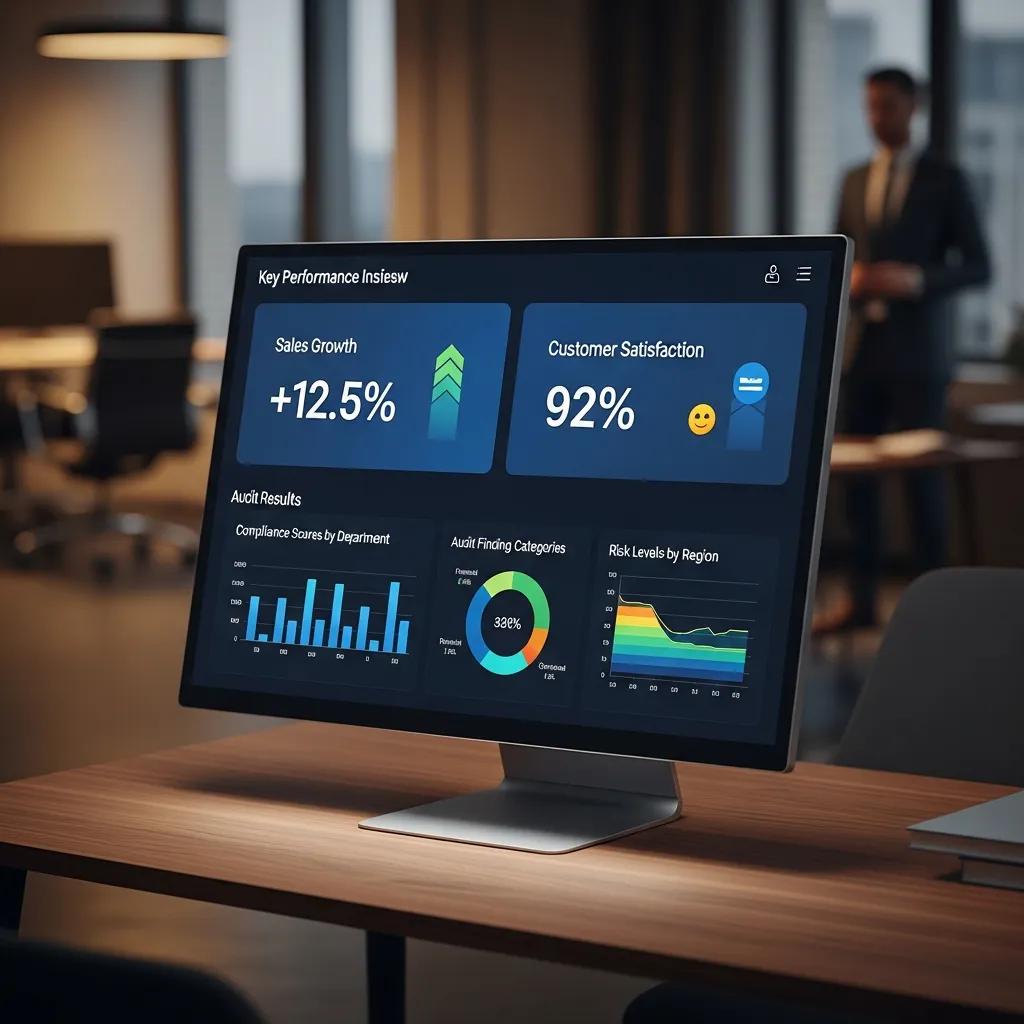
Clause 9.3 requires top management to review the QMS at planned intervals to confirm suitability, adequacy and effectiveness. Reviews must consider defined inputs — audit results, customer feedback, performance metrics, corrective action status and resource adequacy — and produce outputs that include decisions and actions on improvement and resourcing. Typical evidence includes meeting minutes or records, the slides or dashboards used, and tracked action logs showing owners and due dates. Auditors will look for clear traceability from input data through management decisions to follow-up actions — that traceability closes the continual improvement loop.
How to Conduct an Effective QMS Management Review Process?
Run reviews to produce decisions, not just discussions: prepare data in advance, convene the right leaders to a structured agenda, make evidence-based decisions, and assign tracked actions with measurable targets. The flow is plan → analyse → decide → follow up. The benefit is faster, more reliable alignment between operational performance and strategic objectives. Planning should set frequency, required attendees, agenda items and data owners so meetings focus on high-value decisions rather than collecting facts.
Use this practical checklist and sample agenda to run an efficient review:
- Prepare and distribute materials: Assemble audit reports, KPI dashboards, customer feedback and CAPA status at least one week beforehand.
- Confirm attendees and roles: Make sure top management and process owners attend and understand decision authorities.
- Follow a time-boxed agenda: Review performance, risk/resilience metrics, resource needs and outstanding actions.
- Decide and assign: Record decisions, assign owners, set deadlines and prioritise follow-ups.
- Close the loop: Schedule follow-up checkpoints, integrate outputs into objectives, and route items to internal audit or CAPA as needed.
This checklist turns inputs into concrete decisions and measurable outputs. The next section maps typical inputs to their data sources and representative metrics using an EAV-style reference to simplify pre-meeting preparation.
What Are the Key Inputs for an ISO 9001 Management Review?
Key inputs are the factual evidence that supports management decisions: audit results, customer feedback, process performance, nonconformities and CAPA status, context changes and resource adequacy. Each input answers a governance question — for example, audit trends reveal systemic weakness, while resource adequacy shows whether commitments are achievable — enabling leadership to prioritise interventions. Preparing inputs with clear owners and representative metrics makes the review analytical rather than anecdotal.
Intro to the inputs table: the table below links each input to typical sources and measurable example metrics so teams can standardise pre-meeting deliverables.
| Input | Typical Source | Example Metric |
|---|---|---|
| Internal audit results | Audit reports, trend analysis | Nonconformities per quarter; repeat findings rate |
| External audit findings | Certification or supplier audits | Major/minor finding counts; corrective action closure time |
| Customer feedback | Surveys, complaint logs, NPS | Customer satisfaction score; complaint resolution time |
| Process performance | Operational dashboards, SPC charts | Process yield %, cycle time, defect rate |
| Corrective action status | CAPA logs, action trackers | % actions closed on time; effectiveness verification rate |
| Changes affecting QMS | Market reports, regulatory notices | Number of significant changes; risk score delta |
That mapping clarifies who supplies each piece of data and which metrics matter before the meeting — reducing prep time and improving decision quality. The next section explains how to convert management review outputs into tracked actions that drive continual improvement.
Stratlane Certification also provides templates and audit support that put these preparation steps into practice for organisations preparing for certification or surveillance audits. Their accredited approach and AI-assisted audit tools can automate data collation and help ensure records meet auditor expectations while keeping top management focused on decisions.
What Are the Expected Outputs of an ISO 9001:2015 Management Review?
Management review outputs are the documented decisions and actions that follow from evaluating inputs; they must be specific, assigned and measurable so they lead to improvement. Typical outputs include identified opportunities for improvement, resource requirements, updates to quality objectives, changes to processes or policy, and assigned corrective or preventive actions. Outputs convert analysis into governance: they direct operations, shape internal audit focus and set strategic priorities, producing measurable results at subsequent reviews.
Capture outputs so each decision links to an owner, a due date and a verification method — that makes follow-up straightforward. The table below clarifies common outputs, typical owners and expected follow-up activities.
Intro to outputs table: the table below helps translate high-level review decisions into accountable, auditable actions.
| Output | Responsible Role | Typical Follow-up Action |
|---|---|---|
| Update quality objectives | Top management / QMS manager | Revise objectives, publish targets, monitor quarterly KPIs |
| Allocate resources | CFO / department heads | Approve budget, recruit or train staff, confirm completion |
| Initiate improvement project | Process owner | Create project plan with milestones and effectiveness measures |
| Adjust risk treatment | Risk owner | Update risk register, mitigation plan and review schedule |
| Corrective/preventive actions | CAPA owner | Assign tasks, verify implementation, confirm effectiveness |
How Do Management Review Outputs Drive Continuous Improvement?
Outputs feed back into the QMS lifecycle: a decision becomes an action, the action is implemented and measured, and the results become inputs for the next review or internal audit. For example, a decision to cut late deliveries sparks a cross‑functional improvement project; results show lower delay rates and audits confirm sustained improvement. That loop ensures decisions are validated with evidence rather than assumption.
Concrete case: a review highlights rising defect rates on a production line. Management assigns a corrective project, sets a 30% defect reduction target and plans verification by process capability studies. At the next review, statistical evidence shows the target was met, and internal audit redirects focus to another higher‑risk area. When outputs carry owners and metrics, they create a verifiable improvement trajectory auditors can trace.
How Can Top Management Ensure Commitment to the Management Review Process?
Top management demonstrates commitment through sponsorship, attendance at reviews, resourcing decisions and by using review outputs to shape strategy and objectives. Visible leadership — integrating review decisions into strategic plans and performance dashboards — signals that quality is a management priority. The practical benefit is tighter alignment between operational improvements and business goals, increasing the QMS’s strategic value.
What Are Best Practices for Scheduling and Documenting Management Reviews?
Balance a steady cadence with trigger-based, ad-hoc reviews: common practice is at least one annual comprehensive review, quarterly operational reviews and additional sessions after major changes. That approach preserves oversight while reserving full reviews for strategic decisions. Documentation best practice is to circulate a pre‑meeting pack, use a standard minutes template capturing decisions, owners, deadlines and verification criteria, and store records in a controlled repository accessible to auditors and stakeholders.
Recommended cadence and documentation steps: a quarterly operational review for performance metrics, an annual strategic review for alignment, and immediate reviews after significant regulatory, market or process changes. Use a consistent minutes template — inputs reviewed, decisions made, actions assigned, verification method — to ensure traceability and effective follow-up.
- Common cadence: Annual strategic review, quarterly operational reviews, ad‑hoc on major change.
- Documentation essentials: Pre‑meeting pack, standardised minutes, action tracker, evidence attachments.
- Retention practice: Retain review records and evidence for the audit cycle and organisational learning.
These controls make reviews predictable and demonstrably effective for auditors and stakeholders.
How Does AI-Driven Auditing Enhance the ISO 9001 Management Review?

AI-assisted auditing speeds up data consolidation, surfaces trends and anomalies, and delivers prioritised, evidence-based insights for management. By combining automation with pattern recognition, AI ingests audit findings, KPIs and customer feedback, then highlights systemic risks and predictive indicators human review can miss. The result is a faster, more consistent synthesis of inputs and clearer, action‑oriented outputs that strengthen reviews and internal audit work.
Key AI benefits include faster synthesis of large datasets, repeatable root‑cause identification and dashboards that translate technical findings into management-ready insights. The table below maps AI capabilities to review benefits and sample outputs.
| AI Capability | Benefit for Review | Example Output |
|---|---|---|
| Natural Language Processing (NLP) | Extracts themes from feedback and audit text | Prioritised list of common issues from comments |
| Trend detection & anomaly scoring | Identifies drifting KPIs and outliers | Dashboard highlighting rising defect clusters |
| Predictive analytics | Forecasts risk areas before failures occur | Risk heatmap with probability scores |
| Automated evidence aggregation | Collects supporting documents and metrics | Packaged review dossier with attachments |
This mapping shows how AI turns dispersed data into decision-ready artefacts, reducing prep time and enabling leadership to focus on high‑value governance. The next subsection covers AI functions and governance considerations to preserve trust and explainability in AI-assisted reviews.
Stratlane Certification demonstrates this in practice: as an accredited certification body across Europe and the UK, Stratlane combines experienced auditors with AI-enabled audit tools to streamline evidence collection, trend analysis and certificate management. Organisations preparing for management reviews can use these tools and services to speed preparation and keep records audit‑ready while maintaining management focus on strategic decisions.
In What Ways Does AI Improve Data Collection and Analysis for Management Reviews?
AI automates consolidation of audit reports, operational logs and customer feedback into unified datasets and enhances analysis with NLP, clustering and predictive models that reveal root causes and emerging risks. That lets management see prioritised issues instead of sifting through raw reports, improving decision speed and accuracy. Typical AI outputs include trend dashboards, anomaly alerts and ranked action lists with probable root causes and recommended next steps.
Governance matters: ensure data provenance, explainability of AI outputs and human oversight by auditors when interpreting AI signals. Combining AI insights with auditor judgement preserves accountability while gaining efficiency, so management review decisions remain evidence-based and defensible during external certification or surveillance audits.
What Are the Future Trends and Preparations for ISO 9001:2025/2026 Management Reviews?
Future management reviews will emphasise digitalisation, deeper risk-based and resilience thinking, and stronger alignment with sustainability and ESG expectations. Broader stakeholder focus on resilience and environmental performance will expand review inputs and require integrated data systems. Preparing now reduces rework and positions organisations to gain advantage from an adaptive QMS.
- Digital integration: Build consolidated dashboards and auditable evidence trails for rapid review preparation.
- Risk and resilience metrics: Add supply-chain continuity, scenario testing and recovery time objectives to KPIs.
- Sustainability alignment: Include ESG indicators linked to quality objectives and stakeholder expectations.
Early adoption lets organisations evolve management reviews from periodic compliance checks into strategic governance sessions that combine quality, risk and sustainability metrics.
How Will Digitalisation, Risk-Based Thinking, and Sustainability Impact Management Reviews?
Digitalisation will demand integrated data platforms and evidence trails that make inputs instantly available and auditable, increasing the speed and depth of reviews. Risk-based thinking and resilience will broaden review scope to include scenario planning, supply‑chain stress tests and recovery metrics alongside process performance. Sustainability will bring ESG KPIs — for example waste reduction or supplier sustainability scores — into review agendas, linking QMS performance to wider corporate responsibility goals.
To adapt, prioritise data governance, choose meaningful resilience and sustainability KPIs, and train leadership to interpret integrated dashboards. These steps help ensure management reviews remain the central forum for aligning operational quality with strategic risk and sustainability objectives, making the QMS a driver of resilience and stakeholder trust.
Stratlane Certification supports organisations through this transition by pairing accredited certification expertise with AI-enabled audit tools and certificate management services, helping clients prepare data-rich review packs and convert outputs into tracked actions for certification readiness and continuous compliance.
If you’re ready to operationalise these practices, consider requesting a tailored quote or booking audit support to pilot AI-assisted review preparation and certificate management with an accredited provider. Stratlane Certification can supply templates, audit assistance and managed certificate services to speed readiness and ensure your management reviews meet current ISO 9001:2015 expectations and emerging 2025/2026 requirements.
Frequently Asked Questions
What is the role of top management in the ISO 9001 management review process?
Top management demonstrates commitment by attending reviews, making strategic decisions from the review outputs and allocating necessary resources. Active involvement ensures quality objectives align with business goals and keeps the QMS effective. Visible leadership reinforces a culture of quality and makes the management review a meaningful governance activity.
How can organisations prepare for the anticipated ISO 9001:2025 changes?
Prepare by focusing on digitalisation, resilience and sustainability: integrate data systems for timely access to metrics, enhance risk management with scenario planning and resilience measures, and align quality objectives with ESG criteria. Early action reduces future rework and helps the QMS become a strategic asset that meets changing stakeholder expectations.
What are the benefits of using AI in the management review process?
AI automates data collection, uncovers trends and delivers actionable insights. It quickly processes large datasets to reveal systemic risks and anomalies that might be missed manually, enabling faster, better-informed decisions. AI dashboards make complex data easy to interpret, so management can focus on priority issues and drive continuous improvement.
How should organisations document their management review outcomes?
Document outcomes with standardised minutes that capture key decisions, assigned responsibilities, deadlines and verification methods. Store these records in a controlled repository accessible to stakeholders and auditors. Clear traceability between decisions and actions is essential for follow-up and auditability; use action trackers and attach supporting evidence where possible.
What challenges might organisations face during management reviews?
Common challenges include data overload, lack of top management engagement and poor alignment between outputs and strategy. Data overload can cause analysis paralysis; low executive involvement weakens decision authority. Overcome these by streamlining data preparation, setting tight agendas and fostering accountability among leaders.
How can organisations ensure continuous improvement through management reviews?
Embed a feedback loop where review outputs directly inform actions and objectives: document decisions, assign ownership, set measurable targets and follow up regularly. Integrate review findings into operational practice and evaluate effectiveness at subsequent reviews. Consistent measurement and adjustment keep the QMS dynamic and continually improving.
Conclusion
Applying these management review best practices will make your ISO 9001:2015 QMS more effective by linking leadership decisions to measurable improvement. Use structured inputs and outputs to turn data into action, and consider AI tools to speed preparation and sharpen insights. Explore our templates and support services to optimise your management reviews and stay ahead of future ISO developments.