
What to Expect in Your ISO Surveillance Audit Process

What to Expect During ISO Surveillance Audits: A Practical Guide to the Process and the Role of AI
An ISO surveillance audit is a periodic check performed after initial certification to ensure a management system still meets the relevant ISO standard and is being applied effectively. These audits confirm ongoing compliance, concentrate on risk-prioritized areas, and gather evidence needed to keep a certificate in good standing and to drive continual improvement. Teams that treat surveillance as a planned, repeatable activity reduce the chance of unexpected non-conformities and show steady performance across processes and controls. This guide walks through what auditors look for, a practical audit-readiness checklist, what happens on site and in the report, and how AI-assisted tools speed reviews and reduce auditor effort. By the end you’ll have concrete prep steps, sampling templates, and a clear view of how AI can support continuous monitoring and risk-based prioritization.
Stratlane Certification is an accredited certification body with cross-border operations that combines experienced auditors with AI-enabled auditing tools to make management system assessments more efficient. For teams exploring certification or interested in “Get your Management System audited with AI,” Stratlane offers AI-assisted workflows alongside human auditor review to accelerate document checks and surface high-risk areas. That company context is offered as an option for organizations considering an external accredited provider in parallel with the internal preparation steps covered here. Continue for standards-specific expectations and actionable checklists you can use whether you hire an external body or prepare internally for surveillance.
What Is an ISO Surveillance Audit and Why Is It Important?
A surveillance audit is a planned assessment that verifies a management system still conforms to ISO requirements by sampling records, observing operations, and interviewing staff to confirm effective implementation. It relies on a risk-based sampling approach: auditors concentrate on higher-risk processes and check records, corrective actions, and management review outputs to ensure controls remain effective. The immediate benefit is preserving certification through objective, documented evidence of control operation and improvement; organizations also gain early visibility into emerging risks that could threaten compliance. Knowing this purpose lets teams prioritize the most important areas before the auditor arrives and ensures surveillance strengthens operational resilience as well as certification maintenance.
Surveillance audits serve to protect the credibility of certification and to reassure stakeholders that controls are working as intended. Scheduling usually follows an annual rhythm between initial certification and the three-year recertification, though frequency can vary by accreditation rules and sector risk. Surveillance focuses on changes since the prior audit and on verifying corrective actions, which keeps oversight continual without repeating a full certification audit. The next section outlines common surveillance purposes and typical timing so you can align your internal calendar with expected audit windows.
What Is the Purpose and Frequency of ISO Surveillance Audits?
Surveillance audits have three main aims: confirm ongoing conformity to the standard, verify corrective actions are effective, and monitor system performance against objectives and risks. Auditors combine document review, sampling of operational records, and targeted interviews to check that controls remain in place and that recent changes haven’t introduced non-conformities. Frequency usually follows an annual or periodic pattern—many schemes require one or two surveillance visits per year depending on the standard and risk profile—with a full recertification audit every three years. Organizations with large changes, higher risk, or prior major findings may receive additional or more frequent follow-ups.
Audit timing and scope are set during planning and depend on company size, complexity, and past findings. Early coordination helps ensure auditors can access key evidence and schedule process owners for interviews, which shortens on-site time and improves sampling efficiency. The following subsection explains how surveillance outcomes support keeping your certificate valid.
How Does an ISO Surveillance Audit Support Certification Maintenance?
A surveillance audit builds an evidence trail showing the management system is operating and improving, which supports certificate validity and prepares the organization for recertification. Auditors typically review management review minutes, internal audit summaries, corrective action records, and objective data (KPIs) to confirm trends, performance, and closure of prior findings. When minor non-conformities are found, organizations provide root-cause analysis, corrective action plans and closure evidence; major non-conformities may lead to follow-up assessments or suspension if not resolved. Keeping records current and demonstrating effective corrective actions increases confidence in your system and reduces the chance of disruptive decertification outcomes.
Evidence gathered in surveillance—trend charts, audit trails, and performance metrics—also feeds continuous improvement and management decision-making, creating positive feedback for system maturity. Clear links between surveillance findings and management responses improve resilience and simplify future recertification audits. The next major section gives step-by-step preparation guidance and a practical readiness checklist to align owners and evidence.
How to Prepare Effectively for Your ISO Surveillance Audit
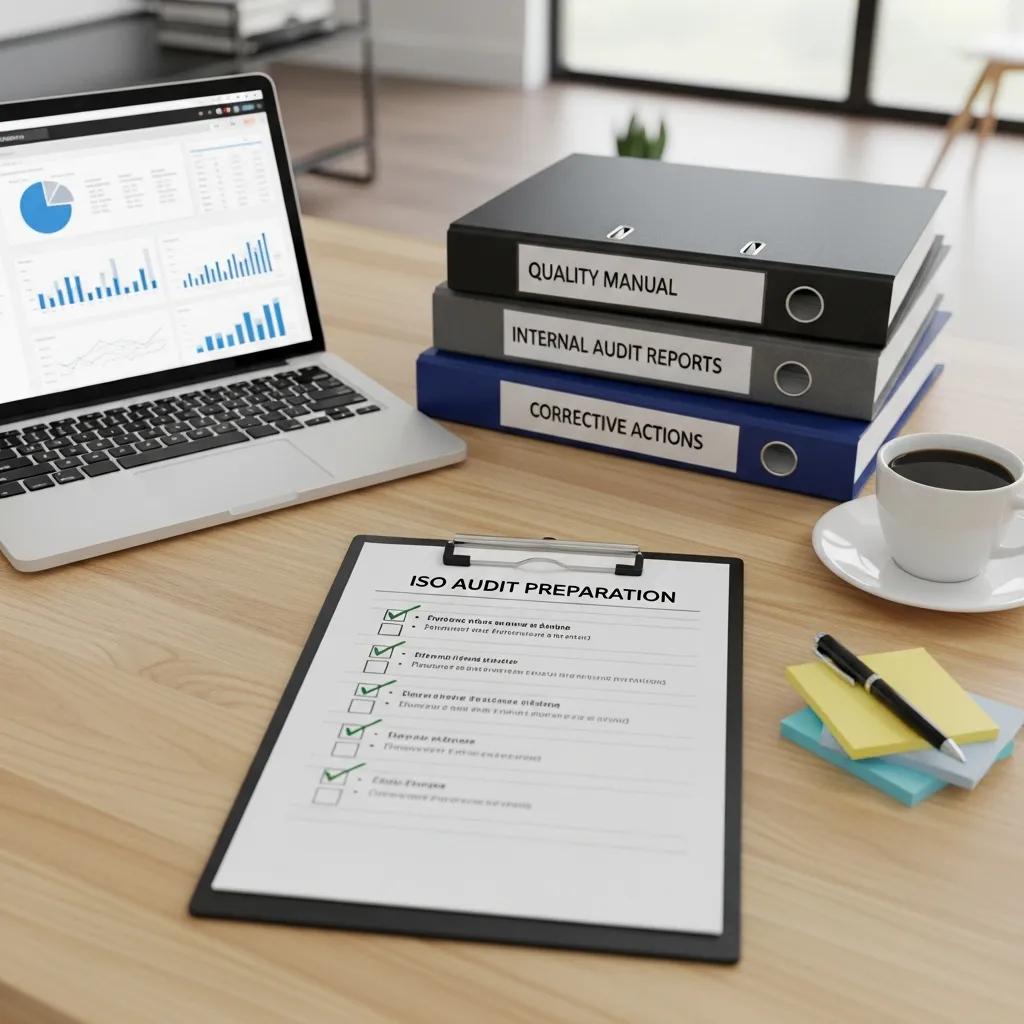
Good surveillance preparation blends document readiness, internal-audit alignment, staff briefings, and a targeted sampling plan to demonstrate continued conformity and performance. Begin by mapping the audit scope to process owners and assembling the latest management review, internal audit reports, KPI dashboards, and corrective action logs. Proper preparation reduces on-site time and last-minute evidence hunts; it also lets you highlight areas where AI-assisted review or external auditor sampling should focus. The steps below, together with a concise evidence-owner table, create a practical roadmap for readiness.
Preparation is about relevant evidence and clear ownership—not dumping every file into a folder. The table below lists core documents, where auditors typically find them, and who usually owns the evidence to speed collection and accountability.
| Document | Where to Find It | Who Owns It |
|---|---|---|
| Management Review Minutes | Quality/management folder or QMS repository | Top management / QMS manager |
| Internal Audit Reports | Internal audit system or shared drive | Internal audit lead |
| Corrective Action Records | CAPA log or non-conformity tracker | Process owner / QMS coordinator |
| Objective and KPI Reports | Performance dashboards / departmental reports | Process owners / Operations manager |
| Process Procedures | Document control system | Document control custodian |
This table clarifies responsibility and reduces friction when auditors request evidence. After gathering documents, run a quick self-check and align internal audit samples with areas auditors are likely to review.
Turn preparation into routine with a short, repeatable checklist you can track and audit.
- Build a document pack with management review, internal audits, CAPA records, and KPI reports organized by process.
- Confirm availability of process owners and key staff for interviews on the scheduled dates.
- Run a self-assessment against the last audit findings and record evidence for planned corrective actions.
- Prepare a sampling plan that shows where operational records and objective evidence are kept.
Using this checklist eases on-site activities and shows auditors you’re prepared. The next sections list the core audit requirements auditors will check and a compact checklist teams can act on immediately.
What Are the Key ISO Audit Requirements to Meet?
Auditors look for core indicators that the system is implemented, monitored, and improving: documented information, performance monitoring, internal audits, management review, and corrective action handling. In practice, they seek traceable records that connect objectives to results, evidence of risk assessment and treatment for the applicable standard, and closure or progress on corrective actions. Acceptable evidence includes time-stamped records, signed management review minutes, internal audit reports with verification, and documented root-cause analyses for non-conformities. Meeting these checkpoints allows auditors to validate the system without unnecessary rework and helps protect certification.
Linking requirements to named process owners and evidence locations avoids last-minute searching and lets auditors sample efficiently. The following subsection provides a concise, practical preparation checklist for immediate use.
What Does a Comprehensive ISO Surveillance Audit Preparation Checklist Include?
A thorough checklist ensures essential records and responsibilities are in order before audit start. Key items include up-to-date procedures, recent internal audit evidence showing sampling across processes, corrective action records with verification evidence, and performance data tied to objectives and KPIs. Also brief staff on likely interview topics, make incident and emergency logs accessible, and pre-arrange access to operational areas and records to prevent delays. A short rehearsal—walking through an auditor scenario with key personnel—usually reveals gaps you can fix before the audit.
Keep a simple action tracker with owners and due dates for final tasks and evidence submission, and save a pre-audit pack auditors can review during planning. With these steps in place, move on to what happens during the surveillance audit itself.
What Happens During the ISO Surveillance Audit Process?
A surveillance audit follows a clear sequence: planning and scheduling, opening meeting, document review, on-site observations and interviews, reporting, and follow-up. It starts with scope confirmation and a sampling plan, moves through focused evidence checks and observations, and ends with auditors presenting findings and required corrective actions. Each stage exists to gather objective evidence efficiently while keeping operational disruption minimal and ensuring non-conformities are identified and classified appropriately. Below is a timeline that maps stages to typical timeframes and deliverables so you can set realistic expectations.
The timeline helps teams schedule logistics and ensure key records and witnesses are available when auditors need them.
| Stage | Typical Time / Deliverable | Notes |
|---|---|---|
| Planning & Scheduling | 1–2 weeks prior / Audit plan and scope confirmation | Auditor confirms focus areas and key contacts |
| Opening Meeting | 30–60 minutes / Scope, objectives, logistics | Auditor outlines sampling approach and schedule |
| Document Review | 1–2 days / Record verification | Cross-checks documents against requirements |
| On-site Observations & Interviews | 1–3 days / Process observations and staff interviews | Auditors sample operations and evidence |
| Reporting & Closing Meeting | 1 day / Findings and NC classifications | Auditor explains non-conformities and timelines |
| Follow-up & Closure | Days to months / CAPA evidence submission | Verification of corrective action and closure |
This sequence shows expected interactions and deliverables and helps you estimate resource needs for each phase. The following sections describe the main stages in more detail and explain how non-conformities are handled.
What Are the Main Stages of the ISO Surveillance Audit?
The core stages—planning, opening meeting, document review, on-site verification, reporting, and follow-up—are designed to confirm that the system is implemented and effective through targeted evidence sampling. Planning sets scope, schedule, and participants; the opening meeting aligns expectations and logistics. Document review checks that procedures and records meet clauses before on-site checks validate practices and performance through interviews and observations. The closing meeting summarizes findings and next steps, and the auditor issues a report that classifies non-conformities and outlines required corrective actions. Managing each stage well keeps the audit focused on risk and efficient.
Organizations that pre-register evidence owners and schedule walkthroughs reduce auditor time and make expectations clear. The next subsection explains how non-conformities are classified and managed to protect certification status.
How Are Non-Conformities and Corrective Actions Managed?
Non-conformities are usually categorized as minor or major depending on their severity and impact: minor findings point to isolated issues, while major findings indicate systemic failures that threaten objectives or control effectiveness. When a non-conformity is raised, auditors expect a documented root-cause analysis, a corrective action plan with owners and deadlines, and evidence of implementation and verification. Minor NCs typically require documented corrective actions and closure evidence within an agreed timeframe; major NCs may lead to suspension or extra assessments if not resolved. Verification of corrective actions is a required follow-up that restores confidence and supports continued certification.
Timely, objective CAPA records and proof of verification—updated procedures, refresher training records, monitored KPIs—are essential to close findings and avoid escalation. The next major section explores how AI-driven auditing can streamline many of these steps by automating checks and surfacing predictive risks.
How Does AI-Driven Auditing Enhance ISO Surveillance Audits?

AI-driven auditing uses automated document analysis, natural language processing, and predictive analytics to speed evidence review, standardize checks, and highlight high-risk issues for human auditors. The approach pairs machine-accelerated checks with auditor judgment: AI ingests document sets, flags deviations, scores risk, and groups evidence, while professional auditors validate and interpret AI-suggested findings before reporting. The main advantage is faster, more consistent assessments and the option for near-continuous monitoring—turning surveillance from a periodic snapshot into an ongoing compliance signal. The table below links common AI capabilities to practical benefits so you can see where automation adds value.
Showing AI capabilities next to the benefits helps teams decide where automation will give the best return and where human oversight remains essential.
| AI Capability | Capability Description | Benefit |
|---|---|---|
| Automated Document Analysis | NLP parsing of policies, procedures, and records | Cuts manual review time and surfaces inconsistencies |
| Predictive Risk Modeling | Uses historical data to forecast likely non-conformities | Focuses audit effort on higher-risk processes |
| Continuous Evidence Aggregation | Ongoing collection of logs and KPIs | Enables near–real-time monitoring between audits |
| Anomaly Detection | Finds deviations in trends, logs, or configurations | Highlights emerging issues before they escalate |
By automating routine checks and elevating priority risks, AI frees auditors to spend more time on verification and context-driven judgment. The next sections list practical AI benefits and outline Stratlane’s AI-assisted workflow as an example of a hybrid approach.
What Are the Benefits of AI in ISO Audit Efficiency and Accuracy?
AI produces measurable time savings by trimming document review hours and improving consistency with standardized checks and scoring. Organizations get reports faster because AI pre-processes documents, extracts key evidence, and drafts findings for auditor review—reducing backlogs and shortening corrective-action lead times. Accuracy improves as AI flags anomalies and trend shifts that manual sampling can miss, enabling risk-based auditing to target the highest-probability issues. Predictive analytics also supports continuous compliance by surfacing patterns that often precede non-conformities, giving teams a chance to act earlier.
Those gains translate into lower audit effort, more focused auditor engagement, and stronger evidence trails for maintaining certification. The next subsection describes a representative AI-assisted audit workflow used by an accredited provider and how automation and human review work together.
How Does Stratlane’s AI-Powered Audit Process Work?
Stratlane Certification’s AI-assisted audit process starts with secure ingestion of documents and operational records, followed by automated compliance checks that map content to relevant ISO clauses. The system ranks findings using predictive risk scores that professional auditors review and validate in context, blending machine speed with human judgment. Final reports combine AI-curated evidence with auditor observations and recommended corrective actions, enabling quicker delivery and simpler certificate management. For organizations considering this hybrid model, Stratlane positions AI as an assistant that improves speed and consistency while accredited auditors keep final responsibility for conclusions and certification decisions.
This hybrid workflow also supports continuous monitoring—collecting and aggregating evidence over time to flag emerging risks and give management actionable insight. If you’re considering a formal engagement, the next section explains where AI is most effective for particular standards.
What Are the Specific Expectations for ISO 9001 and ISO 27001 Surveillance Audits?
Expectations differ by standard: ISO 9001 surveillance centers on quality management performance, customer outcomes, and process controls, while ISO 27001 surveillance focuses on risk treatment, the operation of security controls, and incident handling within the ISMS. Both use risk-based sampling but evaluate different evidence—planning and scheduling, document review, on-site checks, reporting, and corrective-action handling. AI can support each standard by aggregating the right evidence: trend and customer-feedback data for ISO 9001, and log analysis and anomaly detection for ISO 27001. Accredited bodies offering AI-assisted audits can therefore deliver faster insight while keeping strict human validation.
When preparing for these common standards, concentrate on standard-specific evidence and ensure sampled controls or processes reflect your operational risk profile. The following subsections outline practical expectations for ISO 9001 and how AI supports ISO 27001 surveillance.
What Should Organizations Know About ISO 9001 Surveillance Audits?
ISO 9001 surveillance focuses on process performance, customer focus, and proof of continual improvement through objectives, KPIs, and corrective actions. Auditors commonly sample customer feedback mechanisms, non-conformity and CAPA records, process performance metrics, and management review outputs to judge effectiveness. Showing clear links between objectives, monitoring data, and corrective-action results demonstrates system maturity and reduces the chance of findings. Operational teams should prepare KPI dashboards, customer satisfaction data, and examples of improvement initiatives that show how the QMS improves results.
Including trend analysis and tying corrective actions to measurable improvements strengthens your audit narrative and helps auditors confirm effectiveness quickly. The next subsection covers AI-enabled evidence collection for ISO 27001.
How Does AI Support ISO 27001 Information Security Surveillance Audits?
AI helps ISO 27001 surveillance by automating log analysis, detecting anomalies across security events, and continuously checking whether controls operate against defined baselines so auditors can prioritize effort. Automated scans of event logs and configurations can surface suspicious patterns that deserve auditor attention, while risk scoring highlights controls with the greatest exposure. For example, AI-driven monitoring can compile evidence of access-control enforcement, patch status, and incident-response logs—presenting auditors with pre-filtered, high-value artifacts. Human auditors then validate these items to ensure correct context and compliance interpretation.
Combining AI log analysis with targeted auditor sampling reduces time needed to verify ISMS effectiveness and increases the chance of finding subtle control failures. Before the FAQs, the article closes with a concise invitation for organizations that want AI-assisted certification or audit services.
If you’re ready to speed surveillance readiness or engage an accredited AI-assisted auditor, Stratlane Certification pairs professional auditors with AI-enabled workflows to accelerate evidence review and prioritize risk. Stratlane’s accredited model combines automated checks and predictive analytics with human validation to deliver faster reports and options for continuous monitoring. To request a quote, schedule an AI-assisted surveillance audit, or explore certificate-management services, Stratlane can assess your management system, recommend a tailored audit plan, and share expected timelines. This option is provided to help teams weighing accredited, AI-supported audits while retaining full control over corrective actions and evidence submission.
What Are Common FAQs About ISO Surveillance Audits?
This FAQ section answers frequent questions about failing surveillance, differences between audit types, and typical timelines to help you make quick, informed decisions and prepare effectively. Each concise answer offers practical next steps and clarifies what auditors and certification bodies expect. The following subsections cover two of the most common concerns organizations raise when preparing for surveillance.
What Happens If You Fail an ISO Surveillance Audit?
If a surveillance audit finds non-conformities, they are documented and require corrective action; the severity determines the response—minor non-conformities usually need a documented CAPA and closure evidence, while major non-conformities can trigger suspension or a follow-up audit. Organizations must perform root-cause analysis, implement corrective measures with assigned owners and deadlines, and provide objective evidence for auditor or certification-body verification. Prompt, well-documented actions reduce the risk of escalation and demonstrate a commitment to compliance. When corrective action is accepted and verified, certification continues; if not, the certification body may require further assessment or take formal action per accreditation rules.
Maintaining open communication with the certification body and thoroughly documenting corrective steps typically leads to resolution without severe consequences. The next subsection explains how surveillance differs from initial certification and recertification audits.
How Do Surveillance Audits Differ From Initial and Recertification Audits?
Surveillance audits are targeted, periodic checks that verify ongoing conformity and the effectiveness of corrective actions. Initial certification audits are comprehensive evaluations of system design and implementation across all clauses. Recertification audits—normally every three years—are broader than routine surveillance and reassess the system’s overall continuing suitability. Surveillance emphasizes sampling and trend verification; initial audits examine full process mapping and complete evidence; recertification combines elements of both to confirm sustained performance. Knowing these scope differences helps teams prioritize preparation and set realistic expectations for auditor activities.
Aligning internal audit cycles and management-review outputs with these varying scopes helps teams gather appropriate evidence and avoids duplicated effort across audit types.
Frequently Asked Questions
1. What are the key differences between ISO surveillance audits and internal audits?
ISO surveillance audits are external assessments conducted by accredited certification bodies to confirm compliance with ISO standards; internal audits are organization-led reviews to check processes and prepare for external audits. Surveillance focuses on verifying ongoing conformity with a risk-based approach, while internal audits aim to spot improvement opportunities and readiness gaps. Both are essential: internal audits feed evidence and corrective actions that make external surveillance smoother.
2. How can organizations effectively address non-conformities identified during surveillance audits?
Start with a clear root-cause analysis for each non-conformity, then create a corrective action plan with named owners, deadlines, and verification steps. Document what you did and supply evidence that shows the action worked. Timely, thorough responses prevent escalation and demonstrate a commitment to continuous improvement—both key to maintaining certification.
3. What role does employee training play in preparing for ISO surveillance audits?
Training is critical. Well-trained staff understand the standard, know their responsibilities, and can answer auditor questions confidently. Regular training on audit expectations, process responsibilities, and compliance helps teams perform consistently and reduces audit friction. It also supports a culture of quality and continuous improvement.
4. How can organizations leverage technology to improve their ISO surveillance audit process?
Technology—especially AI-assisted tools—can speed document analysis, reveal trends, and flag high-risk areas for auditors. Integrating these tools into audit prep improves evidence collection, lowers manual review time, and enables ongoing monitoring. The result is better audit outcomes and more efficient risk management.
5. What should organizations do if they receive a major non-conformity during a surveillance audit?
Respond immediately: perform a thorough root-cause analysis, develop a comprehensive corrective action plan, and implement the necessary changes within the agreed timeframe. Document every step and be prepared to show evidence to the auditor. Failure to address a major NC promptly can lead to suspension, so decisive action is essential.
6. How can organizations ensure continuous compliance between surveillance audits?
Maintain a robust internal-audit program, monitor KPIs regularly, and address issues as they arise. Encourage employee engagement in compliance activities and make continuous improvement part of day-to-day operations. Using technology for real-time monitoring and data analysis also helps sustain compliance between formal surveillance events.
7. What are the potential consequences of failing to prepare adequately for an ISO surveillance audit?
Poor preparation can lead to avoidable non-conformities, additional corrective costs, and even certification suspension if major issues are found. It can also erode stakeholder confidence. Thorough, routine preparation is the best way to ensure a smooth audit and protect your certificate.
Conclusion
ISO surveillance audits are a key part of keeping certification and ensuring your management system continues to perform. With clear preparation, focused evidence, and the right use of AI-driven tools, teams can reduce audit time, improve accuracy, and strengthen ongoing compliance. Working with an accredited certification body like Stratlane can add efficiency through AI-assisted workflows while preserving human oversight. If you want to streamline your surveillance process, consider exploring our AI-assisted certification services to see how we can help you stay audit-ready and focused on improvement.