
Ensure Construction Quality with ISO Certification Standards
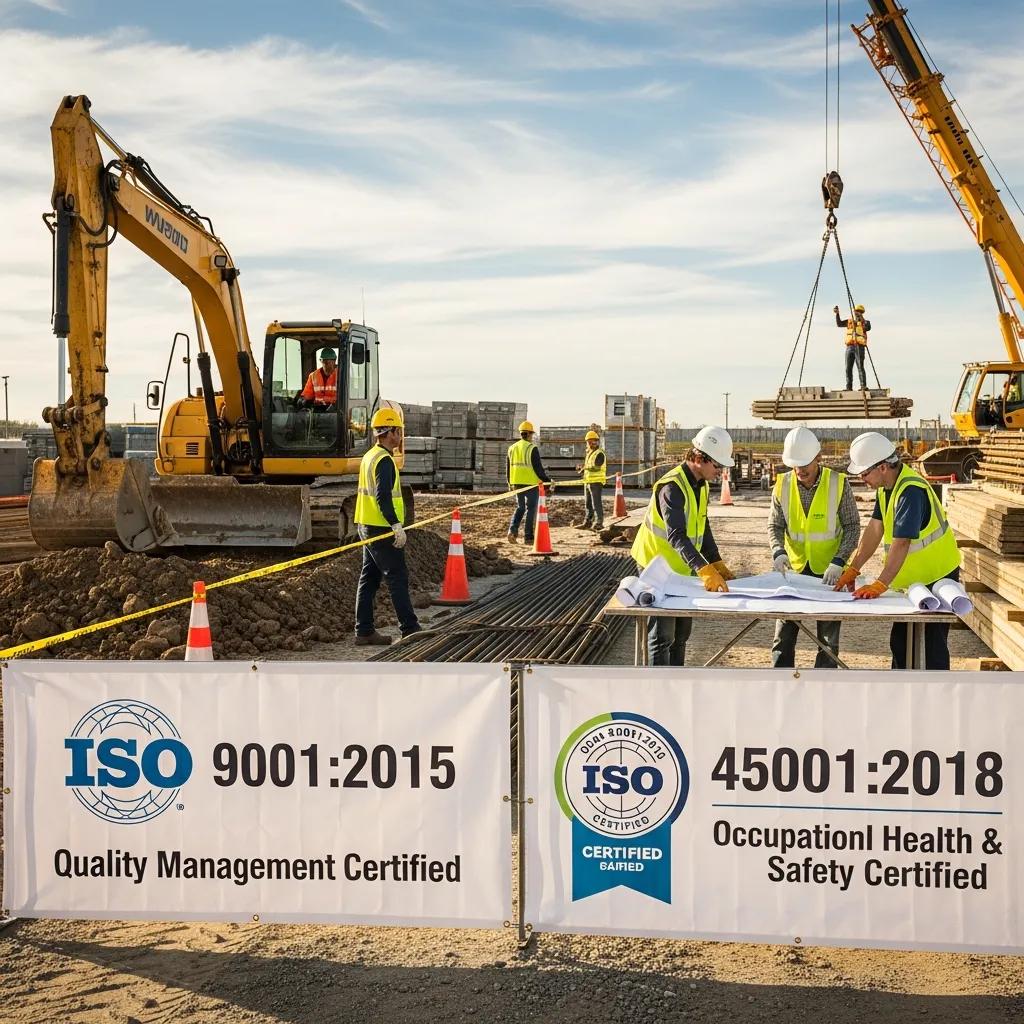
ISO Certification for Construction & Engineering: A Practical Guide to Quality, Safety, and Environmental Compliance
ISO certification formally shows that a company’s management systems meet international expectations for quality, safety, or environmental performance. For construction and engineering firms, that recognition lowers project risk, helps meet regulatory requirements, and strengthens bids. This guide explains how ISO 9001, ISO 14001, and ISO 45001 apply in real project settings, how to put practical controls in place on site and across the supply chain, and how AI-assisted auditing is changing the certification lifecycle. You’ll find clear requirements, implementation steps for QMS, EMS, and OHS systems, and how accredited bodies help with readiness, audit automation, and certificate management. Keywords such as construction quality, engineering standards, ISO certification for construction, and AI-driven auditing are used purposefully to help discovery and real-world adoption.
ISO Certification for Construction: A Guide to Compliance
ISO certification is an independent confirmation that an organization’s management system meets a specific ISO standard. Achieving certification requires documented processes, internal controls, and external audits. The standards create repeatable requirements for process control, risk management, and continual improvement so teams reduce defects, increase safety, and meet client and regulatory expectations. In construction and engineering, that translates to clearer contract performance, fewer change orders, and stronger evidence of capability when bidding complex projects. The sections that follow unpack the standards most relevant to the sector and show how they translate into day-to-day site practices.
Practically speaking, ISO delivers more competitive tenders, lower rework, and simpler regulatory compliance. Those results come from documented procedures, defined responsibilities, and measurable objectives that suppliers and contractors can follow. Consistency across multi-contractor jobs reduces coordination friction and disputes — a big advantage on complicated engineering scopes. The next subsection shows how ISO drives quality and compliance on projects in tangible ways.
How Does ISO Certification Enhance Quality and Compliance in Construction and Engineering?
ISO improves quality and compliance by standardizing key activities: document control, inspection routines, and corrective-action workflows so work is repeatable and auditable. Clear procedures — like revision control for drawings, inspection checklists, and supplier acceptance criteria — lower defect rates and help teams meet contract specifications consistently. Regular audits and management reviews expose systemic issues and create corrective actions that feed continual improvement, resulting in fewer defects, smaller punch lists, and higher client satisfaction. For example, routine material verification and traceability checkpoints reduce failed inspections and speed handovers. With that context, we can compare the standards that focus on quality, environment, and safety.
Which ISO Standards are Most Relevant to Construction and Engineering Industries?
The primary standards for the sector are ISO 9001 for quality management, ISO 14001 for environmental management, and ISO 45001 for occupational health and safety. Other standards, such as ISO/IEC 27001 for information security or the emerging ISO/IEC 42001 for AI management, can be relevant where projects handle sensitive data or integrate AI systems. Mapping standards to specific risks helps firms choose the right certification path for tender requirements, regulatory needs, and internal priorities. Next we’ll look specifically at how ISO 9001 strengthens quality management on projects.
How Does ISO 9001 Certification Improve Quality Management in Construction and Engineering?
ISO 9001 requires a documented Quality Management System (QMS) that covers context analysis, leadership commitment, risk-based planning, operational controls, performance measurement, and continual improvement. In practice, that means clear specifications, inspection steps, and supplier controls that reduce variability and defects. Typical benefits include fewer nonconformities, more predictable schedules, stronger supply-chain performance, and better client outcomes measured through KPIs. Below we break down QMS elements and show how they deliver value across delivery and procurement.
Research supports measurable improvements in construction performance after adopting ISO 9001 QMS practices.
ISO 9000 QMS Impact on Construction Project Performance
This study surveys construction firms in Malaysia to compare performance between ISO 9000 certified and non‑certified companies, highlighting links between certified QMSs and project outcomes.
ISO 9000 certification and construction project performance:
The Malaysian experience, DJ Bryde, 2011
Below we compare core QMS components, the standard’s requirement, and concrete construction examples.
Each QMS element leads to practical construction improvements when implemented correctly.
| QMS Component | Requirement | Construction Example |
|---|---|---|
| Context & Interested Parties | Identify stakeholders and their requirements | Record client specifications, statutory inspections, and contractor roles |
| Documented Procedures | Control documents and records | Revision‑controlled drawings and inspection reports for installed systems |
| Operational Controls | Define and control core processes | Site inspection checklists, work permits, and hold‑point procedures |
| Supplier Evaluation | Set selection and monitoring criteria | Prequalification, incoming material checks, and supplier KPIs |
| Performance Evaluation | Monitor KPIs and perform internal audits | Track defect rates, on‑time delivery, and corrective action closure |
This comparison shows which QMS elements most directly reduce defects and improve predictability. With these building blocks, firms can roll out ISO 9001 in phased, practical steps that align with existing project controls.
What are the Key Requirements of ISO 9001 for Construction Firms?
Key ISO 9001 requirements include defining context and stakeholder needs, securing leadership commitment, setting quality objectives, providing resources, controlling operations, evaluating performance, and driving continual improvement through corrective actions. On construction sites, that means mapping statutory inspection points, ensuring management backs QA resources, standardizing installation and commissioning processes, and keeping document control to prevent work from outdated drawings. Supplier evaluation reduces material‑related rework. Together, these elements create a predictable delivery environment that cuts claims and builds client confidence.
How Does ISO 9001 Benefit Engineering Project Delivery and Supply Chains?
ISO 9001 improves coordination across design, procurement, and construction, reducing RFIs and shortening commissioning timelines through planned quality checks. For supply chains, the standard enforces prequalification, incoming inspection, and supplier KPI monitoring that reduce late deliveries and defects. Measurable outcomes include lower nonconformity rates, faster issue resolution, and stronger tender competitiveness because clients can see documented QMS results. As firms embed these practices, they gain clearer metrics for continuous improvement and better alignment with subcontractors and vendors.
Beyond process gains, ISO 9001 often strengthens market positioning and internal self‑assessment capability.
ISO 9001 Certification for Construction Project Management
Adopting ISO 9001 enables firms to market their services more effectively while also providing a framework to internally audit and address gaps in delivery capacity.
Quantifying the impact of ISO 9001 standard on the project and engineering management and success factors;
A case of construction industry, AA Khatatbeh, 2023
Why is ISO 45001 Certification Critical for Construction Safety and Occupational Health?
ISO 45001 provides a structured Occupational Health and Safety (OHS) framework that identifies hazards, assesses risk, and implements controls to prevent workplace injuries and illnesses. It combines hazard identification, risk assessment, worker participation, incident investigation, and management review so that controls are proactive rather than only reactive. Outcomes include fewer incidents, better regulatory alignment, and greater confidence from contractors and insurers. Embedding OHS into management systems protects workers and keeps projects on schedule and on budget.
Understanding the standard’s core elements shows how it supports on‑site safety programs and cultural change.
ISO 45001’s emphasis on consultation and systematic hazard control translates directly into day‑to‑day site tools and measurable performance monitoring.
What are the Occupational Health and Safety Standards under ISO 45001?
Core ISO 45001 requirements cover hazard identification and risk assessment, legal compliance checks, operational controls, emergency preparedness, incident investigation, and worker participation. Applied to construction, these become fall‑protection systems, permit‑to‑work procedures for confined spaces, lockout/tagout for energized equipment, and structured incident reporting. Worker consultation helps ensure controls are practical and followed, while training and competence records support consistent application across multi‑contractor sites. The result is an OHS system that reduces exposure to common construction hazards and builds a safety‑first culture.
These controls reduce incidents and create the data needed to track safety improvements over time.
How Does ISO 45001 Reduce Risks and Prevent Accidents on Construction Sites?
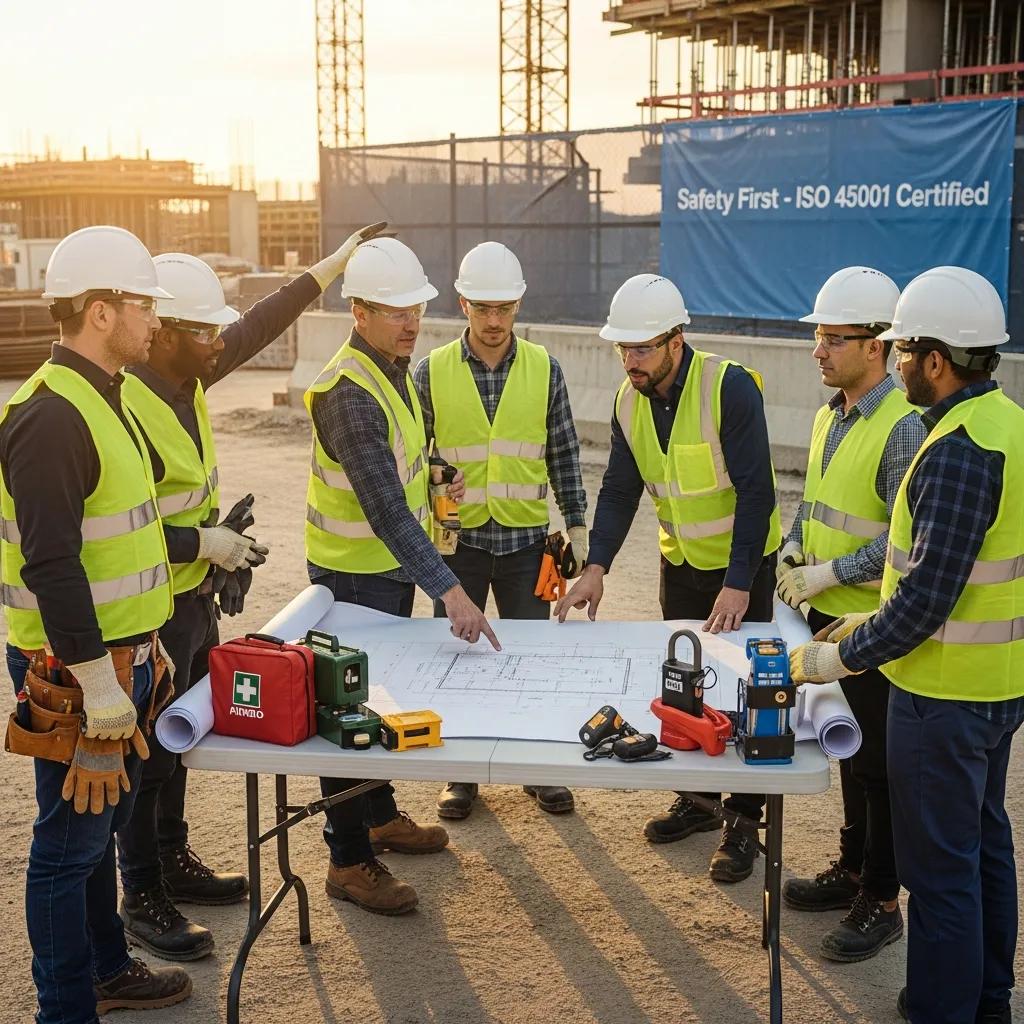
ISO 45001 reduces risk through preventive controls, targeted training, and continuous monitoring that surface hazards before they cause harm. Tools like pre‑task risk assessments, daily toolbox talks, and near‑miss reporting help teams detect and fix issues early, lowering incident rates. Regular audits and corrective actions close gaps quickly, and integrating contractor management ensures measures extend to subcontractors and temporary labor. Organizations that adopt ISO 45001 commonly report fewer lost‑time incidents and improved readiness for inspections.
How Does ISO 14001 Certification Support Environmental Management in Engineering and Construction?
ISO 14001 defines an Environmental Management System (EMS) that identifies environmental aspects, sets objectives, controls operations, and monitors performance to reduce pollution, waste, and resource use. The standard encourages lifecycle thinking, regulatory alignment, and continual improvement so projects avoid fines, minimize delays, and limit environmental harm. On construction sites, practical results include improved waste handling, reduced sediment runoff, and lower material waste through smarter procurement. The following subsections outline sustainable practices promoted by ISO 14001 and how engineering teams can set EMS objectives and KPIs.
Academic work illustrates how ISO 14001 is applied to construction EMSs and the benefits firms can realize.
ISO 14001 Environmental Management in Construction
This paper examines environmental management systems and the ISO 14001 standard as applied to construction, including a case study of a certified firm and practical EMS measures.
Environmental management systems and ISO 14001 certification for construction firms, C Hendrickson, 2004
Below we compare common environmental practices with the impacts they address and implementation examples.
Construction projects use concrete practices to meet EMS objectives and compliance obligations.
| Practice | Environmental Impact Addressed | Implementation Example |
|---|---|---|
| Waste Segregation | Reduces landfill volume and contamination | On‑site sorting stations and recycling vendor contracts |
| Erosion & Sediment Controls | Prevents sediment runoff to waterways | Silt fences, sediment basins, and stabilized access roads |
| Material Selection | Lowers embodied carbon and toxicity | Specify low‑VOC products and recycled aggregates |
| Emissions Controls | Reduces air and noise pollution | Dust suppression and selecting low‑emission plant |
This table shows how specific practices tie to measurable outcomes that satisfy stakeholders and regulators.
What are Sustainable Practices Promoted by ISO 14001 in Construction Projects?
ISO 14001 promotes source reduction, on‑site segregation, erosion control, lifecycle material assessment, and emissions management to shrink a project’s environmental footprint. Practical measures — such as segregated waste streams, lower‑impact material procurement, and sediment controls — cut remediation costs and disposal fees while improving resource efficiency and community relations near work zones. Clear EMS objectives and KPIs make it easier for engineering teams to track progress and demonstrate results.
Putting an EMS into practice requires measurable targets and routine monitoring, which we cover next.
How Does ISO 14001 Help Engineering Firms Manage Environmental Impact?
ISO 14001 helps firms translate environmental goals into action by setting objectives, performance indicators, monitoring programs, and supplier criteria that influence design and procurement. Lifecycle thinking guides material choices and maintenance specifications that reduce long‑term impacts, while supplier environmental criteria ensure upstream practices support project goals. Routine inspections, emissions checks, and waste tracking produce management‑review data so teams can adjust controls and show compliance — a clear advantage when sustainability is part of tender evaluation.
With EMS basics covered, the next section explores how AI‑driven auditing is reshaping ISO certification and compliance.
In What Ways Does AI-Driven ISO Auditing Transform Certification for Construction and Engineering Firms?
AI‑driven auditing accelerates document review, spots anomalies in large datasets, and produces predictive risk models that help auditors focus on high‑impact issues — improving speed and accuracy. Natural language processing speeds contract and drawing reviews, pattern detection flags trends across inspection records, and continuous dashboards surface out‑of‑spec signals before they escalate. For construction and engineering, these capabilities mean quicker readiness checks, prioritized corrective actions, and near‑real‑time supplier monitoring. The table below compares traditional, AI‑driven, and hybrid audit approaches across key dimensions.
This comparison highlights where AI adds measurable value and how firms can combine it with human expertise.
| Audit Approach | Time | Accuracy | Continuous Monitoring | Cost Impact |
|---|---|---|---|---|
| Traditional Audit | Periodic, often several days on site | Effective for sampled evidence | Limited between visits | Higher due to travel and manual processing |
| AI-Driven Audit | Faster data processing, remote checks | Stronger pattern and anomaly detection | Ongoing dashboards and alerts | Lower operational cost through automation |
| Hybrid (AI + Human) | Rapid prep, focused onsite verification | Best balance of context and detection | Continuous with human oversight | Optimized cost with higher effectiveness |
AI and hybrid approaches reduce audit time and cost while improving detection and monitoring — a major benefit for multi‑site projects and complex supply chains.
How Does AI Enhance Efficiency and Accuracy in ISO Compliance Audits?
AI automates repetitive tasks like scanning thousands of documents, cross‑checking drawings with specs, and extracting evidence from inspection logs so auditors can apply judgment where it matters. NLP speeds contract and procedure reviews while anomaly detection surfaces trends manual sampling can miss, improving overall accuracy. Pairing automated extraction with human validation shortens audit cycles and reduces missed nonconformities. In practice, AI tools prioritize issues for auditors so field time is used for verification and remediation rather than paperwork.
Beyond efficiency gains, AI’s predictive models and monitoring provide a proactive layer to compliance management.
What Predictive Analytics and Continuous Monitoring Capabilities Does AI Provide?
Predictive analytics flag high‑risk sites, activities, or suppliers by analyzing historical inspection data, incident reports, and supplier metrics to produce risk scores and early warnings. Continuous dashboards aggregate KPIs — defect trends, supplier lead times, safety incidents — and send alerts on out‑of‑spec trends so teams can intervene early. These capabilities reduce surprise nonconformities and focus resources where they cut risk most, for example through targeted supplier audits or remediation at at‑risk sites. Predictive outputs are most reliable when reviewed regularly by experienced auditors who refine thresholds and validate findings.
Next we show how a certification body combines AI and managed services to deliver certification and ongoing certificate management for clients.
After outlining AI benefits, it’s useful to see how an accredited certification body operationalizes these tools for construction and engineering clients.
What is Stratlane Certification’s Process and Value Proposition for ISO Certification?
Stratlane Certification is an accredited body offering ISO certification services with AI‑enhanced audit tools to improve efficiency and audit focus for construction and engineering clients. Our end‑to‑end process typically follows a clear sequence: scope and quote, readiness assessment and gap remediation, AI‑assisted audits combined with experienced auditors, certification issuance, and ongoing certificate management through a searchable certificate database. The combined value is accredited oversight, AI‑prioritized audit focus, and an easy certificate platform for validity checks and downloads — simplifying marketing, client verification, and compliance routines.
The next subsection explains client benefits from our AI‑driven approach and how firms can request quotes or schedule audits.
How Does Stratlane’s AI-Driven Audit Process Benefit Construction and Engineering Clients?
Stratlane’s AI‑driven audits shorten preparation time, surface the highest‑priority nonconformities, and enable focused on‑site verification instead of broad sampling — reducing disruption to project schedules. Our accredited auditors operate across 29+ countries and pair domain experience with AI outputs to deliver actionable findings and pragmatic corrective actions for construction and engineering contexts. After certification, our certificate database makes validity checks and marketing downloads simple, so firms can demonstrate compliance quickly. These outcomes cut audit time while preserving rigorous standards and global recognition.
The final operational step is explaining how to get a quote, book an audit, and manage certificates through Stratlane.
How Can Firms Get a Quote, Schedule Audits, and Manage Certificates with Stratlane?
To engage, provide the standards you want (for example ISO 9001 or ISO 14001), the sites in scope, and any industry specifics. That lets Stratlane prepare an accurate quote and audit plan — we work with SMEs, large firms, and academic organizations across the US, EU, and UK. After scoping, you can book audits and leverage AI‑assisted readiness checks that accelerate assessment; accredited auditors then verify compliance and issue certificates when requirements are met. Stratlane’s certificate database supports validity checks and downloads so certified firms can manage credentials for marketing or client verification. Typical next steps are to request a formal quote and schedule your audit to begin readiness and certification.
- Provide Scope and Locations: Tell us the standard(s) and sites to get an accurate assessment.
- Receive a Quote: Stratlane issues a scoped proposal and audit plan based on your inputs.
- Book Your Audit: Schedule the AI‑enhanced readiness check and auditor verification.
These steps clarify timelines and documents needed to move from readiness to certification and ongoing certificate management.
Frequently Asked Questions
What are the costs associated with obtaining ISO certification for construction and engineering firms?
Costs vary by company size, operational complexity, and which ISO standards you pursue. Expect initial consultancy or training, internal audit preparation, and fees for the certification audits. Ongoing costs include surveillance visits and continual improvement activities. Budget for both the upfront implementation and the recurring effort needed to maintain certification.
How long does the ISO certification process typically take for construction firms?
Timelines depend on readiness and complexity. A typical range is three to six months from initial assessment to certificate issuance. Firms with existing management systems can move faster; those starting from scratch may need extra time for training and procedure rollout.
What role does employee training play in achieving ISO certification?
Training is essential. It ensures staff understand standards, processes, and their responsibilities within the management system. Training builds the culture and capability required for consistent application and helps reduce nonconformities during audits.
Can small construction firms benefit from ISO certification?
Yes. Small firms gain credibility, operational clarity, and a competitive edge in tenders. ISO certification demonstrates commitment to quality, safety, and environmental management and can help streamline work, reduce waste, and improve project outcomes.
What are the common challenges faced during the ISO certification process?
Typical challenges include resistance to change, limited internal expertise, and the effort required to document and maintain processes. The initial time and financial investment can also be a hurdle. Address these by involving staff early, investing in targeted training, and using external advisers if needed.
How often do construction firms need to undergo ISO audits after certification?
After certification, firms usually have annual surveillance audits to confirm ongoing compliance and a full re‑certification every three years. Maintaining active management review and continuous improvement makes those audits routine and less disruptive.
Conclusion
ISO certification gives construction and engineering firms a structured way to improve quality, safety, and environmental performance — and deliver better project outcomes. Standards like ISO 9001, ISO 14001, and ISO 45001 help teams standardize processes, reduce risk, and demonstrate compliance. Working with an accredited body such as Stratlane can simplify the path to certification and provide ongoing support for continuous improvement. When you’re ready to move toward stronger, more predictable delivery, explore our ISO certification services and start the conversation.