
Comprehensive Environmental Management: EIA Meets ISO 14001

Integrating EIA and ISO 14001 for complete environmental management — an AI-driven route to certification
Environmental Impact Assessment (EIA) and ISO 14001 play different but complementary roles: EIA assesses project or plan-level environmental effects, while ISO 14001 sets the requirements for a systematic Environmental Management System (EMS). When you integrate EIA with ISO 14001, impact identification, mitigation planning and monitoring feed directly into a formal management system that supports continual improvement and regulatory readiness. This guide lays out why that integration delivers measurable environmental performance gains, how AI-accelerated auditing tightens the loop, and the practical steps organisations should take to implement an integrated approach. You’ll find a clear roadmap covering strategic benefits, AI audit capabilities, a phased implementation checklist, target audiences and concise answers to common technical questions. We use terms like impact assessment, EIA lifecycle management, ISO 14001 environmental aspects and AI-driven environmental audits to connect the theory with practical actions that support compliance and sustainability goals.
Streamlining EIA and ISO 14001 Integration with AI Auditing
Bringing EIA and ISO 14001 together creates a single, coherent framework where EIA outputs directly inform EMS design, objectives and controls — improving both environmental performance and compliance. The logic is straightforward: EIA establishes baseline conditions, identifies impacts and recommends mitigations; ISO 14001 turns those findings into processes, roles and monitoring regimes that sustain continual improvement. The combined approach reduces duplicated work, provides clearer evidence for regulators and strengthens risk management by aligning project-level findings with organisational policy. Organisations that unify EIA and ISO 14001 shorten reporting cycles and make monitoring data usable within management review and operational controls, so they can respond faster when environmental deviations occur.
The structured framework of ISO 14001 reinforces this connection — research highlights its main components and how they support environmental management.
Integrating ISO 14001 EMS with Environmental Impact Assessment
ISO 14001 EMS [7] is organised into five core areas: environmental policy; planning; implementation and operation; checking and corrective action; and management review. The study referenced below summarises an environmental impact assessment for the Sultanate of Oman and related forecasting models for CO2 emissions.
Forecasting models based CO2 emission for
Sultanate of Oman, J Yousif, 2017
This integration yields measurable advantages that decision-makers can weigh quickly during planning.
The table below summarises common integration benefits and expected outcomes to help with fast decision-making.
| Integration Aspect | Characteristic | Expected Outcome |
|---|---|---|
| Environmental performance | Aligns mitigation with EMS objectives | Clearer KPIs and lower residual impacts |
| Regulatory efficiency | Consolidates reporting and evidence | Faster permitting and smoother compliance audits |
| Resource efficiency | Reduces duplicated monitoring and documentation | Lower operational costs and audit burden |
| Risk management | Embeds EIA findings into risk registers | Proactive controls and fewer incidents |
That comparative view shows how assessment outputs become verifiable system-level controls for stakeholders and auditors.
What are the environmental and sustainability benefits of EIA–ISO 14001 integration?
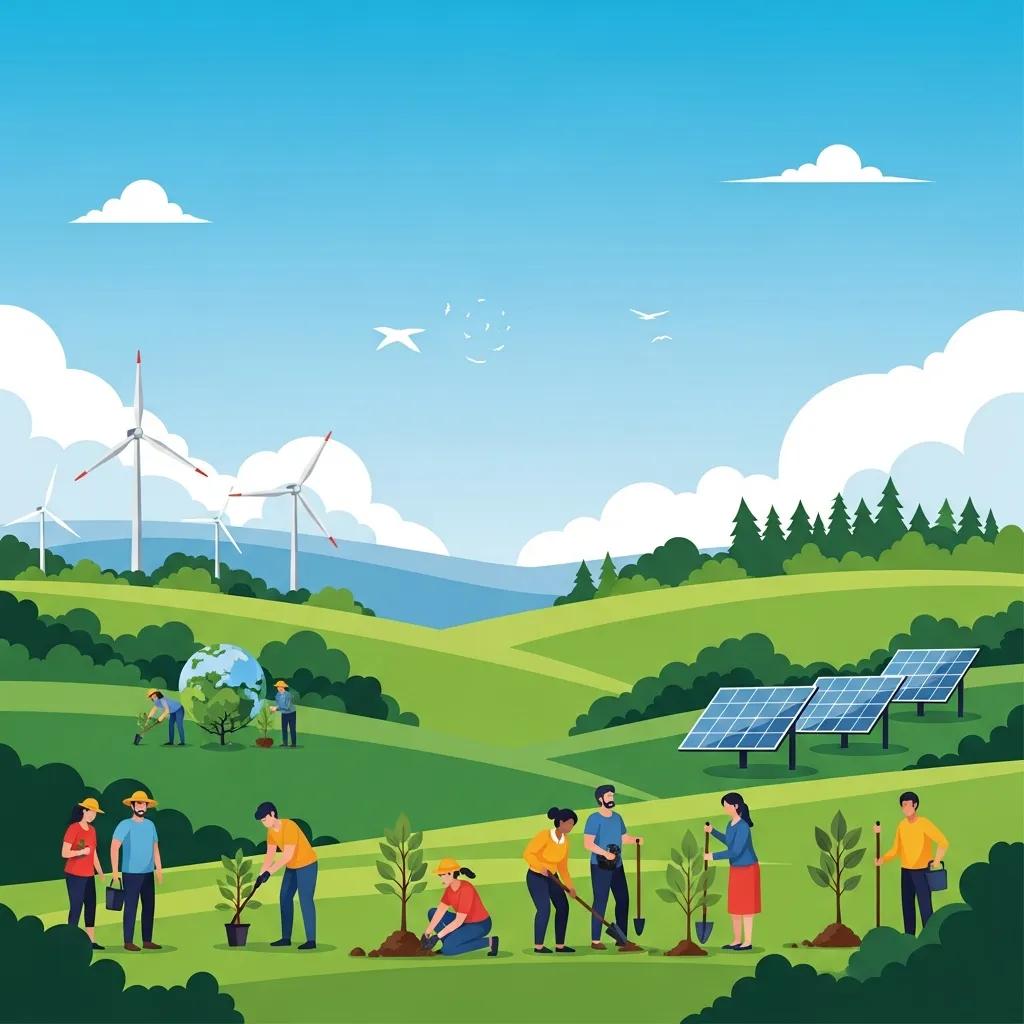
Integration improves outcomes by turning EIA recommendations into operational controls, measurable objectives and monitoring programmes within the EMS. In practice, EIA baseline studies and impact identification supply the evidence base for ISO 14001 requirements — especially when determining environmental aspects and setting objectives. Expected results include better sequencing of mitigation measures, targeted monitoring that reveals compliance trends, and EIA-derived indicators used as EMS KPIs for continual improvement. Linking EIA follow-up programmes directly into EMS processes closes the loop between prediction and day-to-day performance, producing more consistent environmental results over time.
Those improvements also make regulatory communication clearer and strengthen decision-making when organisations need to demonstrate stewardship to stakeholders.
How does integration streamline regulatory compliance and risk management?
A unified EIA–ISO 14001 approach cuts redundancy by aligning EIA monitoring with the legal and other requirements captured in ISO 14001, simplifying reporting and audit readiness. ISO 14001 requires identification of applicable obligations and operational controls, which can be populated from EIA permit conditions and follow-up commitments. The result is a single risk register that incorporates EIA-identified impacts and EMS controls, enabling prioritised mitigation and a clearer audit trail. This consolidation shortens inspection cycles, reduces time reconciling separate reports and improves the organisation’s ability to show compliance during management review and external audits.
By formalising EIA follow-up as routine EMS activities, teams move from reactive correction to proactive prevention — a shift that strengthens compliance and builds stakeholder confidence.
How does Stratlane's AI-driven auditing improve EIA and ISO 14001 integration?
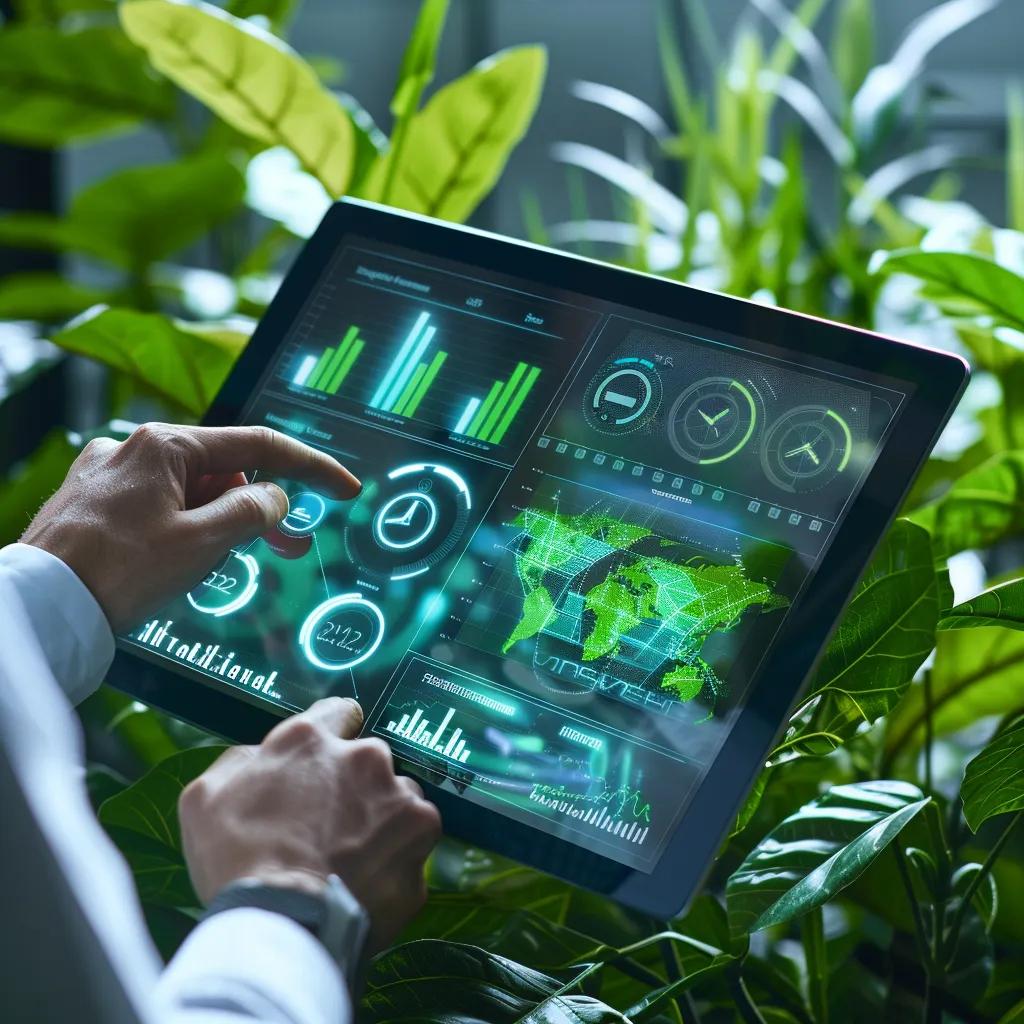
Stratlane Certification uses AI-driven auditing to speed evidence review, automate conformity checks and surface predictive risk insights that support both EIA follow-up and EMS decision-making. The core mechanism is automated data ingestion and analysis: monitoring datasets and EIA outputs are processed to highlight anomalies, map evidence to ISO 14001 clauses and flag gaps for corrective action. The practical benefits are shorter audit cycles, more reliable findings and better prioritisation of mitigation actions — helping organisations move faster from EIA recommendations to certified EMS controls. Understanding these AI capabilities helps you see how an accredited certification body using machine-assisted audits can deliver robust, defensible certification outcomes.
The potential for AI to transform sustainability auditing is already the subject of academic and practical study.
AI-Powered Smart Auditing for Sustainability
AI is reshaping audit practice, creating new opportunities for efficiency, accuracy and deeper insight in both financial and non-financial reporting. This study looks at AI’s role in sustainability auditing and explores “Smart Auditing” — how AI-powered tools can improve the effectiveness and reliability of sustainability assurance.
AI-driven and data-intensive auditing: Enhancing sustainability and intelligent assurance, O Senturk, 2025
Below is a concise mapping of common AI features to audit tasks and business outcomes to illustrate these capabilities.
| AI Capability | Audit Function | Business Outcome |
|---|---|---|
| Automated data ingestion | Consolidate monitoring and EIA datasets | Less manual reconciliation and faster evidence assembly |
| Anomaly detection | Spot outliers in monitoring streams | Quicker identification of non-conformance |
| Predictive modeling | Forecast likely future excursions | Prioritise mitigations and preventive maintenance |
| Document pattern recognition | Map evidence to ISO clauses | More consistent audit evidence and fewer queries |
This mapping shows how AI functions translate into tangible audit efficiencies and higher-quality outputs, helping organisations align EIA findings with EMS requirements more reliably.
As an accredited certification body, Stratlane Certification applies these AI-enabled processes to accelerate audits, manage certificates across jurisdictions and support clients through quote-to-audit workflows. Our service model focuses on efficient AI-assisted audit tools, experienced auditors across Europe and the UK, and certificate management that helps organisations convert integration work into recognised certification.
In what ways does AI change environmental auditing processes?
AI changes environmental auditing by automating repetitive checks, extracting structured insights from unstructured reports and applying anomaly detection to continuous monitoring data. The underlying methods include natural language processing to parse EIA documents, machine learning to identify patterns and rule-based checks to match evidence against ISO 14001 requirements. That lets auditors concentrate on high-value interpretation, corrective action design and stakeholder engagement instead of manual reconciliation. The result is better audit accuracy and shorter cycle times because AI surfaces likely non-conformities and risk hotspots for targeted human review.
Those gains free auditors to validate complex mitigation effectiveness rather than spending time on clerical tasks, improving the quality of audit conclusions and management decisions.
How do predictive AI insights support proactive environmental management?
Predictive AI models combine historical monitoring data with EIA-derived parameters to forecast potential environmental excursions and prioritise mitigation before incidents occur. Models produce risk scores by combining emissions trends, operational schedules and environmental thresholds to estimate probability and consequence, then generate ranked actions for management. For example, forecasts can flag likely pollutant excursions tied to specific operational regimes, enabling pre-emptive maintenance or operational adjustments. The business value is preventing non-compliance, lowering incident response costs and giving management forward-looking indicators for review instead of relying only on retrospective data.
The wider implications of AI in environmental risk management — especially its effects on stakeholder trust and decision-making — remain an active area of research.
AI for Environmental Risk Management & Impact Simulation
As AI becomes more embedded in sustainability governance, understanding the social and ethical contexts that shape its use is essential. This study examines Perceived Environmental Responsibility (PER) as a factor that influences stakeholder trust, AI adoption and the performance of AI-enabled risk management systems in sensitive decision-making. Although AI offers predictive analytics, real-time monitoring and impact simulation, its effectiveness depends on how stakeholders interpret an organisation’s values and intentions.
THE ROLE OF PERCEIVED ENVIRONMENTAL RESPONSIBILITY IN ARTIFICIAL INTELLIGENCE-ENABLED RISK MANAGEMENT AND SUSTAINABLE DECISION …, S Sarker, 2024
By folding predictive insights into the EMS, organisations move from reacting to incidents toward preventing them — better aligning EIA expectations with operational reality and improving long-term environmental performance.
What are the key steps to implementing integrated EIA and ISO 14001 systems?
A practical implementation roadmap has four phases: assessment and gap analysis; system development and documentation; implementation with internal audits; and certification with continual improvement. Each phase converts EIA outputs into EMS elements — mapping aspects, controls and monitoring — then tests and certifies the combined system. A phase-based approach ensures deliverables and evidence are produced methodically so certification readiness is demonstrable to external auditors. Organisations that introduce AI tools into these phases can accelerate data mapping, evidence collation and internal audit cycles while preserving governance and traceability.
The numbered list below provides a quick, featured-snippet style checklist for reference.
- Phase 1 — Assessment: Map EIA outputs to ISO 14001 clauses and score EMS maturity.
- Phase 2 — System Development: Draft procedures, objectives and monitoring plans aligned to EIA findings.
- Phase 3 — Implementation & Internal Audit: Deploy controls, train staff and run internal audits to verify evidence.
- Phase 4 — Certification & Continual Improvement: Engage an external audit, obtain certification and use reviews to refine controls.
This stepwise plan gives teams a concise action list that can be adapted to project complexity and organisational scale.
| Phase | Key Activities | Deliverables |
|---|---|---|
| Phase 1: Assessment | Map EIA outputs to EMS elements; identify legal requirements | Gap analysis report; risk register |
| Phase 2: System Development | Develop procedures, objectives, monitoring protocols | EMS manual; documented controls |
| Phase 3: Implementation | Implement controls, conduct internal audits, train personnel | Internal audit reports; corrective action plans |
| Phase 4: Certification | Prepare for external audit, demonstrate evidence, certify | Certification evidence package; management review records |
The table makes clear which outputs are expected at each stage so teams can align resources and timelines efficiently.
An AI-assisted evidence-mapping audit fits naturally into Phase 4, shortening evidence review and improving audit clarity — consider quoting an AI-driven audit to validate integrated systems quickly.
How to conduct an initial assessment and gap analysis for integration?
Start by mapping EIA outputs — baseline studies, impact matrices and mitigation measures — against ISO 14001 clauses such as context, aspects and impacts, legal requirements and monitoring. Use a diagnostic checklist and maturity scoring to prioritise remediation where documentation, monitoring or responsibilities are weakest. Typical gap categories include incomplete control documentation, inconsistent monitoring frequency and unclear role assignments for EIA follow-up. A prioritisation matrix that weighs regulatory risk, environmental consequence and ease of remediation helps focus limited resources on the most material gaps first.
This diagnostic phase establishes the roadmap for system development and lets you draft targeted procedures and monitoring in the next stage.
What are best practices for system development, documentation and internal audits?
Structure documentation around ISO 14001 clauses with direct links to EIA outputs. Define measurable environmental objectives drawn from EIA indicators, and create operational controls that reference mitigation measures. Maintain a register of environmental aspects, monitoring plans and responsibilities with version control to preserve traceability. Schedule regular internal audits using checklists that incorporate EIA follow-up items, and train staff so they understand how EIA findings translate into day-to-day controls. Where appropriate, use AI tools to automate evidence collection and flag areas for auditor attention — that lets internal auditors focus on effectiveness and corrective actions.
These practices make the integrated system auditable, resilient and capable of demonstrating continual improvement during management review.
| Development Phase | Recommended Documentation | Internal Audit Focus |
|---|---|---|
| Procedures | EMS manual, operational controls | Evidence linkage to EIA mitigation |
| Monitoring | Monitoring plans, data logs | Data integrity and anomaly handling |
| Training | Competency matrix, training records | Staff awareness and role compliance |
These templates help organisations build documentation that operational teams and auditors can use to validate successful integration.
Who benefits most from integrating EIA with ISO 14001 certification?
Organisations with significant environmental footprints or heavy regulatory oversight benefit most from integrating EIA with ISO 14001. The combined approach provides a unified way to assess, mitigate and manage impacts while improving reputation and operational resilience. Sector-specific benefits emerge: industries with complex permitting regimes can speed approvals; organisations with heavy monitoring needs reduce reporting burdens through consolidated programmes. The approach scales — SMEs can adopt simpler processes while larger groups embed system-level risk management. Across sizes, integration signals to stakeholders that environmental stewardship is systematic and certified.
Below are short sector vignettes that show where integration tends to add most value.
- Construction and infrastructure: Clear EIA follow-up embedded in the EMS speeds permitting.
- Energy and utilities: Predictive monitoring helps reduce downtime and avoid environmental incidents.
- Manufacturing: Operational controls cut emissions and support supply-chain compliance.
- Mining and extractives: Strong baselines and monitoring programmes lower environmental liabilities.
Which industries and organisations gain from comprehensive environmental management?
Sectors with high environmental footprints or heavy permitting obligations gain most from integrated EIA–EMS approaches because they must demonstrate both project-level impact control and system-level governance. Integration turns EIA commitments into routine operational checks that regulators and financiers can audit reliably. Construction, energy, manufacturing and infrastructure projects often see measurable benefits such as faster approvals, fewer compliance incidents and clearer stakeholder reporting. Organisations facing supply-chain certification pressures also gain from the combined assurance of impact assessment and a certified management system.
Understanding these sector drivers helps organisations decide which EIA outputs to operationalise first within their EMS.
How does integration support SMEs, corporations and academia?
Integration can be tailored to different organisation types. SMEs gain simpler compliance paths and cost predictability; corporations secure system-level risk management and stakeholder assurance; academic institutions benefit from structured demonstration projects and richer data for research. Practically, SMEs adopt focused monitoring and lean documentation, corporations implement comprehensive controls and supply‑chain oversight, and academia uses integrated programmes as testbeds for new monitoring methods. Each type gets relevant value — lower administrative burden for SMEs, regulatory assurance for corporations and robust evidence for research.
These tailored approaches help each organisation balance effort and assurance when implementing integration.
What are common questions about EIA, ISO 14001 and AI integration?
Practitioners frequently ask how EIA feeds an EMS, what role AI can play, and whether certification is affected when AI tools are used in audits. Short, direct answers clarify relationships, practical limits and governance expectations so organisations can make informed choices. The Q&A below is formatted for quick reference and FAQ schema readiness, covering mapping, AI use-cases and certification implications.
- How does EIA inform EMS design and objectives? EIA supplies baseline studies, identified impacts and recommended mitigations that populate the EMS aspect register, monitoring plans and environmental objectives. Those outputs form the evidence base for ISO 14001 requirements and feed continual improvement cycles.
- Can AI replace human auditors in environmental certification? No. AI augments auditors by automating evidence processing, detecting anomalies and scoring predictive risks, but human experts remain essential for judgement, interpretation and validation of mitigation effectiveness.
- Does using AI change certification validity? No. AI-driven audit tools do not alter certification criteria. AI is a tool for analysing evidence and improving efficiency. Accredited certification bodies may use AI in audits provided human auditors retain responsibility for findings and certification decisions.
How does EIA inform the ISO 14001 Environmental Management System?
EIA outputs — baseline data, impact matrices, mitigation measures and monitoring protocols — map directly to ISO 14001 elements such as identification of aspects and impacts, planning actions to address risks and opportunities, and operational controls. The mechanism is explicit mapping: EIA monitoring programmes supply the data streams used to verify controls and measure progress against environmental objectives. Documentation should link each EIA commitment to an EMS procedure, monitoring metric and responsible role so audits can trace compliance from project conditions to management review. That mapping ensures EIA follow-up becomes part of continual improvement rather than an isolated compliance activity.
A clear mapping table helps auditors and managers confirm that EIA commitments have become sustained EMS processes.
What role does AI play in enhancing environmental impact assessments and audits?
AI helps by cleansing data, detecting patterns, supporting predictive models and running automated conformity checks, speeding and standardising evidence evaluation while highlighting areas that need expert attention. This approach requires strong data governance: models depend on high-quality inputs, transparent logic and human validation to keep outcomes explainable and defensible. Use-cases include automated trend detection in monitoring networks, rapid cross-referencing of EIA reports against permit conditions and forecasting likely non-compliance windows for preventive action. While AI boosts efficiency and insight, governance and human oversight are essential to manage bias, meet regulatory expectations and preserve audit defensibility.
These practical caveats ensure AI is introduced responsibly — protecting audit quality and stakeholder trust.
For organisations ready to validate an integrated EIA–ISO 14001 system, Stratlane Certification offers accredited AI-assisted auditing, multi-country certificate management and a streamlined quote-to-audit workflow to convert integration work into certified outcomes — request a quote or schedule an AI-driven audit to begin the certification phase with AI-enhanced evidence mapping.
- Key integration benefits checklist: A short list to confirm readiness before you commission external audit support.
- Implementation readiness items: Ensure monitoring data quality, role assignments and linked documentation are in place.
- AI governance checklist: Verify data provenance, model explainability and human validation processes.
These practical lists help teams prepare for certification and maintain continuous improvement after accreditation.
This article explains the strategic rationale, AI-enabled mechanisms, implementation steps, target audiences and common questions about integrating EIA with ISO 14001. If you’re seeking an accredited partner that uses AI-driven audit tools, Stratlane Certification provides experienced auditors across Europe and the UK, multi-country certificate management and support to turn integration work into certified EMS recognition — contact us to request a quote or book an AI-driven audit and simplify certificate management.
Frequently Asked Questions
What are the main challenges organizations face when integrating EIA with ISO 14001?
Common challenges include aligning different team cultures, maintaining clear cross‑team communication and managing complex documentation. Organisations also often need to upskill staff on new processes and integrate data from disparate sources. Overcoming these hurdles requires a clear integration strategy, visible leadership support and a commitment to cross‑department collaboration to ensure a smooth transition.
How can organizations measure the success of EIA and ISO 14001 integration?
Measure success with targeted KPIs: improvements in environmental performance (for example, reduced emissions or waste), compliance rates and the efficiency of reporting and permitting processes. Regular internal audits and management reviews also indicate whether the integrated system is meeting objectives and driving continual improvement.
What role does stakeholder engagement play in the integration process?
Stakeholder engagement builds transparency and trust. Involving employees, regulators and local communities ensures their concerns and expectations feed into environmental management. That involvement often leads to more practical mitigations and increases the credibility of your environmental programme. Regular, structured communication and feedback loops keep stakeholders informed and supportive.
How does AI enhance the data collection process for EIA and ISO 14001?
AI streamlines data collection by automating aggregation and analysis of large datasets, including monitoring records and compliance logs. Machine learning can surface patterns and anomalies that would be time-consuming to find manually, letting teams focus on interpretation and action. In short, AI improves accuracy and speeds up the insights that inform environmental management.
What are the potential cost savings from integrating EIA with ISO 14001?
Integration can reduce costs by eliminating duplicate monitoring and reporting, lowering audit overhead and improving resource allocation. Better compliance reduces exposure to fines and incident response costs. Over time, these efficiencies translate into measurable operational savings and a more predictable compliance budget.
How can organizations ensure continual improvement after integration?
Maintain continual improvement by setting measurable objectives, monitoring performance regularly and running internal audits to identify enhancement opportunities. Engage employees in improvement activities and foster accountability. Leveraging AI for data analysis can highlight trends and inform strategic adjustments so the integrated system evolves with changing risks and regulatory requirements.
Conclusion
Integrating Environmental Impact Assessment with ISO 14001 gives organisations a streamlined way to improve environmental performance, compliance and operational efficiency. The synergy reduces duplication, embeds continual improvement and makes environmental stewardship part of everyday operations. With AI-driven auditing, organisations can accelerate certification and achieve more measurable outcomes. To discuss how Stratlane Certification can support your integration, request a quote or schedule an AI-driven audit today.