
The Global Impact of ISO Certification on Standardization

Why Global Standardization Matters: International Benefits and ISO Certification
Standardization is the deliberate process of creating shared technical specifications, rules, and practices so products, services, and processes behave consistently across borders. By aligning requirements and assessment methods, standards cut uncertainty, enable systems to interoperate, and create a stable foundation for trade, investment, and innovation. This guide shows how global standards support economic growth, improve interoperability, and streamline supply chains — and how ISO certification connects organizations to international markets and regulatory confidence. You’ll find clear explanations of how standards lower transaction costs, how interoperability works at technical and semantic levels, and practical benefits tied to ISO 9001, ISO 14001, ISO 27001, and ISO 42001. We also cover the growing role of AI-assisted auditing and sector-specific impacts for defence, SMEs, and academia, with actionable lists and examples to help decision-makers use standards strategically for market access and resilience.
Why Global Standardization Is Essential for Economic Growth

Global standards drive growth by lowering transaction costs, closing information gaps, and creating common rules that let companies scale and compete. Clear specifications and shared test methods reduce friction in cross-border trade and shorten time to market for exporters. When more firms adopt the same standards, regulatory uncertainty falls and investment becomes more attractive — which fuels innovation and productive specialization across industries. Together, these effects expand markets, enable economies of scale, and raise returns on R&D.
Standards also stop markets from fragmenting. They set measurable performance criteria and conformity procedures that buyers and regulators can rely on instead of bespoke inspections, which cuts verification costs. A predictable regulatory environment encourages sustained investment in technology and skills. These core benefits explain how standards open market access and simplify trade documentation for exporters and importers.
Meeting these international benchmarks is often a prerequisite for participating in global value chains and accessing higher‑value markets.
Standards, Value Chains and Market Access
Compliance with international standards is frequently required to enter global production networks. Firms in developing countries face many product and process requirements; failing to meet them can exclude businesses from profitable markets and raise competitive pressure.
How Standardization Boosts International Trade and Market Access
Standards smooth trade by aligning product specs, conformity assessment, and paperwork so goods and services are accepted across jurisdictions without repeated testing. When exporters follow recognized standards, customs and regulators can accept conformity evidence, cutting border delays and redundant inspections. Harmonized standards also enable mutual recognition agreements and simpler supplier qualification for multinational buyers. Practical examples include standardized test reports reducing port sampling and uniform labeling formats speeding customs clearance.
- Common specifications: Agreed product criteria reduce the need for country‑by‑country redesign.
- Conformity evidence: Shared assessment methods lower duplicate testing at borders.
- Documentation alignment: Standardized forms and labels speed customs processing.
These mechanisms increase predictability in cross‑border transactions and make it easier for businesses to scale internationally — which is why trade policy often highlights standardization as a core enabler of market access.
What Economic Advantages Follow from Adopting Global Standards?
Adopting global standards delivers measurable gains: lower costs, broader revenue opportunities, and reduced risk. Standards cut production and compliance expenses by providing common design and testing frameworks that reduce rework and enable mass production. Certification can unlock procurement opportunities or price premiums, creating new revenue paths. Standards also help manage regulatory and reputational risk by embedding repeatable processes for quality, safety, and environmental performance.
- Lower production costs through standardized designs and modular components.
- Greater export potential via recognized conformity evidence and market acceptance.
- Reduced regulatory risk and insurance exposure through standardised controls.
These benefits strengthen competitiveness and give firms a firmer base to invest in innovation. Next we explain how interoperability — the technical and semantic glue of standards — makes those gains possible across systems and organisations.
How Standardization Improves Interoperability in International Business
Standards improve interoperability by defining common interfaces, data formats, and governance practices that let diverse systems and teams work together across borders. Interoperability has multiple layers — technical (protocols and interfaces), semantic (shared vocabularies and data models), and organisational (aligned processes and governance) — and standards set the specifications that bring these layers into sync. When systems exchange data using standard protocols or organisations adopt the same management frameworks, integration costs fall and collaboration accelerates. That alignment supports multinational projects, digital trade, and cross‑border service delivery with fewer translation steps.
Because interoperability reduces friction in data exchange and system integration, it speeds partner onboarding and improves supply chain coordination. The sections below outline ISO’s role in technical compatibility and how interoperability strengthens cross‑border collaboration and data exchange.
How ISO Standards Ensure Technical Compatibility
ISO delivers widely accepted technical specifications manufacturers and software teams can implement to assure compatibility across components and systems. By defining interface parameters, file formats, tolerance ranges, and test methods, ISO reduces bespoke engineering and enables plug‑and‑play integration. For example, using an ISO data‑exchange format removes the need for custom parsers and shortens integration time between enterprise systems or industrial equipment.
- ISO specs create a common engineering language that lowers integration cost.
- Shared test methods give objective acceptance criteria across vendors.
- Technical compatibility speeds development cycles and reduces supplier lock‑in.
These technical standards pair with semantic standards — how data elements are named and interpreted — which improves automated processing and cross‑border collaboration for multinational operations.
How Interoperability Improves Cross‑Border Collaboration and Data Exchange
Interoperability enables consistent, machine‑readable data exchange that cuts manual reconciliation and accelerates decisions. Standardised protocols and semantic models remove format mismatches and translation errors, so teams can share project plans, compliance evidence, and logistics data without repeated conversions. Digital trade initiatives and industry consortia show how interoperable systems shorten procurement timelines and enable reliable analytics across global operations.
- Streamlined processes reduce time spent on data cleansing and integration.
- Faster partner onboarding lowers the operational cost of expanding supply networks.
- Consistent data models improve the reliability of aggregated analytics for risk management.
By lowering operational friction, interoperability creates a platform for scalable, resilient collaboration that supports international growth and innovation.
What Are the Core Benefits of ISO Certification Worldwide?
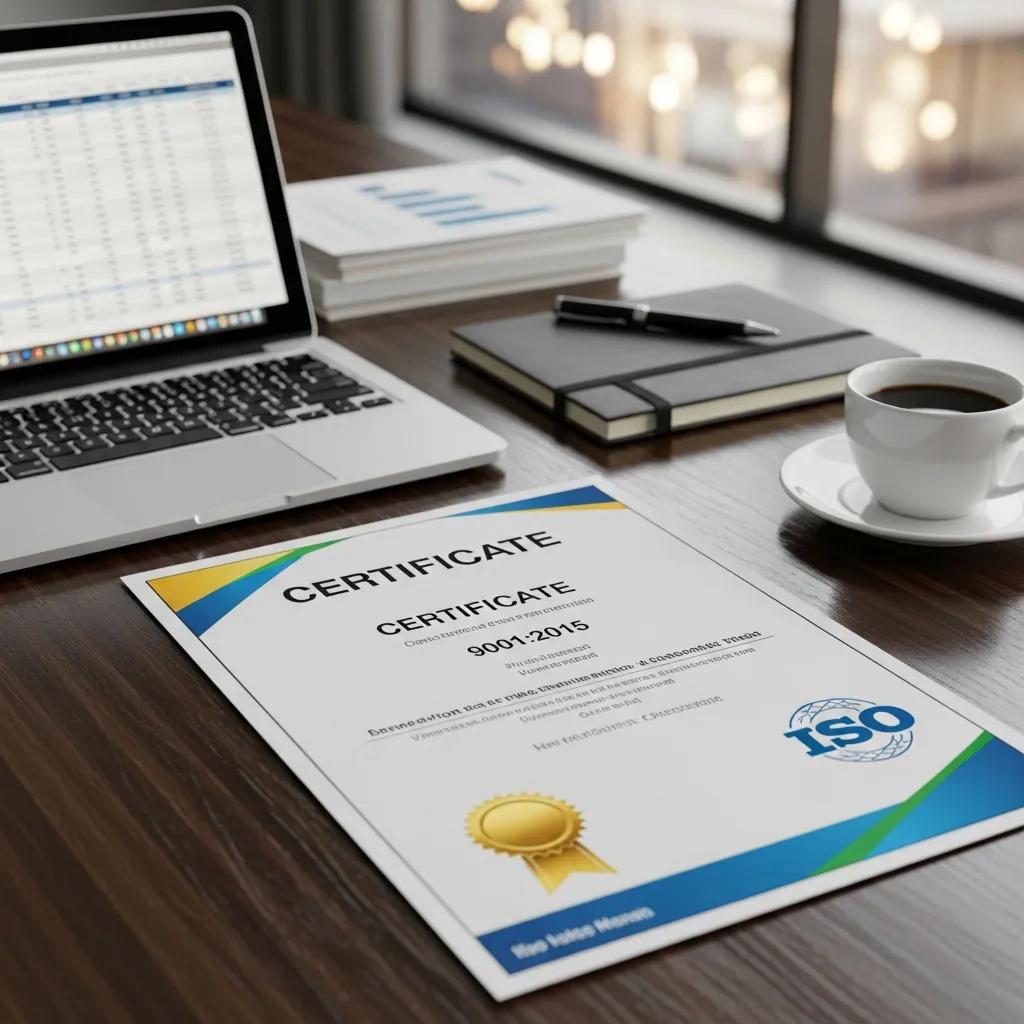
ISO certification delivers tangible benefits: it validates a management system and signals conformity to customers, regulators, and partners. Certification shows an organisation has implemented a structured framework — for quality, environment, information security, or AI governance — depending on the standard. These credentials reduce buyer uncertainty, simplify entry into regulated procurement, and often speed supplier qualification. Internally, certification drives continuous monitoring, corrective actions, and performance measurement, which produce measurable process improvements.
Key benefits organisations typically see from ISO certification include:
- Market Access: Recognised evidence that eases entry into international tenders and supply chains.
- Operational Efficiency: Standardised processes that cut waste, variation, and nonconformities.
- Risk Management: Frameworks that embed systematic controls and auditability.
- Stakeholder Confidence: Independent assurance for customers and regulators.
Certification is a strategic tool for organisations seeking to scale internationally and meet regulatory obligations. The table below compares four common ISO standards and their primary business outcomes.
Many organisations combine standards to align quality, sustainability, and security goals; the comparison helps select complementary standards for a holistic management approach.
| ISO Standard | Primary Focus | Business Outcome |
|---|---|---|
| ISO 9001 | Quality management systems | Stronger process consistency and customer satisfaction — easier market access |
| ISO 14001 | Environmental management | Lower environmental risk and compliance costs — stronger sustainability credentials |
| ISO 27001 | Information security management | Improved data protection and reduced breach risk — greater trust in digital services |
| ISO 42001 | AI management systems | Defined AI governance and risk controls — support for trustworthy AI deployment |
This comparison shows how choosing standards that match strategic objectives delivers distinct operational and market outcomes. With that context, organisations can assess certification pathways that fit their sector and risk profile.
Stratlane Certification provides ISO services for ISO 9001, ISO 14001, ISO 27001, and ISO 42001 with unique advantages: AI‑assisted auditing, an accredited global reach issuing certificates in over 27 countries, professional auditors operating in 29+ countries, and centralized certificate management via a secure database and download portal. Our client‑focused process moves smoothly from quote request to audit appointment to certificate issuance, helping organisations turn standards into commercial advantage while cutting administrative friction.
How Standardization Improves Global Trade and Supply‑Chain Efficiency
Standards boost trade and supply‑chain efficiency by harmonising documentation, testing, and tracking protocols to reduce delays, errors, and duplicate inspections. They enable logistics systems to interoperate, standardise product labelling, and unify conformity assessment procedures — all of which speed customs clearance and shorten inventory dwell time. By offering common baselines, standards also support regulatory convergence, lowering compliance costs for suppliers operating in multiple jurisdictions. The outcome: faster lead times, lower transaction costs, and more predictable cross‑border shipments.
Standards reduce trade friction through mutual recognition of conformity assessment, standardised documentation formats, and common data protocols for tracking and traceability. The table below links examples of standards and protocols to supply chain activities and their impacts on time, cost, and compliance.
Applying standards strategically across procurement and logistics delivers measurable operational gains and stronger resilience against disruption.
| Standard / Protocol | Supply Chain Aspect | Impact on Time / Cost / Compliance |
|---|---|---|
| Conformity assessment standards | Customs inspection and acceptance | Reduces border delays; lowers inspection costs |
| Documentation and labeling standards | Shipping and customs processing | Speeds clearance; reduces fines for mislabeling |
| Data exchange protocols | Tracking and traceability | Reduces reconciliation time; improves recall capability |
| Testing and certification standards | Supplier qualification | Reduces supplier checks; shortens onboarding time |
This mapping highlights how targeted standards adoption shortens processing, cuts costs, and improves regulatory alignment. Next, we outline tactics businesses can use to lower trade barriers and optimise supply chains with standards.
How Standards Reduce Trade Barriers and Optimise Supply Chains
Standards lower trade barriers by enabling mutual recognition of conformity assessment and harmonising testing and documentation that would otherwise trigger country‑specific checks. When one accepted test report replaces multiple national tests, inspection redundancy falls dramatically. Standardised labels, measurements, and safety criteria also ease the administrative burden on customs and importers, reducing clearance time, demurrage, and inventory costs.
- Mutual recognition agreements let third‑party conformity evidence be accepted across borders.
- Standardised documentation reduces administrative errors and speeds clearance.
- Common testing criteria minimise the need for re‑testing on entry.
These measures let procurement and logistics teams plan with greater certainty, lowering landed costs and improving supply‑chain agility. Regulatory convergence further explains why standards are central to long‑term trade efficiency.
How International Standards Support Regulatory Convergence
International standards act as neutral technical references that regulators can fold into national laws, aligning requirements across jurisdictions and reducing divergent compliance regimes. When standards are adopted into regulation, businesses can follow a single implementation to satisfy multiple national requirements. That harmonisation lowers multi‑market compliance costs and increases predictability for exporters.
- Standards incorporated into regulation replace divergent technical rules with common references.
- Regulatory convergence cuts duplicative testing and paperwork.
- Consistent legal frameworks improve market stability and investor confidence.
This regulatory alignment helps firms plan global rollouts more efficiently and encourages cross‑border investment by reducing legal complexity.
How AI‑Driven Auditing Strengthens Standardization Compliance
AI‑driven auditing strengthens compliance by automating repetitive evidence collection, prioritising high‑risk areas, and surfacing anomalies for auditor review. Pattern recognition and anomaly detection shrink audit cycle time and make findings more consistent, improving traceability and reducing rework. AI complements auditor expertise rather than replacing it — it accelerates data processing, highlights gaps, and lets auditors focus on judgement‑heavy tasks like contextual interpretation and corrective action design.
The table below compares traditional, AI‑driven, and hybrid audit approaches, showing the metrics typically improved and example impacts organisations might see.
| Audit Approach | Metric Improved | Example Impact |
|---|---|---|
| Traditional audits | Time to evidence collection | Manual collection; longer cycles |
| AI-driven audits | Time-to-certification | Automated checks shorten cycle time significantly |
| Hybrid audits | Accuracy of findings | AI flags anomalies; auditors validate context and corrective actions |
This comparison shows how AI integration raises audit efficiency and consistency. The next section quantifies typical efficiency gains and explains the mechanisms behind them.
What Efficiency Gains and Cost Reductions Does AI Bring to ISO Audits?
AI speeds audits by automating document review, cross‑referencing records, and flagging inconsistencies that once required manual checks. Typical improvements include less auditor time on repetitive work, faster identification of high‑risk issues, and shorter audit cycles thanks to continuous monitoring and pre‑audit readiness checks. Those gains often lower external audit fees, shorten time‑to‑certification, and reduce internal resources spent on evidence collection.
- Automation cuts auditor hours on routine evidence gathering.
- Prioritisation algorithms direct auditors to the highest‑risk controls first.
- Continuous monitoring enables earlier detection and correction of nonconformities.
Shorter audit cycles and better evidence review also reduce post‑certification corrective actions, lowering total compliance cost over time. The section below shows how an accredited provider applies these capabilities in practice.
How Stratlane Certification Uses AI to Improve Audit Accuracy
At Stratlane Certification we use AI‑assisted tools to expand audit scope, improve consistency, and strengthen evidence traceability while keeping auditor oversight central. AI helps by quickly analysing document sets, spotting anomalies in logs and controls, and producing audit‑ready dashboards that reduce manual reconciliation. These capabilities cut rework, shorten timelines, and increase the reliability of findings — which speeds certificate issuance and simplifies certificate management.
We combine AI‑assisted analysis with an accredited global reach — issuing certificates in over 27 countries and deploying professional auditors in 29+ countries — to deliver consistent assessments across jurisdictions. Our client‑centric workflow moves from quote request to audit appointment to certificate issuance and includes a secure certificate database and download portal for post‑certification management. Organisations curious about AI‑enabled audit efficiency can request a demo or quote to estimate time and cost savings while meeting international accreditation standards.
Industry‑Specific Impacts of Standardization
Standards affect industries in different ways, but common outcomes include smoother procurement, lower interoperability risk, and clearer compliance paths for regulated sectors. In defence and information security, standards set minimum baselines for interoperability and supplier assurance. For SMEs, standards reduce entry friction by providing recognised benchmarks that lower buyer uncertainty. Academic institutions benefit from standardised data models and research protocols that support reproducibility and easier industry collaboration. These sector‑level effects let organisations prioritise the standards that matter most to their goals and regulatory context.
The lists below summarise key impacts for defence/information security, SMEs, and academia and suggest tactical steps each sector can take to leverage standards:
- Defence and critical infrastructure: Enables joint operations, supplier assurance, and secure information sharing needed for procurement and interoperability.
- SMEs: Certification and standards reduce buyer friction, simplify supplier qualification, and open access to larger supply chains.
- Academia: Standardised data models and protocols improve reproducibility, enable cross‑institution datasets, and ease technology transfer.
These sector examples show how standards act as technical enablers and commercial credentials that support specialised needs and market access. The subsections below explore defence/security implications and benefits tailored to SMEs and academic institutions.
Standards in Defence and Information Security
Standards set minimum security baselines, interoperability rules, and procurement criteria that shape supplier selection and joint operations. Frameworks like ISO 27001 give defence contractors and critical infrastructure operators a structured approach to information security, helping demonstrate maturity and reduce supply‑chain cyber risk. Interoperability standards make sure equipment from different vendors can work together safely — a necessity for coalition operations and multinational procurement.
- Security standards establish repeatable controls that increase supplier trustworthiness.
- Interoperability standards lower integration costs and enable coordinated operations.
- Recognised frameworks simplify compliance with defence procurement requirements.
Adopting these standards reduces technical and commercial friction that can slow multinational defence and critical infrastructure programmes, enhancing operational effectiveness and supply‑chain resilience.
Benefits for SMEs and Academia
For SMEs, standards offer credibility and a route into larger, regulated supply chains by providing clear, verifiable evidence of capability and quality. Small firms that adopt ISO frameworks can simplify tendering and reduce the documentation burden demanded by large buyers. Academic institutions benefit from standardised data formats and research protocols that make collaboration and technology transfer more efficient, helping research outputs align with industry and regulatory needs.
- SMEs get faster supplier qualification and improved access to export markets.
- Academic institutions gain better reproducibility and easier industry partnerships.
- Practical steps include prioritising standards tied to target markets and using modular implementation to control upfront cost.
Stratlane Certification supports SMEs and academic clients across the US, EU, and UK with tailored certification journeys and certificate management tools that simplify onboarding and ongoing compliance. Organisations aiming to scale or show trustworthy AI practices, quality, environmental stewardship, or information security can request a quote for an AI‑enabled audit and use our certificate database and download portal to manage issued certificates efficiently. This integrated approach turns standardisation into concrete market access and operational resilience.
Frequently Asked Questions
What is the process for obtaining ISO certification?
Typical steps to ISO certification are: choose the relevant standard (for example, ISO 9001 for quality or ISO 27001 for information security); implement the required processes and documentation; carry out internal audits and fix nonconformities; then undergo an external audit by a certification body. If the external audit is successful, the organisation receives certification (commonly valid for three years) and must complete periodic surveillance audits to maintain it.
How can small and medium-sized enterprises (SMEs) benefit from standardization?
SMEs benefit from standardization by gaining credibility and access to larger markets and supply chains. Recognised standards demonstrate capability and compliance, reducing buyer uncertainty and streamlining supplier qualification. Standards also help SMEs simplify operations, lower costs, and improve efficiency — all of which support growth in domestic and international markets.
What are the challenges organisations face when implementing standards?
Common challenges include employee resistance to change, the complexity of aligning existing processes with new requirements, and costs for training and certification. Maintaining ongoing compliance and ensuring staff understand their roles can also be difficult. Effective change management, clear communication, and continuous training help build a culture of compliance and continuous improvement.
How do international standards impact regulatory compliance?
International standards provide a common technical reference that regulators can adopt into national law, which reduces conflicting rules across jurisdictions. When standards are integrated into regulation, businesses can implement a single set of practices to meet multiple legal requirements, lowering compliance costs and improving predictability for exporters.
What role does technology play in enhancing standardization compliance?
Technology streamlines compliance by automating tasks, improving data accuracy, and enabling real‑time monitoring. AI‑driven auditing tools can accelerate evidence collection, detect anomalies, and prioritise high‑risk areas. Digital platforms help manage documentation and track metrics, reducing administrative burden and improving consistency in meeting standard requirements.
How can organisations measure the effectiveness of their standardization efforts?
Measure effectiveness with KPIs such as compliance rates, audit results, and customer satisfaction. Track the number of nonconformities found and the time to resolve them to monitor operational efficiency. Assess impacts on market access, revenue growth, and cost savings. Regular reviews and stakeholder feedback identify improvement opportunities and validate the value of standardisation initiatives.
Conclusion
Adopting global standards and pursuing ISO certification give organisations clearer market access, leaner operations, and stronger risk management. Aligning with internationally recognised frameworks reduces compliance costs and builds stakeholder trust, helping businesses compete and grow. Thoughtful application of standards streamlines processes and positions firms for a strategic advantage in global markets. Learn how our certification services can help you capture these benefits and strengthen your organisation today.