
Unlock Benefits of ISO MSS: Certification Made Simple

ISO Management System Standards — A Practical Guide to Certification and Business Benefits
ISO Management System Standards (MSS) are proven frameworks that help organizations tighten processes, boost efficiency, and meet international expectations. This guide breaks down why MSS matter, which standards are most relevant, and the clear business advantages of becoming certified. Many companies face recurring challenges around quality, risk and sustainability — ISO standards offer a structured path to solve those problems and lift operational performance. Below we cover the value of ISO MSS, their guiding principles, the key standards to know, how certification drives value, the growing role of AI in audits, and how the certification journey works with Stratlane Certification.
What Are ISO Management System Standards and Why Are They Important?
ISO Management System Standards are internationally recognized frameworks that help organizations design, implement, maintain and continually improve their management systems. They matter because they create consistency, improve efficiency and embed continuous improvement into daily operations. Adopting ISO MSS lets teams manage risk more deliberately, align stakeholders around clear processes, and raise customer confidence — all while keeping pace with changing market and regulatory demands.
How Do ISO MSS Provide a Framework for Organizational Improvement?
ISO MSS drive improvement by putting repeatable processes and measurement in place. They push teams to review workflows, spot gaps, and apply fixes that stick. The standards also build risk awareness into everyday operations, so organizations can anticipate issues and reduce surprises. Finally, ISO approaches encourage stakeholder involvement — from frontline staff to customers — which produces better outcomes and steadier performance.
What Are the Core Principles Behind ISO Management Systems?
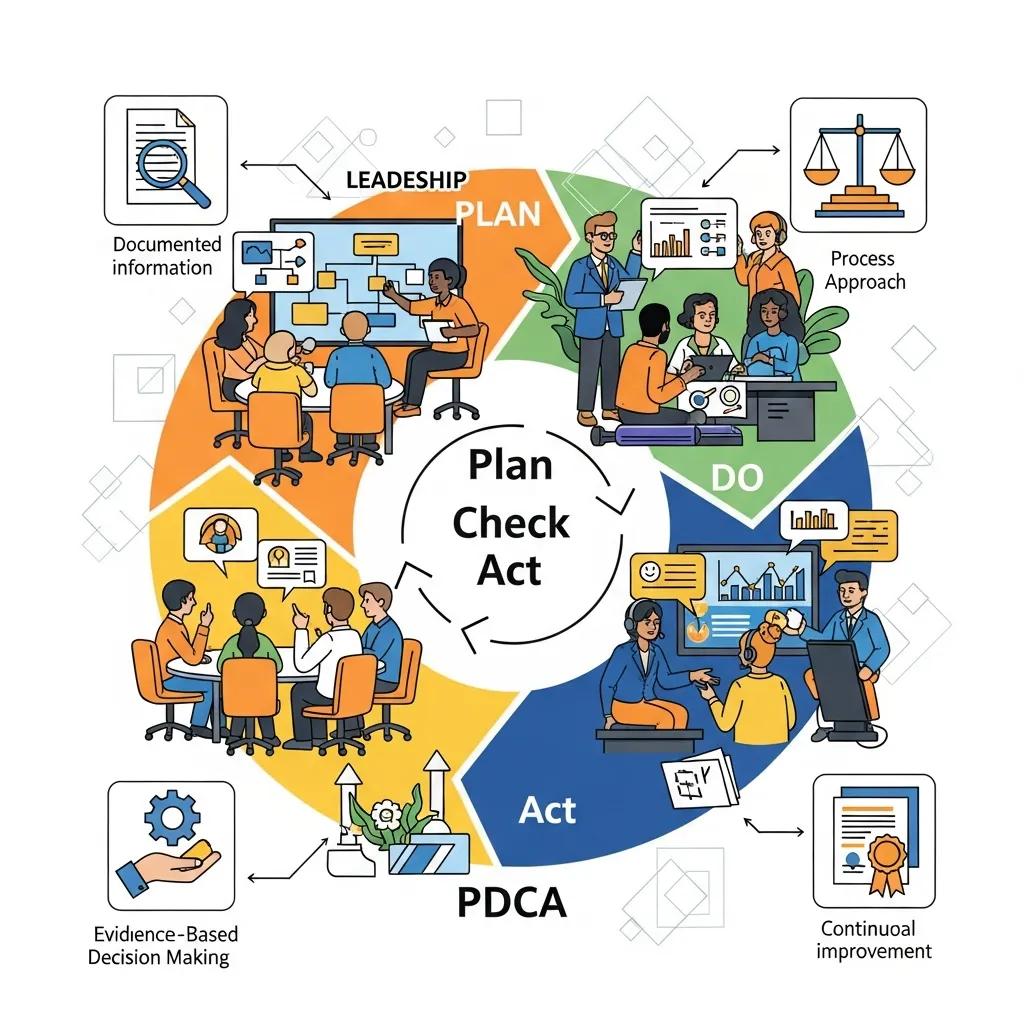
The core principles include customer focus, leadership, engagement of people, a process approach, continual improvement, evidence-based decision making, relationship management, and a systems approach to management. These principles form a practical playbook for aligning your management system with strategic goals. When teams apply them consistently, they see better operational results, more innovation and a stronger competitive position.
Which Key ISO Standards Should Your Business Know?
Several ISO standards are especially relevant for businesses looking to strengthen management systems: ISO 9001 for Quality Management, ISO 14001 for Environmental Management, ISO 27001 for Information Security Management, and ISO 42001 for AI Management Systems (currently under development). Knowing what each standard covers helps you pick the right path to improve performance and meet stakeholder expectations.
What Is ISO 9001 and How Does It Enhance Quality Management?
ISO 9001 sets out requirements for a quality management system focused on meeting customer needs and improving satisfaction. Implementing ISO 9001 helps organizations simplify processes, reduce defects and create a habit of continuous improvement. The standard’s process-based approach encourages organizations to map workflows, measure performance and make data-driven improvements.
How Does ISO 14001 Support Environmental Sustainability?
ISO 14001 gives organizations a practical framework to manage environmental responsibilities. It helps you identify environmental impacts, meet regulatory requirements and reduce waste. Adopting ISO 14001 improves resource efficiency and reputation — and it supports longer-term sustainability goals that matter to customers, partners and regulators.
What Are the Strategic Benefits of ISO Certification for Businesses?
ISO certification delivers measurable business benefits: it tightens operations, builds credibility and strengthens risk management — changes that often translate into cost savings and market advantage.
- Operational Efficiency: Certification helps standardize work, cut waste and improve productivity, which drives down costs and raises performance.
- Credibility and Market Access: A certified management system signals reliability to customers and partners, opening doors to new markets and contracts.
- Risk Management: ISO standards provide a structured way to identify, assess and reduce risks, helping prevent costly incidents and compliance failures.
Stratlane Certification is an accredited body that delivers ISO management system certifications and leverages AI-enhanced audit tools for faster, more accurate assessments.
How Does ISO Certification Improve Operational Efficiency and Risk Management?
Certification promotes consistent processes and a cycle of measurement and improvement. Organizations that achieve certification typically see smoother workflows, lower operating costs and better use of resources. The standards also force a disciplined view of risk — identifying threats early and putting controls in place to reduce their impact.
In What Ways Does Certification Boost Credibility and Market Access?
An ISO certificate is a clear signal to prospects and regulators that your organization follows proven practices. That credibility builds trust, supports procurement requirements and can be decisive when competing for new business. For many buyers and sectors, certification is now a baseline requirement to qualify for work.
How Is AI Transforming ISO Auditing and Certification Processes?

Artificial intelligence is changing how audits are performed by improving speed, consistency and insight. AI tools automate routine checks, surface trends across large datasets and highlight areas that need human judgment, so audits become more focused and cost-effective.
What Is AI-Driven Auditing and How Does It Enhance Audit Accuracy?
AI-driven auditing uses algorithms and analytics to review records, spot anomalies and contextualize findings. That increases accuracy by catching patterns that manual reviews can miss and by giving auditors real-time evidence to support their conclusions. With automation handling repetitive work, auditors spend more time on analysis and recommendations.
How Does ISO 42001 Address Responsible AI Management Systems?
ISO 42001 (under development) aims to establish best practices for managing AI responsibly. It will cover governance, transparency and accountability to help organizations deploy AI in ways that are ethical and compliant. When published, ISO 42001 will guide teams to design, operate and monitor AI systems with clear oversight and documented safeguards.
What Is the Step-by-Step ISO Certification Process with Stratlane?
The certification path typically moves from readiness assessment to audit and then ongoing certificate management. Knowing the stages helps teams prepare and achieve certification more efficiently.
- Initial Consultation: We assess your readiness, help select the right standard and outline a practical plan.
- Audit Process: Accredited auditors evaluate your management system, identify gaps and recommend corrective actions.
- Certificate Issuance: After a successful audit, you receive your ISO certificate — proof of your system’s conformity.
How Do Professional Auditors Conduct AI-Enhanced ISO Audits?
Auditors combine domain expertise with AI tools that analyze large datasets, detect trends and flag exceptions. This hybrid approach speeds evidence collection and delivers sharper, actionable findings. The result is a more thorough audit in less time, with recommended fixes that target the highest-impact areas.
What Are the Key Stages from Audit Booking to Certificate Management?
The full process includes audit booking, pre-audit checks, the main audit and post-audit follow-up. Organizations should prepare documentation, perform internal reviews and close any nonconformities. After certification, ongoing certificate management — surveillance audits and continuous improvement — keeps the system aligned with standards and business goals.
What Are the Most Common Questions About ISO Management System Standards?
Organizations frequently ask about principles, benefits and practical steps for implementation. Clear answers to these questions help teams decide which standard fits their needs and how to get started.
What Are the 7 ISO Management Principles and Their Roles?
- Customer Focus: Prioritizing customer needs to drive satisfaction and loyalty.
- Leadership: Setting direction and creating an environment that supports objectives.
- Engagement of People: Involving employees so their skills and ideas improve performance.
- Process Approach: Managing activities as linked processes to achieve consistent results.
- Improvement: Continuously seeking better ways to deliver value.
- Evidence-Based Decision Making: Using data and analysis to guide choices.
- Relationship Management: Building productive, mutually beneficial relationships with stakeholders.
These principles act as a foundation for management systems that drive performance and customer satisfaction.
How Do Different ISO Standards Address Business Needs?
Each ISO standard targets a specific set of business risks and opportunities. ISO 9001 is about quality and customer focus; ISO 14001 covers environmental impact and compliance; ISO 27001 protects information assets; and ISO 42001 will guide safe, ethical AI use. Choosing the right standard aligns your management system with your strategic priorities.
Understanding the differences helps you deploy the most relevant practices for your organization’s needs.
| ISO Standard | Focus Area | Key Benefits |
|---|---|---|
| ISO 9001 | Quality Management | Higher customer satisfaction, streamlined processes |
| ISO 14001 | Environmental Management | Lower environmental impact, regulatory compliance |
| ISO 27001 | Information Security Management | Improved data protection, stronger risk control |
| ISO 42001 | AI Management Systems (under development) | Ethical AI deployment, governance and oversight |
Frequently Asked Questions
What is the difference between ISO 9001 and ISO 14001?
ISO 9001 focuses on quality management and meeting customer expectations through consistent processes and improvement. ISO 14001 centers on environmental management, helping organizations reduce environmental impact and comply with regulations. Both drive better performance, but ISO 9001 targets product and service quality while ISO 14001 addresses sustainability and environmental responsibility.
How can small businesses benefit from ISO certification?
Small businesses benefit from clearer processes, cost savings and stronger market credibility. Certification can help reduce waste, improve customer confidence and make bids more competitive. For many small firms, ISO certification becomes a differentiator that supports growth and long-term stability.
What role does employee engagement play in ISO management systems?
Employee engagement is essential. When staff are involved, they contribute practical ideas, take ownership of processes and help sustain improvements. Engaged teams lead to better decisions, higher morale and reduced turnover — all of which support a healthier management system.
How often should organizations review their ISO management systems?
Organizations should review their management systems at least annually to confirm continued effectiveness and compliance. More frequent reviews are advisable after major changes — new products, process shifts or regulatory updates — to keep the system aligned and continuously improving.
What are the costs associated with obtaining ISO certification?
Costs vary by organization size, system complexity and the chosen standard. Typical expenses include consulting, training, audit fees and any investments needed to close gaps. While there’s an upfront investment, many organizations find the long-term gains in efficiency, market access and risk reduction outweigh initial costs.
Can organizations integrate multiple ISO standards into one management system?
Yes. Integrating standards like ISO 9001 and ISO 14001 into a single management system reduces duplication and simplifies audits. An integrated approach creates a cohesive framework that addresses quality, environmental and other requirements more efficiently.
Conclusion
Adopting ISO Management System Standards strengthens operations, credibility and risk control — and it positions your business for sustainable growth. If you’re ready to translate these standards into real performance gains, explore Stratlane Certification’s ISO services. Take the next step toward a more resilient, trusted organization.