
Boost Your Physical Security: Key Access Control Strategies
Physical Security for ISO 27001: Practical Measures, Implementation Steps, and Audit-Ready Strategies
Physical security covers the controls that stop unauthorized access, damage, or interference with information systems and the infrastructure that supports them. Under ISO 27001, Annex A.11 focuses on physical and environmental security and expects layered controls that deter, detect, delay, and enable response to physical threats. This guide walks through the controls mapped to A.11, gives practical steps for implementing access and perimeter controls, and explains asset protection, environmental safeguards, surveillance options, and validation practices. You’ll get an actionable process for assessment, design, implementation, monitoring, and continuous improvement that aligns with ISO 27001 audit expectations. We also cover how AI-assisted auditing can speed evidence collection and correlation, plus how external certification and certificate management can help sustain compliance. Throughout, terms like physical security measures, access control, asset protection, perimeter security, and ISO 27001 physical security are used to keep the guidance practical and audit-focused.
What Are the Core Physical Security Controls Required by ISO 27001?
A.11 in ISO 27001 sets the baseline protections for premises, equipment, and how information is handled to protect confidentiality, integrity, and availability. These controls restrict physical entry, provide environmental safeguards, enable detection and response, and set procedures for asset handling and disposal. Proper implementation produces the audit evidence assessors expect: policies, access logs, maintenance records, and incident reports. The controls below summarize the primary areas an ISMS must cover and provide a practical starting point for assessment and remediation.
Physical security has grown in prominence across ISO 27001, with Annex A placing clear emphasis on protecting facilities and assets.
ISO 27001:2013 Annex A — Physical Security Controls
Related controls were expanded in ISO 27001:2013 to underscore the practical importance of physical security within an organization’s ISMS.
Evaluating the effectiveness of ISO 27001:2013 based on Annex A, I. Saberi, 2013
The primary physical controls are:
- Access Control: Limit entry to buildings and sensitive areas using authentication and authorization so only approved personnel reach information assets.
- Perimeter Security: Deter and delay intruders with fencing, lighting, vehicle barriers, and controlled entry points to protect facility boundaries.
- Surveillance & Monitoring: Use CCTV, analytics, and intrusion detection to spot incidents early and capture forensic evidence for investigations.
- Environmental Controls: Protect equipment from fire, flooding, temperature extremes, and power failures through suppression, HVAC, and redundancy.
- Asset Handling and Disposal: Maintain inventories, secure storage and transport, and ensure secure disposal of information-bearing devices and media.
Together these controls form a layered defense that supports ISO 27001 audit criteria and ongoing risk management. The sections that follow break down access control mechanics and perimeter measures into operational steps.
How Does Access Control Protect Information Assets?
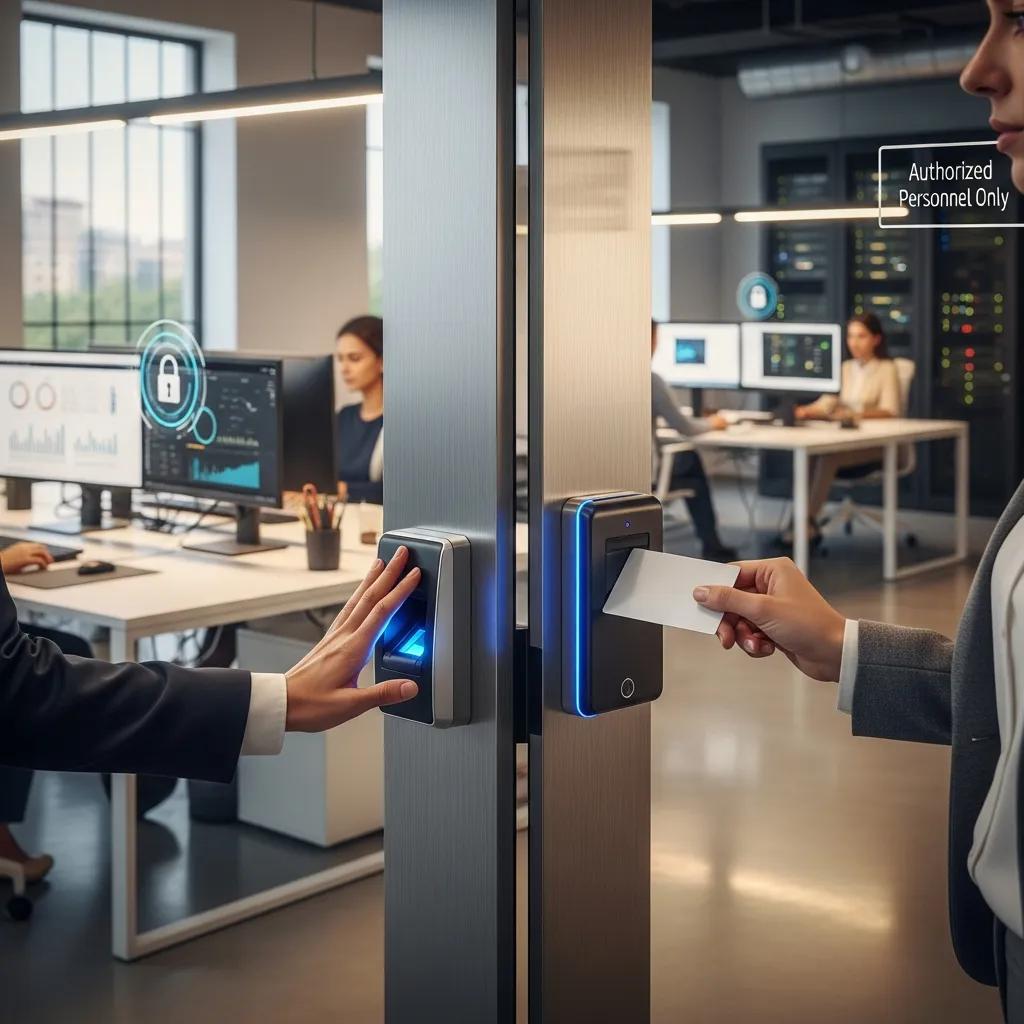
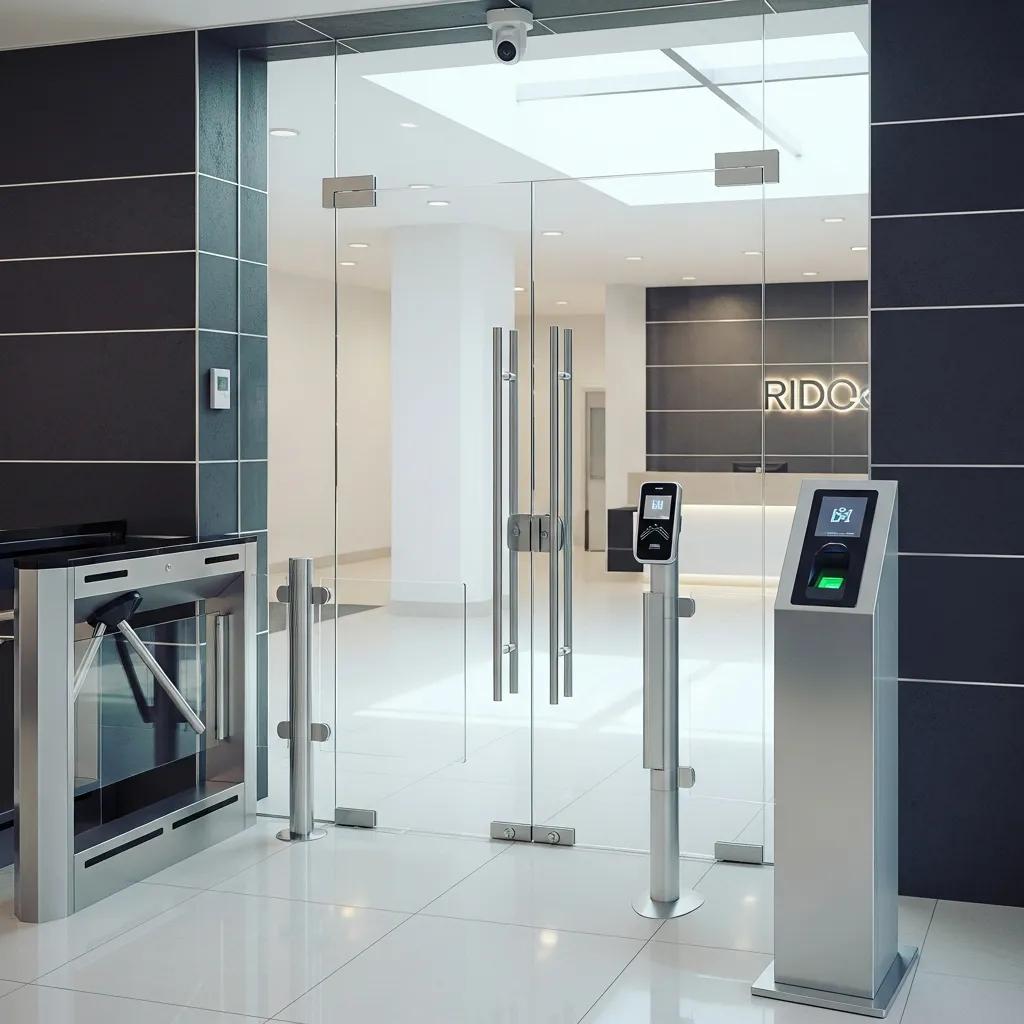
Access control enforces who, when, and where people and devices can interact with physical resources, reducing the chance of unauthorized disclosure or tampering. Authentication (proving identity) and authorization (granting rights) ensure only vetted personnel reach sensitive systems, while audit logs record access attempts as evidence. Common technologies include card readers, biometric scanners, turnstiles and mantraps, and access control panels integrated with identity systems. Regular maintenance and periodic access reviews supply auditors with the records they expect. Practical measures include role‑based access matrices, documented exception handling, and retention of access logs to show control effectiveness and support investigations.
Strong access control reduces the load on internal teams by stopping inappropriate approaches before they escalate.
What Perimeter Security Solutions Ensure Facility Protection?
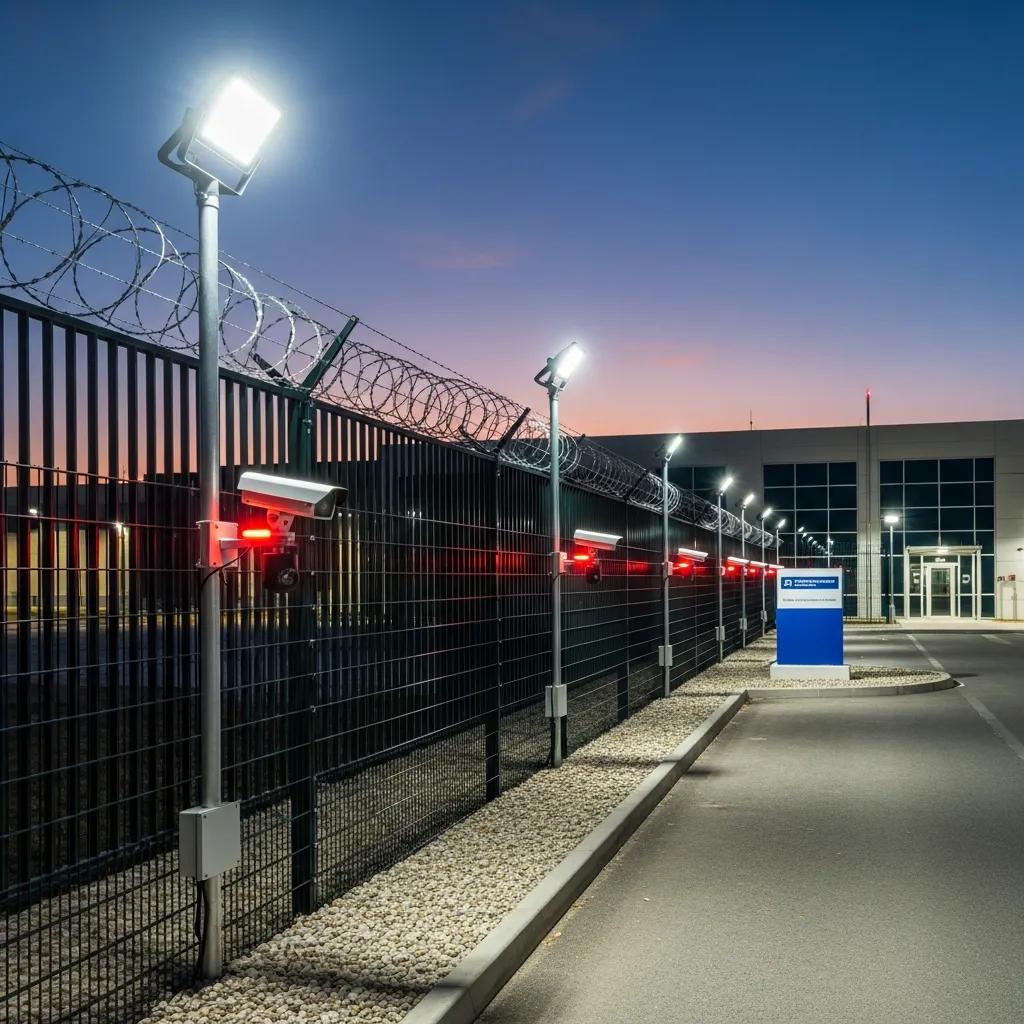
Perimeter security deters, detects, and delays hostile actors before they reach sensitive areas. Physical measures—fencing, barriers, strategic lighting, vehicle checkpoints, and controlled gates—combine with sensors and surveillance to provide timely detection and response. Best practice is to design visible deterrents with overlapping detection zones and keep a clear separation between public and secure areas. Routine inspections and maintenance schedules are useful audit evidence. Proper perimeter design lowers the chance of forced entry and creates time for response teams to intervene, complementing internal access controls.
Perimeter planning naturally leads into the choice and design of internal access control systems that manage zones once entry is granted.
How Can Businesses Implement Access Control Systems Effectively?
Implementing access control effectively follows a lifecycle: assess requirements, design policy and architecture, procure fit-for-purpose technology, install and integrate components, test and validate, operate under governance, and review regularly for improvement. A clear policy with defined roles and a documented provisioning process ensures technical controls are backed by organizational rules, producing predictable access behavior and auditable trails. Integrating access controls with IT identity systems and logging creates a single source of truth for events and simplifies evidence collection for ISO 27001 audits. The checklist and comparison below help teams pick appropriate technologies and align governance with A.11 requirements.
Implementation checklist for access control:
- Assess Requirements: Identify sensitive areas, user roles, and business processes that need physical protection and apply risk-based access rules.
- Design Policy and Architecture: Create role-based access matrices, segregation of duties, and clearly defined zone boundaries aligned to business needs and compliance.
- Procure and Integrate: Choose readers, controllers, credentials, and management software that integrate with identity and logging platforms.
- Test and Validate: Run functional tests, failure-mode scenarios, and scheduled access reviews to confirm controls work as intended.
- Operate and Review: Keep maintenance logs, incident records, and periodic re-certification of access rights as part of governance cycles.
This checklist provides a traceable path from risk identification to an operational control environment. The table below compares common access methods to help select the right fit.
Access control options compared for selection:
| Access Method | Security Level | Typical Use Case |
|---|---|---|
| Card-based access control | Medium | Offices and shared data rooms where credentials must be easily revoked |
| Biometric access control systems | High | High-security zones that need strong authentication and non-repudiation |
| PKI / Smartcard solutions | High | Environments requiring cryptographic binding between identity and physical access |
| Turnstiles and mantraps | High | Single-person ingress control for secure facilities |
| PIN-based or keypad systems | Low-Medium | Low-risk areas or visitor flows when paired with other controls |
This comparison highlights trade-offs so organizations can match technology to risk appetite and operational constraints before moving to component-level design.
What Are the Key Components of Access Control Systems?
Access control systems include interdependent components that enforce and record who enters where: card readers or biometric scanners, controllers, credentials, management software, and audit logs. Readers capture identity data, controllers evaluate credentials against policy, software manages configuration and reporting, and logs create a chain of custody for access events—items auditors commonly request. Integration with directory services and SIEM systems improves event correlation and incident response. Planning for redundancy in controllers and secure configuration management preserves availability and integrity while meeting ISO 27001 evidence requirements.
Understanding components helps align system design and records to the specific clauses and evidence auditors expect under A.11.
How to Align Access Control Implementation with ISO 27001 Physical Security Requirements?
Map each technical and procedural activity to A.11 clauses, document the supporting policy, and keep the records auditors will ask for—access provisioning logs, review records, and test results. Practical artifacts include a role-to-area matrix that explains why each right exists, change logs for controller firmware, and scheduled access reviews. Document exception processes and visitor controls, and retain maintenance records for readers and locks. When evidence is organized and traceable to risk assessments, organizations can demonstrate the link between risk treatment and implemented controls, which is central to certification readiness.
Once access control is mapped to ISO requirements, expand the focus to broader asset protection strategies.
What Are Best Practices for Corporate Asset Protection Strategies?
Start asset protection with a complete inventory and classification that ties physical items to their information value and risk. Classification drives storage, handling, labeling, and transport rules—highly sensitive media, for example, should have encrypted storage and a documented chain-of-custody during transport. Governance is key: assign custodians, define handling procedures, and schedule audits so ownership and responsibility are clear. Lifecycle controls—secure disposal and media sanitization—prevent data leakage and should be backed by destruction certificates or logs for audit purposes.
Asset classification and risk priorities inform the environmental controls and monitoring systems you deploy to protect physical assets.
How to Conduct Physical Security Risk Assessments for Asset Protection?
A physical security risk assessment converts asset value, threats, and vulnerabilities into prioritized controls using a threat‑vulnerability‑impact model. List assets, assign sensitivity, identify realistic threats (theft, vandalism, environmental hazards), and score potential impacts to operations or confidentiality to build a remediation roadmap. Select controls to reduce risk to acceptable levels, assign owners, and set target dates—documenting all as verifiable evidence. Regular reassessment keeps protections aligned with changing threats and supports the risk treatment records ISO 27001 requires.
Risk assessment outcomes guide which environmental controls and monitoring measures address the most significant risks.
What Environmental Security Controls Safeguard Assets from Natural and Man-Made Threats?
Environmental controls protect assets from fire, flood, temperature swings, and power loss through detection, suppression, redundancy, and monitoring: fire detection and suppression, raised flooring, HVAC controls, UPS and generator backups, and environmental sensors. Logging temperature, humidity, and water ingress helps prevent failures and creates timestamped evidence for investigations. Integration with building management systems centralizes alerts and can trigger automated responses. Regular testing of suppression systems and documented preventive maintenance are typical audit deliverables. Pairing environmental controls with continuity planning and offsite backups preserves availability and supports ISO 27001 objectives for resilience.
Environmental resilience should be combined with perimeter and surveillance measures that detect incidents before they affect core systems.
How Do Perimeter Security Solutions Enhance Facility Safety?
Perimeter solutions form the first line of defense—deterring intrusion, enabling early detection, and delaying adversaries so response teams can act. Effective designs layer fencing and barriers, lighting and landscaping, intrusion sensors, and CCTV with analytics to avoid single points of failure. Regular testing, maintenance, and clear procedures ensure these measures work consistently and generate the records auditors expect—installation schematics, sensor calibration logs, and incident timelines. Attention to sightlines, overlapping sensor coverage, and resilient power sources measurably improves detection and response times.
Organizations typically validate perimeter plans and readiness through expert audits before formal certification or surveillance reviews. Engaging experienced auditors helps ensure perimeter controls meet ISO 27001 expectations and that supporting documentation is complete.
What Are Effective Surveillance and Intrusion Detection Technologies?
Combine CCTV, video analytics, perimeter intrusion detection systems (PIDS), motion sensors, and integrated alarm platforms to detect and contextualize incidents for faster response. Analytics can flag loitering, tailgating, or perimeter breaches and surface anomalies for human review; PIDS deliver low-latency alerts. Maintain data retention policies and chain-of-custody procedures to preserve evidentiary value. Consider camera redundancy, bandwidth and storage needs for high-resolution analytics, and privacy‑compliant retention rules—auditors will want retention schedules and access logs. Balancing automated detection with human verification reduces false positives and keeps operations effective.
Surveillance capability drives layout choices to maximize detection while keeping maintenance practical.
How to Design Perimeter Security Layouts for Maximum Protection?
Design perimeter layouts using layering, overlapping coverage, and controlled access paths so detection happens early and response windows are manageable, while still enabling maintenance access. Key considerations include buffer zones, unobstructed camera sightlines with overlap, lighting to remove shadowed approaches, and barriers that channel vehicle traffic through checkpoints. Document layout rationale and test results for auditors. Design checklists should include coverage maps, sensor placement rationale, power and communications routing, and maintainability access—these become auditable records showing due diligence. Balancing deterrence with usability reduces nuisance alarms and helps controls remain effective over time.
Perimeter design and surveillance readiness lead into how AI can accelerate auditing and evidence correlation across these layers.
What Role Does AI Play in Auditing Physical Security Measures?
AI supports auditing physical security by automating evidence collection, correlating disparate data sources, and spotting anomalies manual review can miss. By ingesting video analytics, access logs, environmental sensor streams, and maintenance records, AI can surface patterns—repeated access anomalies or failing sensors—that need attention and produce structured audit artifacts. The outcome is faster audit preparation and stronger continuous monitoring aligned with ISO 27001’s ongoing assurance expectations. Practical AI tools augment human auditors by automating repetitive tasks and highlighting exceptions for review, not replacing professional judgement.
The sections below outline AI auditing benefits and practical examples that show how it applies to physical security assessments.
How Does AI-Driven Auditing Improve ISO 27001 Compliance Efficiency?
AI-driven auditing speeds compliance by automating evidence searches, detecting anomalies across logs and video, and correlating events into coherent narratives that cut time-to-evidence for auditors and management. Automation can triage routine checks, surface priority exceptions, and standardize evidence packages for certification or surveillance audits, reducing preparation effort and improving repeatability. Continuous AI-enabled monitoring offers near-real-time assurance, narrowing the gap between incident and detection and helping organizations demonstrate proactive control management to auditors. These efficiencies translate into faster audit cycles and clearer, more defensible evidence trails for ISO 27001 assessments.
Seeing concrete AI examples helps teams decide where automation yields the biggest returns in their audit workflows.
What Are Examples of AI Enhancing Physical Security Assessments?
Examples include video analytics that flag unusual after-hours movement and trigger automated log correlation to reveal tailgating; predictive maintenance models that flag sensor degradation before failure; and automated correlation that links badge anomalies to CCTV clips for rapid triage. The typical flow is: data ingestion → AI correlation/detection → human validation → auditable outcome. AI produces structured artifacts—time‑stamped correlations, alert summaries, and prioritized exception lists—that auditors can review. Document AI models, validation processes, and human review steps so outputs are transparent and admissible during certification audits.
Stratlane Certification integration: For organizations ready to operationalize AI-assisted audit workflows, Stratlane Certification — an accredited certification body for ISO standards including ISO 27001 — combines AI-driven tools with experienced auditors to accelerate evidence collection, validate controls, and manage certificates post-certification. Working with a provider that blends accredited auditing and AI tooling can streamline readiness checks and improve traceability of audit evidence before formal assessment.
How to Develop and Maintain a Robust Physical Security Strategy for ISO 27001?
A robust physical security strategy follows a continual cycle: Assess → Design → Implement → Monitor → Improve, with governance, roles, and documented procedures at every step to ensure sustainability and auditability. Start with a risk-based assessment to identify critical assets and threat scenarios, then design layered controls mapped to A.11 and business priorities. Implementation should include testing and sign-off with documented evidence. Monitoring uses scheduled reviews, KPIs (for example, incident response times and maintenance completion rates), and periodic risk reassessment to drive continuous improvement. Finally, integrate certificate management into operational processes to track surveillance dates, corrective actions, and recertification readiness for long-term compliance.
When preparing for certification, organizations often engage external audit and certification services for gap analysis, evidence packaging, and certificate lifecycle support; Stratlane Certification provides accredited ISO 27001 services, AI-assisted audit tools, experienced auditors, and certificate management to help teams stay audit-ready.
What Steps Are Involved in Physical Security Policy Development and Implementation?
Policy work begins with defining scope, objectives, and governance responsibilities, then adds procedures for access provisioning, visitor management, asset handling, environmental controls, and incident response. Each policy element should name responsible roles and measurable controls. Engage stakeholders to keep policies practical, and run training and awareness programs so staff understand expectations—document training and acceptance as audit evidence. Implementation plans assign owners, timelines, and success criteria; testing validates that controls operate as designed and escalation paths work under stress. Ongoing enforcement relies on periodic reviews, corrective action tracking, and linking policy to the ISMS risk treatment plan so controls remain aligned with operations and audit expectations.
Policy work and implementation activities feed directly into certification readiness via evidence consolidation and surveillance planning.
How to Achieve and Sustain ISO 27001 Certification with Effective Physical Security Controls?
Certification readiness for physical security starts with a gap analysis, remediation plans, evidence collection, and a pre-assessment to confirm controls meet A.11. Auditors will ask for policy documents, risk assessments, access logs, maintenance records, and incident histories. Typical readiness tasks include consolidating records into an evidence repository, performing access reviews and control testing, and running tabletop or live incident response exercises to show operational effectiveness. After certification, sustaining compliance requires surveillance audits, continuous monitoring, corrective action tracking, and certificate management to maintain visibility over status and upcoming audit milestones. Certificate management services—scheduling, evidence updates, and renewal planning—help organizations stay audit-ready and reduce the admin burden of maintaining ISO 27001 status.
Stratlane Certification integration: Organizations can engage Stratlane Certification for accredited audits, AI-assisted evidence collection, and certificate management to support both initial certification and ongoing surveillance.
- Assess your current posture: Perform a gap analysis against A.11 and document remediation actions.
- Remediate and collect evidence: Implement controls and assemble policies, logs, and maintenance records for the audit package.
- Engage accredited auditors: Schedule a formal assessment to validate the ISMS and physical controls.
- Maintain and monitor: Use continuous monitoring, periodic reviews, and certificate management to sustain compliance.
Following these steps creates a repeatable certification pathway backed by evidence-based controls and governance.
Frequently Asked Questions
What is the importance of environmental controls in physical security?
Environmental controls keep systems running and data safe by protecting equipment from fire, flooding, and power outages. Typical systems include fire detection and suppression, HVAC management, and backup power (UPS and generators). These measures preserve availability and integrity—core ISO 27001 objectives—and regular testing plus maintenance records serve as audit evidence that the organization is proactive about environmental risks.
How often should physical security risk assessments be conducted?
Conduct physical security risk assessments at least annually and whenever there are significant changes—new assets, operational shifts, or after incidents. Regular assessments reveal new threats and vulnerabilities and support continuous improvement, keeping measures aligned with ISO 27001 requirements and the organization’s changing risk profile.
What role does employee training play in physical security compliance?
Training ensures staff know their responsibilities for access control, incident reporting, and emergency response. A security-aware workforce reduces human error, a common cause of breaches. Documented training sessions and attendance records are also key audit artifacts that demonstrate commitment to compliance and operational readiness.
How can organizations ensure the effectiveness of their surveillance systems?
Maintain surveillance systems through regular equipment checks, software updates, and optimal camera placement to minimize blind spots. Integrate video analytics to enhance detection and regularly audit footage and incident procedures to confirm systems work as intended. Retention schedules and access logs should be documented to meet ISO 27001 evidence requirements.
What are the benefits of integrating AI into physical security measures?
AI improves monitoring, speeds incident detection, and enhances data correlation across sources. It automates routine reviews of footage and logs, highlights anomalies, and helps organize evidence for audits. Used responsibly—documented and validated—AI tools boost operational efficiency and help demonstrate continuous monitoring to auditors.
What should be included in a physical security policy?
A physical security policy should define scope, objectives, and governance responsibilities, and include procedures for access control, visitor management, asset handling, and incident response. It should name accountable roles, set measurable controls, and require training. Regular reviews ensure the policy stays relevant—documenting updates and training provides clear audit evidence and guidance for staff.
Conclusion
Physical security is a foundational element of ISO 27001 compliance. A layered approach—access control, perimeter protections, environmental safeguards, and robust asset handling—reduces risk and improves audit readiness. Combining experienced auditors with AI-assisted tools can speed evidence collection and strengthen continuous monitoring. If you’re preparing for certification or need help sustaining compliance, explore our certification services and expert support to take the next step toward securing your organization.