

ISO revisions update published international standards to reflect technical advances, regulatory changes, and industry consensus. Knowing how those revisions move through ISO’s stages helps organizations stay compliant and protect market access. This guide walks you through the revision lifecycle, flags near-term changes (for example, **ISO** 9001:2025 and the ISO 27001:2022 transition), and lays out practical steps for gap analysis, control updates, and audit readiness. You’ll get timelines you can act on, sector-specific implications for SMEs, enterprises, and research institutions, and straightforward methods to prioritize workstreams. We also show where AI-driven tools speed transitions and cut costs without compromising audit integrity. Each section answers a core question and the subsections include checklists and templates you can apply right away—so you can move from assessment to certification with confidence.
What Are ISO Standard Revisions and Why Do They Matter?
An ISO revision is a formal update to an existing standard that brings requirements in line with new technology, legal expectations, and lessons learned in the field. Revisions keep standards usable and relevant; organizations that follow them avoid compliance gaps, contractual surprises, and missed opportunities for differentiation. Revisions can change mandatory clauses, normative guidance, and annexes, so treat them as project-level workstreams that touch governance, processes, and vendor relationships. Knowing where a revision sits in ISO’s timeline turns external signals into internal milestones for gap analysis, training, and audit planning.
| Standard | Revision Attribute | Practical Value |
|---|---|---|
| ISO 9001 | Expected revision year | 2025 (anticipated) — schedule QMS policy and objectives review |
| ISO 27001 | Transition deadline | Oct 31, 2025 — update ISMS controls and certification plans |
| ISO 14001 | Review focus | Greater sustainability alignment — incorporate environmental objectives |
This snapshot highlights which standards demand immediate attention and which require ongoing monitoring through technical committees and accreditation updates. Use it to prioritize resources and decide whether to start remediation now or plan readiness activities later.
The revision process has clear stages and decision points that you can map to internal actions and communications. That mapping converts revision signals into concrete tasks for governance and operations.
How the ISO Revision Process Works — Stages and Timeline
Revisions typically start with a proposal and move through committee drafts, Draft International Standard (DIS), Final Draft International Standard (FDIS), and then publication. Early stages (proposal, committee drafts) still allow substantive negotiation, so early monitoring is valuable for scoping. DIS and FDIS signal that requirements are stabilizing—those are the moments to intensify gap analysis, update documentation, and engage auditors. Depending on complexity and the technical committee, a full revision usually takes 18–36 months from proposal to publication, though higher-priority items can move faster.
Subscribe to ISO technical committee announcements, IAF notices, and accreditation body guidance to capture milestone dates and commentary. Legal, procurement, and compliance teams should follow working group summaries to anticipate contractual impacts. Knowing each stage helps teams act at the right time—scoping during drafts, remediation planning at DIS/FDIS, and final evidence preparation before publication.
Which Upcoming ISO Changes Should Your Business Watch?
Certain standards are attracting active revision work and should be triaged by risk, contracts, and strategic importance. ISO 9001 is expected to give more weight to sustainability and digitalization in 2025; ISO 27001:2022 already introduced Annex A updates and a transition timeline; ISO 14001 and ISO 42001 are drawing attention for environmental and AI governance respectively. If your business has complex supply chains or digital services, prioritize ISO 9001 and ISO 27001 because changes can cascade into procurement and customer requirements.
Prioritize standards that carry regulatory or contractual consequences first, then those that improve resilience or open market access. Multiregional companies should align monitoring with accreditation and conformity-assessment news in their operating markets. The next section drills into the specific changes expected in ISO 9001:2025 and what they mean for your QMS.
What Are the Key Changes in the ISO 9001:2025 Revision?
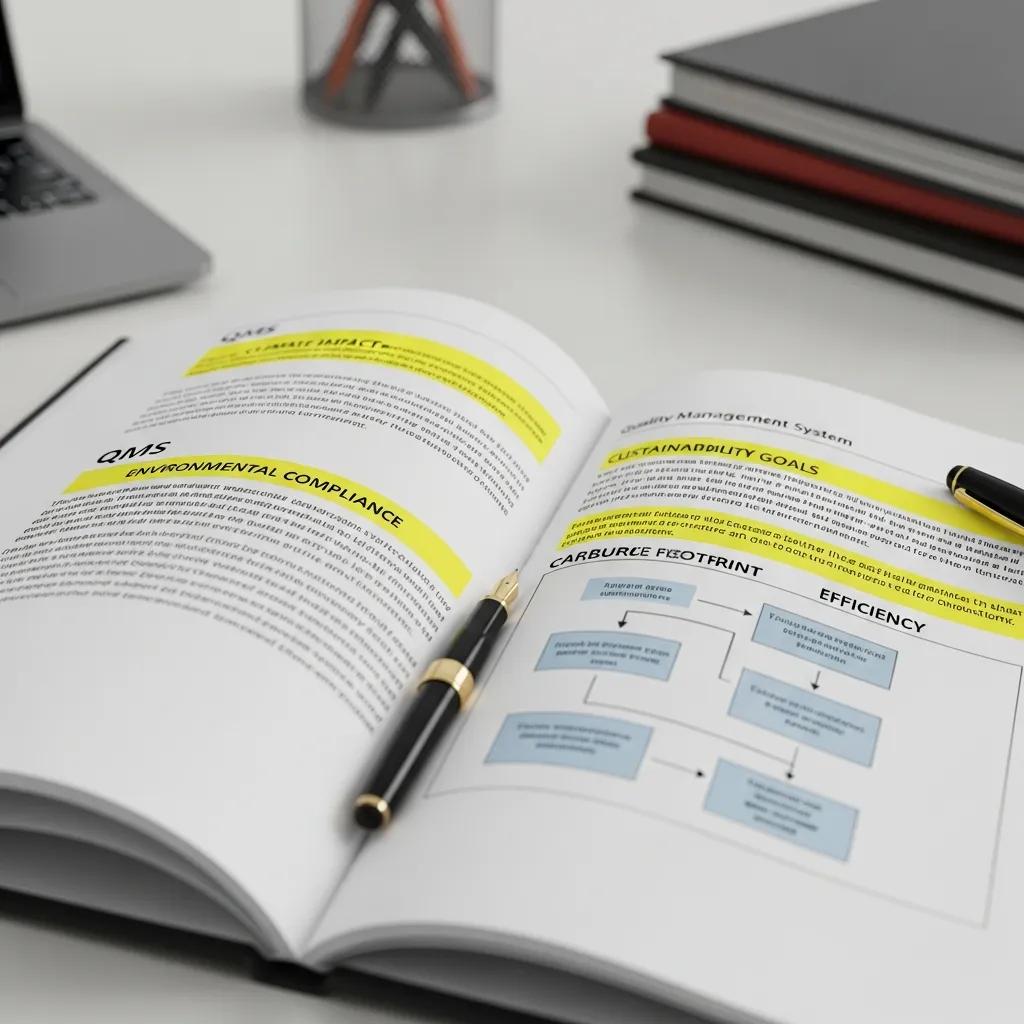
ISO 9001:2025 is likely to broaden quality management expectations to include climate and sustainability considerations, stronger expectations for digital records and data governance, and clearer requirements for ethical leadership and supply-chain resilience. The standard will shift some QMS activities from after-the-fact inspection to forward-looking risk and opportunity management, requiring new objectives, evidence trails, and visible leadership engagement. Treat the revision as compliance work and a chance to improve market positioning—early adopters can demonstrate stronger supplier resilience, sustainability alignment, and governance transparency.
| Change | Impact Area | Recommended Action |
|---|---|---|
| Climate & Sustainability | Policy, Objectives, Evidence | Add climate-related objectives, measure emissions/impacts, record results in management reviews |
| Digitalization & Data Governance | Records, Controls, Security | Implement data governance controls, secure electronic records, update retention and integrity checks |
| Ethical Leadership | Leadership Evidence | Document leadership decisions, include ethics in management review and performance metrics |
| Supply Chain Resilience | Procurement & Supplier Management | Expand supplier assessments, add resilience tests and contractual continuity clauses |
This action mapping helps teams translate high-level revision themes into concrete tasks for policy updates, objective-setting, and evidence collection that auditors will expect to see.
The first deep dive looks at how climate and sustainability may be incorporated into QMS requirements and the evidence auditors will want.
How Will Climate and Sustainability Be Addressed in ISO 9001:2025?
ISO 9001:2025 is expected to require a clear link between quality objectives and sustainability commitments. Organizations will need to identify climate-related risks and opportunities that affect product or process conformity and show how those factors flow into policy and objectives. Practically, that means updating the quality policy, setting measurable sustainability targets (for example, energy use or waste reduction), and embedding monitoring methods into quality processes so you can produce audit evidence. Auditors will look for baseline data, target-setting, performance metrics, corrective action records, and management-review minutes that explicitly discuss climate impacts.
Bringing sustainability into the QMS also changes supplier evaluation criteria and lifecycle considerations, which leads naturally into digitalization and ethical leadership requirements in the new standard.
What Will Digitalization and Ethical Leadership Require in ISO 9001?
Digitalization will push organizations to formalize controls over electronic records, automated decision-making, and data quality within their QMS. Expect requirements for data-governance policies, clear ownership of digital records, and integrity checks auditors can sample. Ethical leadership will raise the bar for documented leadership involvement—written commitments, resource allocation evidence, and recorded decisions that reflect ethical trade-offs in product and process choices. Together, these changes mean management review must demonstrate how leaders guide digital initiatives and ethical choices, linking strategy to operational controls and continual improvement.
Strengthening data governance and leadership evidence will also influence internal audits and training—topics we address when discussing ISO 27001:2022 transition steps.
People practices—especially targeted HRM—play a critical role in delivering effective ISO 9001 outcomes.
HRM’s Role in Effective ISO 9001 Implementation A qualitative case study of ISO 9001 implementation in a food and beverage company found that strategic HRM practices significantly improved implementation effectiveness. The study reported a 24.2% overall service-quality improvement, 96.4% training completion, and 76.8% effectiveness in transferring training to job performance. Training and development (4.2/5.0) and communication systems (4.1/5.0) were among the most impactful factors, with notable gains in reliability (35.5%) and responsiveness (21.2%).
How Can Organizations Successfully Transition to ISO 27001:2022?
Transitioning to ISO 27001:2022 needs a structured program: start with a focused gap analysis, proceed with prioritized remediation of Annex A controls, and finish with internal audits and certification activities aligned to the transition deadline. The work is both technical—updating controls and risk treatments—and programmatic—refreshing documentation, training staff, and evidencing control operation. Run the program like any disciplined project: assign owners, set milestones, and track artifacts such as the risk register, evidence of controls, and management-review outputs.
| Control / Requirement | Gap Present? | Remediation Action / Responsible Role |
|---|---|---|
| A.5 Information security policies | Yes/No | Update policy to reflect new requirements / ISMS Manager |
| A.8 Asset management | Yes/No | Reconcile asset inventory and classification / IT Asset Owner |
| A.12 Operations security | Yes/No | Implement logging and monitoring updates / Operations Lead |
| A.18 Compliance | Yes/No | Map legal and contractual changes / Legal & Compliance |
Use this template as a living document—prioritize controls, assign owners, and create measurable remediation deliverables that feed audit readiness and certification timelines.
Below is a pragmatic checklist to structure a transition program.
- Perform a structured gap analysis: Map existing controls to ISO 27001:2022 Annex A and document gaps.
- Prioritize remediation: Score gaps by business impact and implementation effort to sequence work.
- Execute remediation sprints: Assign owners, track tasks, and collect evidence showing control operation.
- Run internal audits and training: Validate control effectiveness and upskill teams on changes.
- Schedule the external transition audit: Coordinate timing with your certification body well before the deadline.
These steps form a clear path from assessment to certification and lead into the transition deadline and compliance priorities.
What Is the ISO 27001:2022 Transition Deadline and Compliance Priority?
The formal transition deadline for certificates to align with ISO 27001:2022 is October 31, 2025. Organizations with existing certificates must complete their transition by that date to stay current. The deadline affects audit scheduling—surveillance or recertification audits can be combined with transition audits, so plan early to avoid auditor capacity issues. Key compliance priorities include updating the Statement of Applicability, revalidating risk assessments, mapping current controls to the revised Annex A, and collecting documentary evidence of control operation.
The revised Annex A controls also support broader global privacy requirements and should be mapped accordingly.
ISO 27001:2022 Controls for Global Privacy Compliance The Annex A controls in ISO 27001:2022 are designed to support global privacy requirements; several controls have direct implications for data protection and privacy programs.
Track auditor guidance and IAF updates when booking transition audits, and allow contingency time for remediation that emerges from internal assessments. Clear timelines and assigned owners reduce the risk of missing the deadline and help preserve contractual and regulatory confidence.
How to Run a Gap Analysis and Update Controls for ISO 27001:2022
Start by defining scope and collecting artifacts—current risk register, Statement of Applicability, policies, processes, and previous audit findings—then map each artifact to the new Annex A control set to record presence, effectiveness, and evidence. Use a simple scoring system (compliant, partial, non-compliant) and prioritize remediation by risk and contractual exposure. Remediation actions should be specific (policy updates, technical controls, logging changes, supplier contract updates), with named owners and deadlines. Track progress in a remediation register and schedule follow-up checks to validate control operation before the formal audit.
This approach creates an auditable trail from assessment through remediation, aligns technical changes with management oversight, and positions you well for transition assessments.
How Does AI Enhance ISO Certification Audits and Compliance?

AI speeds certification and compliance by automating evidence mapping, accelerating document review, and surfacing predictive insights for risk prioritization—reducing audit time and increasing consistency. Natural language processing can classify policies and procedures against clause requirements, and machine-learning models can flag anomalies in logs or metrics that point to weak controls. That frees human auditors to focus on judgment-intensive work and remediation strategy rather than repetitive evidence collection.
Here are concrete AI benefits organizations report during revision-driven transitions.
- Faster evidence collection: AI indexes documents and links content to clauses, cutting manual search time.
- Greater consistency: Automated mapping reduces variability in how requirements are interpreted.
- Continuous monitoring: Anomaly detection alerts teams to issues before they become audit findings.
AI complements professional auditors and governance processes by surfacing patterns and producing structured outputs for human review. The next subsection outlines where AI most effectively streamlines audit activities.
Some certification bodies now integrate AI into their audit toolkits to improve efficiency and manage cost without lowering assessment rigor.
Stratlane Certification uses AI-enabled audit tools to speed evidence mapping and reduce audit effort while maintaining rigorous assessment standards. As an accredited certification body, Stratlane provides end-to-end services—quotes, audits, and certificate management—and issues ISO 9001:2015 and ISO 27001:2022 certifications across multiple jurisdictions. Stratlane is accredited to issue certificates in over 27 countries and operates with professional auditors in 29+ countries. Once certification is confirmed, organizations receive the Stratlane Certification mark, commonly displayed as the Stratlane ISO Certification Logo on websites, proposals, and leadership materials to signal independently audited conformity. Certificate issuance and usage are governed under the Stratlane Certification BV Charter, which sets the rules for how the mark may be displayed and maintained between audits. If you need a quote or want to schedule a transition audit, contact your Stratlane certification advisor to discuss timelines and scope.
Benefits of AI-Driven Auditing for Standard Updates
AI-driven auditing delivers measurable gains for transition projects by cutting time on repetitive tasks, widening evidence coverage, and prioritizing remediation based on data-driven risk. Automated document classification and clause matching reduce evidence-request backlogs so auditors can verify control operation rather than hunt for artifacts. Predictive risk scoring focuses limited resources on controls most likely to cause nonconformities, making remediation faster and more effective. In practice, AI can materially reduce initial evidence-collection time while improving mapping consistency to Annex A and clause requirements.
These efficiencies support faster audits and a continuous-compliance approach that’s especially valuable during frequent standard revisions and evolving control sets. The next section highlights AI techniques to consider.
How AI Streamlines Gap Analysis, Risk Management, and Monitoring
AI speeds gap analysis by using NLP to classify policies, procedures, and records against standard clauses and produce an initial compliance map for human review. For risk management, supervised models correlate incident data, control maturity, and external threat signals to surface high-risk areas and produce ranked remediation lists. Continuous monitoring uses anomaly detection on logs and operational metrics to trigger investigations before issues escalate. Automated reporting converts these outputs into structured artifacts—evidence lists, remediation registers, and management summaries—that fit directly into audit dossiers.
When paired with disciplined governance and auditor oversight, these AI capabilities make transition programs more scalable, repeatable, and resilient to future revisions.
Balancing Innovation & Security with AI-Driven ISO 27001 Audits Research shows organizations can balance innovation and information security by combining sprint-based risk reviews with AI-driven audit checks, producing faster, more focused assessments without sacrificing control rigor.
Used responsibly, AI helps organizations keep pace with innovation while preserving strong security controls within ISO 27001 frameworks.
What Are the Industry-Specific Impacts of ISO Standard Revisions?
Revisions affect industries differently depending on regulatory exposure, supply-chain complexity, and how standards are used for market access. A one-size-fits-all approach to transition is inefficient. SMEs typically need pragmatic, low-cost paths to conformity; large corporations must manage supplier cascades and enterprise rollouts; academic and research institutions focus on evidence types and data stewardship that differ from commercial contexts. Understanding these differences helps you choose timelines, outsourcing options, and governance models that fit your organization.
Typical sector priorities look like this:
- SMEs: Prioritize essential compliance, low-cost remediation, and minimal operational disruption.
- Corporations: Focus on supplier alignment, contractual compliance, and enterprise-wide training.
- Academia: Emphasize documentation types, research data governance, and ethics approvals.
How ISO Updates Affect SMEs, Corporations, and Academia Differently
SMEs benefit from streamlined transition paths that focus on high-impact controls and pragmatic evidence collection to limit cost and disruption. Small teams should use prioritized roadmaps, straightforward remediation registers, and targeted training. Corporations need to coordinate multi-site rollouts, update procurement and supplier contracts, and fold revisions into enterprise risk and governance. Academic and research institutions must map standards to research records, experiment logs, and ethical approvals—evidence types that often look different from commercial audit artifacts.
These differences determine staffing, the need for external advisers, and which controls get implemented first—factors that directly affect timeline and budget.
Sector-Specific Support from Stratlane
Stratlane Certification combines AI-enabled tools with expert auditor judgment to tailor advisory and audit services for SMEs, corporations, and research institutions across the US, EU, and UK. Engagements typically include targeted pre-assessments for small organizations, enterprise program audits for large firms, and documentation mapping for academic institutions. The goal is to reduce audit time, sharpen evidence requests, and improve readiness while respecting sector constraints.
This targeted support helps organizations move from assessment to certification with less friction and ensures evidence and controls remain defensible to assessors.
How Can Businesses Prepare Effectively for Upcoming ISO Updates?
Effective preparation follows a repeatable sequence: assess current alignment, plan remediation, implement controls, train staff, and maintain monitoring. Start with a scoped gap analysis to identify where changes affect documents, controls, or supplier obligations. Plan by prioritizing tasks by risk and contract exposure, assign owners, and set an evidence-collection cadence for internal audits. Execute remediation in manageable sprints while training staff so auditors can sample consistent evidence.
A focused readiness program reduces last-minute surprises and positions your organization to demonstrate control effectiveness during transition audits.
Step-by-Step Guidelines for Gap Analysis, Documentation, and Training
- Scope & Collect Artifacts (1–2 weeks): Define system scope and gather policies, risk registers, and evidence.
- Map & Score Gaps (2–4 weeks): Map artifacts to revised clauses/Annex A and score gaps by impact and effort.
- Prioritize & Plan Remediation (1–3 weeks): Use risk-based prioritization to sequence remediation tasks and assign owners.
- Execute & Evidence (ongoing): Implement controls, collect operational evidence, and run internal audits to verify effectiveness.
- Train & Communicate (parallel): Deliver role-based training and update management-review inputs to reflect changes.
Adjust this timeline to your organization’s size and complexity. Clear ownership and firm deadlines are critical to an on-time transition.
How Partnering with Stratlane Certification Smooths Transitions
Working with an accredited, AI-enabled certification body like Stratlane reduces friction by pairing practical transition guidance with automated pre-assessments, professional auditor oversight, and full certificate management. Stratlane supports the whole journey—from initial quote and pre-assessment through to certification and ongoing certificate administration—helping you prioritize remediation, schedule transition audits, and maintain conformity across jurisdictions. AI-driven tools accelerate gap analysis and evidence mapping, while auditors operating in 29+ countries provide scalable on-the-ground support. Engaging an accredited provider early sets realistic timelines and lowers the risk of nonconformities at formal assessment.
If you need a structured transition plan or an audit quote, contact your Stratlane certification advisor to discuss scope and scheduling tailored to your sector and footprint.
Frequently Asked Questions
Why do ISO standard revisions matter to businesses?
ISO revisions matter because they update best practices, reflect regulatory change, and can affect contracts and market access. Staying current prevents compliance gaps, keeps processes modern, and supports customer trust. In short: following revisions reduces risk and preserves commercial opportunities.
How should organizations manage transitions to new ISO standards?
Follow a structured approach: perform a gap analysis, prioritize remediation by risk, run targeted remediation sprints, and validate changes through internal audits and training. Assign clear owners and timelines, and use automation where it speeds evidence collection. Regular checkpoints keep the program on track.
What role does employee training play in ISO compliance?
Training ensures people understand new requirements and how to apply them in daily work. Effective role-based training increases competence, reduces nonconformities, and embeds a culture of continual improvement—critical for passing audits and sustaining certification.
How can AI tools help with ISO certification?
AI automates repetitive tasks like document classification and clause mapping, accelerates evidence collection, and surfaces risk signals from operational data. That reduces manual effort, improves consistency, and frees experts to focus on judgment and remediation planning.
What common challenges do organizations face during ISO transitions?
Typical challenges include limited resources, unclear ownership, misaligned documentation, and resistance to change. Overcome these by prioritizing high-impact gaps, engaging stakeholders early, and investing in targeted training and clear project governance.
How do ISO revisions affect supply chain management?
Revisions can introduce new supplier evaluation criteria, documentation requirements, and risk-assessment expectations. Organizations may need to reassess suppliers, update procurement clauses, and run supplier audits. Proactively aligning suppliers reduces downstream compliance risk and improves resilience.
Conclusion
Keeping pace with ISO standard revisions is essential to remain compliant and competitive. By monitoring revision stages, running focused gap analyses, and prioritizing pragmatic remediation, organizations can transition with less disruption. Partnering with an experienced, accredited certification body like Stratlane—backed by AI-enabled tools and global audit capability—streamlines the path from assessment to certification. Ready to move forward? Contact your Stratlane certification advisor to start planning your transition.