
Achieve REACH Compliance: Master EU Chemicals Regulations

REACH Compliance for Chemical Management: Core Requirements and AI‑Driven Audit Solutions
Meeting REACH obligations is essential for any organization working with chemicals — it protects people, products, and the environment while keeping market access intact. This guide walks through the regulation’s core requirements, the ECHA registration pathway, and how AI-powered auditing accelerates and de‑risksthe compliance lifecycle. You’ll get clear guidance for manufacturers, importers, and downstream users, plus practical notes on authorization, restrictions for SVHCs, and how ISO standards can help structure your compliance program.
Use this guide as a compact reference for the fundamentals of REACH: registration with the European Chemicals Agency (ECHA), authorization and restriction mechanisms, the practical role of AI in audits, and proven practices to maintain supply‑chain compliance.
Achieving REACH Compliance: AI-Driven Strategies for Chemical Safety
REACH — Registration, Evaluation, Authorisation and Restriction of Chemicals — requires companies to document and manage chemical risks before products enter the EU market. Manufacturers and importers must register substances with ECHA and provide the data needed to demonstrate safe use, protecting human health and the environment.
How Does the REACH Regulation Define Obligations for Manufacturers and Importers?
Anyone manufacturing or importing one tonne or more of a substance per year must register it with ECHA. Registration relies on a dossier that confirms the substance identity, classification and labelling, and a chemical safety report where relevant. Manufacturers and importers also supply safety data sheets (SDS) to downstream users, so safe handling and risk controls are documented and shared.
What Roles Do Downstream Users and Supply Chain Actors Play in REACH Compliance?
Downstream users translate supplier data into safe operational practices. Effective compliance depends on timely sharing of SDS, clear use descriptions, and open communication across the supply chain. When suppliers and customers align on uses, exposure scenarios, and controls, organisations can manage risk and stay compliant more reliably.
How to Navigate the REACH Registration Process with ECHA?
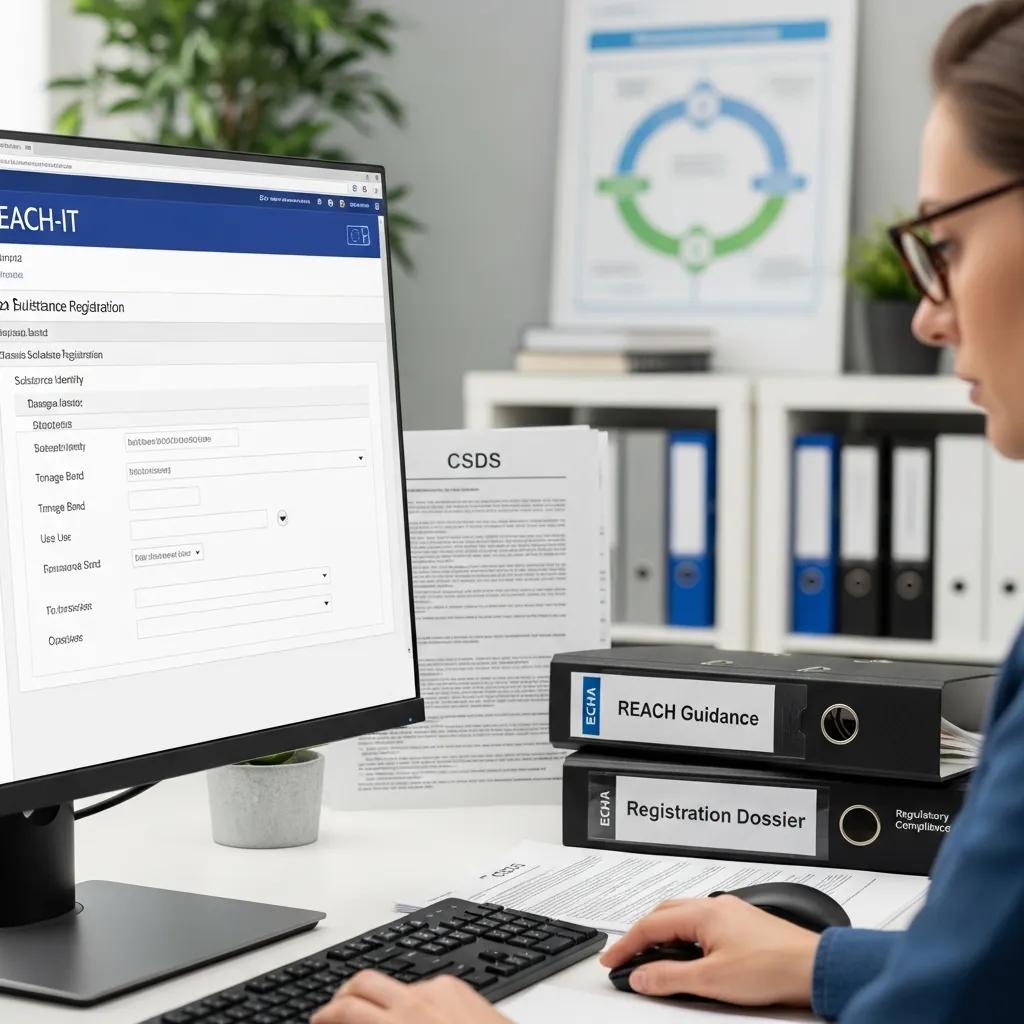
The registration process can be detailed, but it follows a predictable path: collect data, prepare a dossier in the required format, and submit via the REACH‑IT portal before placing the substance on the market. Planning and correct documentation reduce delays and rework.
What Are the Step-by-Step Procedures for Preparing and Submitting a Registration Dossier?
Start by compiling all available physicochemical, toxicological and ecotoxicological data plus intended uses and exposure scenarios. Format the information to match ECHA’s requirements, assemble the registration dossier, and submit it through REACH‑IT. Registration fees apply and vary by company size and the number of substances registered.
How Do Chemical Safety Assessments and IUCLID Data Support Registration?
Chemical safety assessments quantify risks and recommend risk mitigation measures required for the dossier. IUCLID (International Uniform Chemical Information Database) is the standard tool to structure and submit that data; using IUCLID helps ensure consistency with ECHA expectations and reduces back‑and‑forth during evaluation.
What Are the Key Elements of REACH Authorization and Restriction for SVHCs?
REACH manages substances of very high concern (SVHCs) through candidate lists, authorisation and restriction processes. These tracks limit or control high‑risk substances to protect health and the environment while encouraging safer alternatives.
How to Manage Substances of Very High Concern and Authorization Lists?
Monitor ECHA’s candidate and authorisation lists and assess whether your uses need permission. If a substance appears on the authorisation list, companies must apply to keep using it — typically by showing that risks are controlled or that the socio‑economic benefits justify continued use and no safer alternative exists.
What Are the Implications of the REACH Restriction List for Chemical Use?
The restriction list sets limits on manufacture, placing on the market, or use of specific substances. Organisations must confirm their products and processes comply with any applicable restrictions. Failure to comply risks fines, recalls and loss of EU market access, so staying current with updates is essential.
How Can AI-Driven Auditing Enhance REACH Compliance and Chemical Management?

AI-driven auditing accelerates compliance reviews, reduces manual errors, and highlights gaps that merit immediate attention. When paired with subject‑matter oversight, these tools let teams spend less time on data wrangling and more time on remediation and strategic decisions.
In What Ways Does AI Improve Efficiency and Accuracy in REACH Compliance Audits?
AI automates repetitive tasks such as extracting data from SDS, mapping uses to regulated lists, and comparing documentation against regulatory checklists. Machine learning can also spot patterns and anomalies that point to non‑conformities, helping organisations remediate issues before they escalate.
How Does Stratlane’s AI-Powered Tools Support Regulatory Gap Analysis and Documentation?
Stratlane Certification combines regulatory expertise with AI to streamline gap analysis, flag discrepancies between practices and requirements, and compile audit‑ready documentation. Our tools prioritize findings, produce traceable evidence, and speed up auditor reviews so you can close gaps faster.
How to Ensure Supply Chain Chemical Compliance Under REACH Regulations?
Sustained compliance depends on consistent processes across suppliers and customers. Adopt clear data‑sharing protocols, confirm use descriptions, and embed regular checks so compliance is monitored rather than assumed.
What Are Best Practices for Communication and Data Sharing Across the Supply Chain?
Establish standard channels for SDS exchange and change notifications, require precise use descriptors, and invest in training for procurement and operations teams. Regular supplier assessments and scheduled audits help surface inconsistencies early and keep your chain aligned.
How to Address UK REACH and International Chemical Regulation Nuances?
Post‑Brexit, companies selling in both the UK and EU must understand differences between EU REACH and UK REACH and plan for dual compliance when necessary. Track regional updates, maintain separate dossiers where required, and consult specialists for cross‑border strategies.
How Does Integrating ISO Certifications Support REACH Chemical Management?
ISO standards provide structured frameworks to manage environmental and quality risks, which complements REACH obligations. Implementing ISO systems makes compliance more systematic and auditable.
How Can ISO 14001 and ISO 9001 Frameworks Facilitate REACH Compliance?
ISO 14001 guides environmental risk management—helpful for identifying and controlling chemical impacts—while ISO 9001 strengthens document control and process consistency. Together they create repeatable controls that align with REACH requirements.What Are the Benefits of Combining ISO Standards with REACH Auditing Processes?
Combining ISO frameworks with REACH auditing improves operational consistency, simplifies evidence collection for regulators and customers, and supports market access. Organisations that demonstrate both ISO and REACH alignment often see smoother audits and stronger commercial credibility.
Frequently Asked Questions
What are the consequences of non-compliance with REACH regulations?
Non‑compliance can trigger fines, product recalls, and legal action, and it can restrict access to EU markets. Beyond regulatory penalties, reputational harm and disrupted supply chains are common consequences — so proactive compliance is the lower‑risk path.
How often should companies conduct REACH compliance audits?
At minimum, conduct annual audits. Increase frequency when you introduce new substances, change suppliers, reformulate products, or face regulatory updates. Regular reviews help catch gaps early and maintain audit readiness.
What role do safety data sheets (SDS) play in REACH compliance?
SDS are the primary vehicle for communicating hazards, safe handling, and exposure controls. Accurate, up‑to‑date SDS empower downstream users to manage risks and are a core element of REACH documentation.
How can companies stay updated on changes to REACH regulations?
Monitor the ECHA website, subscribe to official alerts, join industry associations, and attend sector events. For complex cases, retain regulatory advisors who track developments and translate changes into practical actions.
What is the significance of the IUCLID tool in REACH compliance?
IUCLID standardises how chemical data are collected and submitted to ECHA. Using IUCLID reduces formatting errors, speeds dossier preparation, and helps ensure your submission meets regulatory expectations.
How does Brexit affect REACH compliance for UK-based companies?
Brexit created two parallel regimes: EU REACH and UK REACH. UK‑based companies selling to both markets must map obligations against each regime and may need separate registrations or representation to maintain market access in the EU and UK.
Conclusion
REACH compliance is a business essential: it protects people, preserves market access, and reduces liability. By understanding registration and authorization rules, applying sound supply‑chain practices, and using AI to streamline audits and documentation, organisations can manage chemical risk more efficiently. Combine those efforts with ISO frameworks for an auditable, repeatable approach — and consider expert support if you need to scale or accelerate compliance work.