
Best Practices for Excellence with ISO 21001 – Guide

How to Achieve Excellence With ISO 21001: A Complete Guide to Certification Benefits and Implementation
Educational organisations that adopt ISO 21001 achieve measurable improvements in learner satisfaction, process consistency, and institutional credibility from day one. This guide explains what ISO 21001 is, explores its core principles, outlines key requirements, and highlights tangible benefits of certification. Readers will find an actionable, step-by-step implementation roadmap, a clear comparison with ISO 9001, real-world success stories, and advice for applying the standard to digital learning and EdTech platforms. IT directors, business leaders, and founders will gain the insights needed to integrate ISO 21001 into their quality management systems effectively.
How to Achieve Educational Excellence with ISO 21001 Certification
ISO 21001 is an Education Management System standard that provides a structured framework to enhance educational processes, align services with learner needs, and promote continuous improvement.
By defining requirements for context analysis, leadership, planning, support, operation, performance evaluation, and improvement, ISO 21001 drives consistent quality in teaching and learning.
For comprehensive guidance on this standard’s framework and certification steps, see Stratlane’s ISO 21001 for Educational Organizations. Understanding this foundation leads naturally into the core principles that shape an effective education management system.
What Are the Core Principles of the ISO 21001 Education Management System Standard?
The ISO 21001 standard centres on a learner-centred approach, leadership commitment, process orientation, stakeholder engagement, and continuous improvement.
- Learner-Centred Approach ensures programmes respond to learner requirements and well-being.
- Leadership Commitment mandates top management establish a quality policy and allocate resources.
- Process Orientation maps and controls educational activities for consistent results.
- Stakeholder Engagement involves students, educators, parents, employers and regulators in decision-making.
- Continuous Improvement drives regular reviews, audits and corrective actions to enhance outcomes.
These principles form a cohesive system that links strategic direction with daily operations, preparing organisations for the detailed requirements ahead.
How Does ISO 21001 Enhance Learner Satisfaction and Educational Quality?
ISO 21001 enhances learner satisfaction by embedding feedback loops, measuring learning outcomes, and adjusting processes based on stakeholder input. Institutions that implement learner satisfaction surveys, gap analyses, and evidence-based decision-making often see more engaged students, improved retention rates, and higher achievement levels. Embedding these mechanisms builds trust with learners and supports a culture of excellence.
Who Can Implement ISO 21001 and What Organisations Qualify?
Any entity offering educational products or services can implement ISO 21001, including:
- Schools and universities seeking to formalise quality practices.
- Vocational and technical training centres aiming to standardise curricula.
- Corporate learning and development departments integrating structured processes.
- Online course providers and EdTech platforms ensuring consistent delivery.
Such organisations gain a competitive edge by certifying their education management processes against an internationally recognised standard, setting the stage for exploring specific requirements.
What Are the Key Requirements of ISO 21001 for Achieving Educational Excellence?
ISO 21001 requires a systematic approach to context, leadership, planning, support, operation, evaluation, and improvement to achieve educational excellence. These requirements ensure that strategic goals translate into effective teaching, learning, and administrative processes.
Before examining the detailed steps, consider how each clause builds on the previous one to form an integrated management system.
How Does Context of the Organisation Influence ISO 21001 Compliance?
Context analysis involves identifying internal and external issues that affect an organisation’s ability to deliver educational services. This requirement ensures objectives align with regulatory, cultural, technological and market factors, enabling institutions to prioritise resources and address risks that could hinder quality.
What Leadership and Commitment Are Needed for ISO 21001 Success?
- Establishing a clear education policy and quality objectives.
- Allocating sufficient resources and defining roles/responsibilities.
- Communicating strategic direction throughout the organisation.
This commitment embeds quality culture and accountability, forming the foundation for effective planning and operations.
How Should Planning, Support, and Operation Be Managed Under ISO 21001?
- Planning defines objectives, identifies risks/opportunities, and sets measurable targets.
- Support addresses competence, awareness, infrastructure, and documented information.
- Operation controls the design, development, delivery and evaluation of educational services.
Together, these elements ensure processes are well-defined, resourced and executed for consistent student outcomes.
How Is Performance Evaluation and Continuous Improvement Conducted?
Performance evaluation and continuous improvement use data-driven reviews to maintain excellence. Institutions conduct internal audits, analyse learner feedback and management reviews, then implement corrective and preventive actions.
This cycle of Plan–Do–Check–Act promotes ongoing enhancements in educational quality.
| Requirement | Description | Impact |
|---|---|---|
| Context Analysis | Assess internal/external factors affecting delivery | Aligns objectives with stakeholder needs |
| Leadership Commitment | Define policies and allocate resources | Ensures strategic direction and accountability |
| Planning | Set objectives, address risks/opportunities | Drives consistent educational outcomes |
| Support & Operation | Manage competence, infrastructure, process controls | Maintains process integrity and quality |
| Performance Evaluation | Monitor, measure, report outcomes | Enables informed decisions |
| Improvement | Execute corrective actions and reviews | Promotes sustained excellence |
Standards Australia, ISO 21001:2018 – Education management systems – Requirements with guidance for use (2018)
This citation provides a concise overview of the key requirements of the ISO 21001 standard, which aligns with the article’s discussion of the same topic.
What Are the Tangible Benefits of ISO 21001 Certification for Educational Institutions?
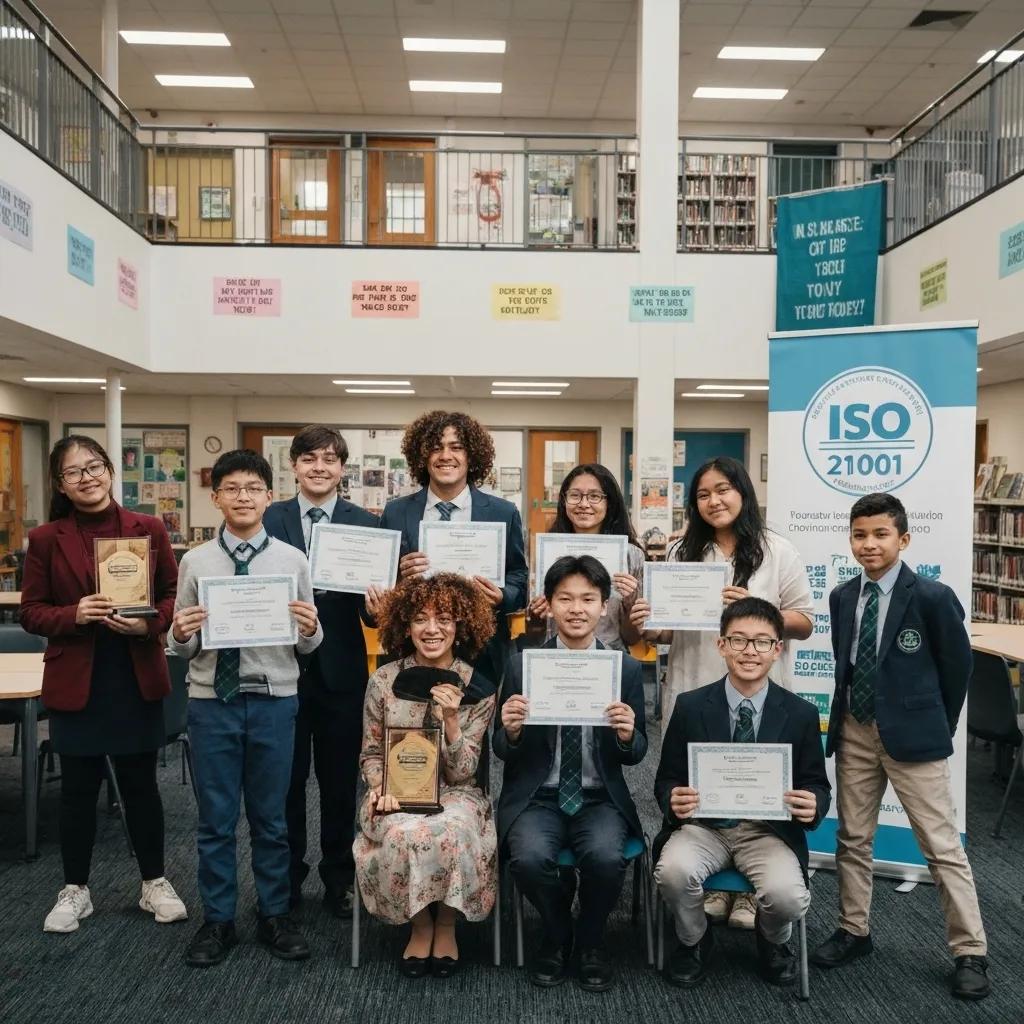
ISO 21001 certification delivers clear benefits by formalising educational processes, enhancing learner outcomes, and strengthening institutional reputation. Certified organisations routinely report faster decision-making, improved stakeholder trust, and measurable educational gains.
International Organization for Standardization, ISO 21001:2018 Educational organizations — Management systems for educational organizations — Requirements with guidance for use (2018)
This source directly supports the claims made in the article about the benefits of ISO 21001 certification.
How Does ISO 21001 Certification Improve Learner Experience and Satisfaction?
- Establishing transparent feedback mechanisms that drive service adjustments.
- Defining clear learning objectives and resources that match learner expectations.
- Implementing continuous review processes that address learner concerns promptly.
These improvements foster a responsive learning environment and higher satisfaction rates.
In What Ways Does ISO 21001 Enhance Operational Efficiency and Institutional Credibility?
By standardising processes, ISO 21001 reduces duplication, minimises errors, and optimises resource allocation. Documented procedures and performance metrics demonstrate accountability to accrediting bodies, governments and partners, strengthening institutional credibility and trust.
How Does Certification Provide Competitive Advantage and Regulatory Compliance?
Certification signals to prospective learners, employers and funding bodies that an institution meets rigorous international criteria. This credential simplifies regulatory approvals, supports funding applications, and differentiates organisations in competitive education markets.
With benefits defined, the next step is a detailed implementation roadmap.
How to Implement ISO 21001: Step-by-Step Guide to Certification Excellence
A structured implementation roadmap ensures smooth progression from planning to certification audit and beyond. Following clear phases reduces risk and accelerates results.
British Standards Institution, ISO 21001:2018 – Education management systems – Requirements with guidance for use (2018)
This source supports the article’s guidance on implementing ISO 21001, providing a framework for the certification process.
What Are the Initial Assessment and Gap Analysis Steps?
- Conducting a baseline audit to compare current practices against ISO 21001 requirements.
- Identifying gaps in processes, documentation and resources.
- Prioritising corrective actions with clear timelines and responsibilities.
This gap analysis informs the planning phase and sets achievable milestones.
How to Develop Documentation and Train Staff Effectively?
Effective documentation and training include:
- Creating policies, procedures and records mapped to ISO 21001 clauses.
- Delivering role-based training to ensure competency and awareness.
- Using interactive workshops and e-learning modules to reinforce quality practices.
Well-trained staff and clear documentation drive operational consistency and audit readiness.
What Is the Role of Internal Audits and Management Reviews?
Internal audits and management reviews verify that processes comply with the EMS and identify opportunities for improvement. Organisation-wide audits, followed by leadership reviews, ensure corrective actions are tracked and performance objectives are met.
How to Prepare for the Certification Audit and Maintain Compliance?
Preparation for the external audit involves:
- Reviewing documentation and corrective action records.
- Conducting mock audits to validate process effectiveness.
- Engaging staff with audit-readiness checklists and refresher training.
Ongoing compliance relies on regular audits, management reviews, and updating processes to reflect evolving educational needs.
How Does ISO 21001 Compare to ISO 9001 for Educational Organisations?
ISO 21001 builds on the High Level Structure used by ISO 9001, adding sector-specific requirements to meet learner-centred goals. This direct lineage ensures familiarity for organisations with ISO 9001 while providing tailored processes for education.
Below is a concise comparison:
| Standard | Focus | Core Benefit |
|---|---|---|
| ISO 21001 | Education management systems | Tailors quality to learner needs |
| ISO 9001 | General quality management | Broad applicability across sectors |
What Are the Core Differences Between ISO 21001 and ISO 9001?
Key differences include:
- ISO 21001 requires explicit learner-centred objectives and satisfaction measurement.
- ISO 9001 focuses on customer satisfaction in any industry, lacking education-specific clauses.
- ISO 21001 mandates stakeholder engagement with educators, learners and regulatory bodies.
Why Is ISO 21001 More Suitable for Education Than ISO 9001?
ISO 21001 incorporates pedagogical considerations, direct measurement of learning outcomes, and explicit requirements for educational resource management. This specificity addresses sector challenges that ISO 9001 alone does not cover.
How Does ISO 21001 Build Upon and Integrate ISO 9001 Principles?
ISO 21001 integrates ISO 9001’s process approach, risk-based thinking and PDCA cycle while adding clauses on educational context, learning design, and stakeholder evaluation. This integration streamlines transition for organisations familiar with ISO 9001.
What Are Real-World Examples of Educational Institutions Achieving Excellence With ISO 21001?
Case studies demonstrate how ISO 21001 translates into measurable improvements in diverse settings, providing proof-points for prospective adopters.
How Did University X Overcome Challenges to Achieve ISO 21001 Certification?
University X aligned its research and teaching divisions through an EMS governance committee, resolved documentation inconsistencies, and adopted a centralised training platform to equip staff with EMS skills.
What Quality Improvements Did Vocational College Y Experience Post-Certification?
Vocational College Y reduced course development lead times by 30 percent, enhanced employer partnerships through regular stakeholder reviews, and improved graduate placement rates.
How Did Online Learning Provider Z Enhance Learner Satisfaction Through ISO 21001?
Provider Z implemented systematic feedback surveys, optimised digital content based on learner analytics, and introduced continuous improvement sprints that raised satisfaction scores by 20 percent.
These examples illustrate the broad applicability and impact of ISO 21001, leading to its adoption in both traditional and digital contexts.
How Is ISO 21001 Applied to Digital Learning and EdTech Platforms?

ISO 21001 adapts seamlessly to online education by emphasising digital reliability, data security, and virtual learner engagement. This ensures e-services meet quality expectations comparable to face-to-face instruction.
What Are the Unique ISO 21001 Requirements for Online Educational Services?
Online providers must address:
- Digital content integrity and version control.
- Platform accessibility, usability and learner support.
- Data privacy, security measures and compliance with regulations.
How Does ISO 21001 Address Data Security and Platform Reliability?
ISO 21001 mandates risk assessments for information systems, controls for data confidentiality, and regular performance monitoring of digital platforms. This approach safeguards learner data and service uptime.
How Can Virtual Learning Experiences Benefit From ISO 21001 Certification?
Certification in a digital context promotes trust among learners and partners, differentiates platforms in a crowded market, and provides a framework for ongoing enhancement of interactive tools and content delivery.
Achieving ISO 21001 certification sets educational organisations on a path to sustained excellence. By aligning processes with learner needs, institutions enhance reputation and operational efficiency. The sector-specific focus of ISO 21001 ensures outcomes beyond general quality standards. Discover how Stratlane’s certification services can guide your organisation to lasting quality management success.