
Future of ISO 42001: Embracing Sustainability

Future of ISO 42001: Embracing Sustainability
A bold statement: the future of ISO 42001 is critical for organisations aiming to enhance their sustainability efforts. This article will explore how ISO 42001 serves as a tool for environmental stewardship, its relationship with sustainable development goals, and effective implementation strategies. By engaging with this content, readers will gain insights into aligning their operations with sustainability standards, addressing the pressing challenge of ensuring data quality and trustworthiness in the current landscape. This understanding can significantly aid businesses in adopting practices that contribute to long-term success and integrity.
ISO 42001 Key Takeaways for Effective Sustainability
- ISO 42001 establishes principles that enhance sustainability across various sectors, including healthcare and infrastructure
- The standard promotes interoperability among technologies to drive sustainable development and efficiency
- Continuous innovation is vital for businesses to adapt to market demands and regulatory changes
- A structured risk management framework strengthens corporate responsibility and aligns goals with sustainability targets
- Integrating ISO 42001 supports transparency, accountability, and stakeholder trust in environmental initiatives
Understanding ISO 42001 and Its Role in Sustainability Efforts
ISO 42001 establishes key principles that underpin sustainability across various sectors, including infrastructure and health care. The standard promotes the standardization of sustainable practices, including standard 81230, ensuring consistent behaviour in implementing energy-efficient machines and technologies. Understanding these principles is crucial for organisations aiming to experiment with innovative solutions while aligning with global sustainability goals.
Key Principles of ISO 42001 Related to Sustainability
The key principles of ISO 42001 promote interoperability among different technologies, which is vital for driving sustainable development. Chief technology officers play a crucial role in leveraging innovative solutions, such as machine learning, to enhance efficiency and reduce energy consumption. By standardising practices, organisations can adopt advanced technologies that support their sustainability goals, creating a cohesive approach to environmental responsibility.
Another significant aspect of ISO 42001 is its encouragement of continuous innovation within sustainability frameworks. By integrating modern technologies, businesses are better equipped to adapt to changing market demands and regulatory requirements. This proactive mindset not only fosters a culture of improvement but also positions organisations to lead in sustainable development, ensuring they remain competitive while contributing positively to their communities.
Importance of Standardization for Sustainable Practices
Standardisation plays a critical role in promoting sustainable practices across various industries by providing a clear methodology for organisations to follow. For example, businesses in the telecommunications sector can benefit from ISO 42001 certification, which clearly outlines the scope and requirements needed to mitigate environmental risks. This enables organisations to implement effective practices that not only comply with regulatory standards but also enhance their operational efficiencies.
Furthermore, a standardised approach fosters a unified framework that promotes accountability and transparency in sustainability efforts. This consistency helps companies navigate potential risks while also encouraging collaborative innovations in their sustainability strategies. By adopting the principles outlined in ISO 42001, organisations can better align their sustainability objectives with global targets, ensuring that their contributions are both measurable and meaningful.
ISO 42001 shapes our approach to sustainability, setting a strong foundation. Now, it is time to examine how this standard bolsters commitment to environmental stewardship, revealing the deeper connections at play.
Exploring the Link Between ISO 42001 and Environmental Stewardship

ISO 42001 effectively promotes eco-friendly management systems by establishing algorithms for risk assessment and corporate governance. Case studies illustrate successful implementations, highlighting improvements in workflow and customer satisfaction. These insights signal a commitment to sustainability while providing practical approaches for organisations aiming to enhance their environmental stewardship through ISO 42001 standards.
How ISO 42001 Promotes Eco-Friendly Management Systems
ISO 42001 supports eco-friendly management systems by integrating impact assessment protocols that help organisations evaluate their environmental performance. This structured approach, endorsed by the International Organization for Standardization, provides the necessary knowledge for businesses to identify risks and opportunities for sustainable practices. By fostering a culture of trust and transparency, organisations can engage stakeholders effectively and demonstrate their commitment to environmental stewardship.
The standard also encourages companies to consider sustainability within their operational contracts, ensuring that eco-friendly practices become integral to their business models. For instance, organisations that adopt ISO 42001 can implement guidelines that lead to long-term partnerships, where environmental impact becomes a key criterion for evaluation. This emphasis on responsible management not only enhances corporate reputation but also aligns with global sustainability efforts, driving significant progress towards a greener future.
Case Studies of Successful ISO 42001 Implementation in Sustainability
Many organisations have successfully implemented ISO 42001 to achieve significant advancements in environmental stewardship. A notable example includes a manufacturing firm that integrated automation and surveillance technologies, enhancing their resource management processes. By adopting these practices, the company not only improved efficiency but also contributed to economic growth while aligning with the principles set forth by the International Electrotechnical Commission‘s committee on environmental sustainability.
Another case study involves a facility management company that harnessed ISO 42001 standards to develop eco-friendly operational strategies. The use of systematic monitoring allowed the company to evaluate and reduce its carbon footprint effectively. This commitment to sustainable practices not only attracted partnerships but also led to improved compliance with environmental regulations, showcasing the role of ISO 42001 in shaping a more responsible business future.
Environmental stewardship is a crucial path for progress. Understanding how ISO 42001 contributes to sustainable development goals reveals a larger story that demands attention.
The Impact of ISO 42001 on Sustainable Development Goals

Aligning ISO 42001 with global sustainability targets is essential for enhancing corporate responsibility in modern business practices. This standard not only guides chief information officers in implementing effective strategies but also ensures that customer and consumer expectations are met. The upcoming sections will delve into the impact of ISO 42001 on fostering sustainable development goals and the effectiveness of its standards in promoting responsible business operations.
Aligning ISO 42001 With Global Sustainability Targets
Aligning ISO 42001 with global sustainability targets fosters an ecosystem of collaboration among various stakeholders. By establishing a shared framework, organisations can effectively address vulnerabilities within their operations while building confidence in their commitment to sustainable practices. This cooperative approach not only enhances accountability but also leads to innovative solutions that maximise environmental stewardship.
Organisations that embrace ISO 42001 demonstrate a proactive stance toward meeting international sustainability objectives. This alignment facilitates communication and understanding among stakeholders, ensuring that everyone is working towards a common goal. The result is a unified effort that not only improves operational performance but also advances global sustainability initiatives, providing meaningful contributions to a more sustainable future.
Enhancing Corporate Responsibility Through ISO 42001 Standards
ISO 42001 standards significantly enhance corporate responsibility by providing a robust framework for risk management. This framework enables organisations to identify and mitigate potential biases in decision-making processes, ensuring that leadership guides efforts toward sustainable practices. By prioritising safety and compliance within their operations, businesses can create a culture of accountability that resonates with stakeholders.
Furthermore, integrating ISO 42001 into information security management reinforces an organisation’s commitment to ethical practices. This alignment allows companies to develop comprehensive strategies that address risks and vulnerabilities while promoting sustainable development goals. The emphasis on responsible governance not only enhances the organisation’s reputation but also drives meaningful contributions to society.
- ISO 42001 strengthens corporate responsibility through a structured risk management framework.
- Leadership guided by these standards helps address biases in decision-making.
- Prioritising safety fosters a culture of accountability.
- Integration with information security management reinforces ethical practices.
- This alignment aids in developing strategies addressing risks and vulnerabilities.
The road to making a real difference is not just in understanding ISO 42001 but in applying it effectively. Next, the focus shifts to practical strategies that can guide businesses in realising their sustainable goals.
ISO 42001 Implementation Strategies for Sustainable Initiatives
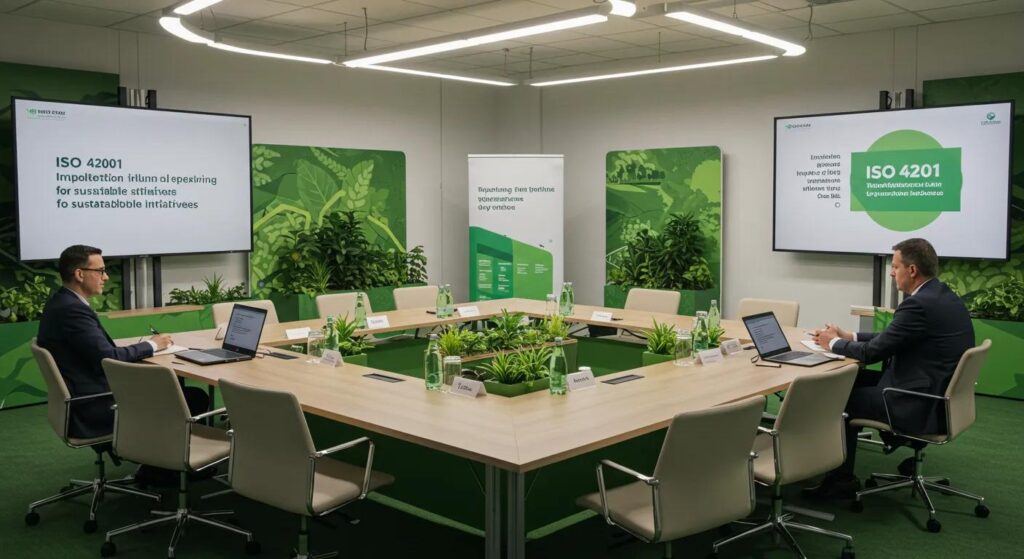
Integrating ISO 42001 into sustainability frameworks involves strategic steps focusing on resource allocation and effective data management. This section will outline methods to implement this international standard while addressing the challenges encountered during its adoption. Emphasising the value of alignment with climate goals, these insights will illustrate how organisations can navigate obstacles to enhance their sustainability initiatives.
Steps to Integrate ISO 42001 in Sustainability Frameworks
Integrating ISO 42001 into sustainability frameworks begins with establishing clear policies that reflect the organisation’s commitment to sustainable practices. These policies should outline specific specifications around resource management and operational procedures, fostering an environment where accuracy and precision in project execution become paramount. By cultivating a culture of intelligence in decision-making, organisations can ensure that their sustainability goals align with ISO standards effectively.
Next, a comprehensive risk management strategy must be developed to identify and assess potential challenges associated with implementing ISO 42001. This strategy should include mechanisms for monitoring compliance and evaluating the impact of sustainability initiatives, allowing for ongoing adjustments based on performance metrics. To further streamline this process, organisations can adopt systematic approaches that promote continuous improvement throughout their sustainability frameworks:
- Establish clear sustainability policies aligned with ISO standards.
- Implement robust specifications for resource management.
- Focus on accuracy and precision during project execution.
- Develop a risk management strategy to assess potential challenges.
- Monitor compliance and evaluate the impact of initiatives.
Overcoming Challenges in ISO 42001 Adoption for Sustainability
Overcoming challenges in the adoption of ISO 42001 requires organisations to engage in due diligence to assess their current practices and align them with quality management standards. A thorough evaluation of existing resources can identify operational risks, enabling companies to implement targeted strategies that improve sustainability outcomes. For example, conducting an internal audit not only reveals gaps in compliance but also provides opportunities to enhance processes that benefit both the organisation and society.
Furthermore, fostering a culture of continuous improvement is imperative for addressing challenges related to ISO 42001 adoption. By encouraging employees to understand the impact of their actions and how they contribute to sustainability goals, organisations can cultivate a proactive attitude towards resource management. Engaging staff through training sessions and workshops ensures that everyone is equipped to mitigate operational risks, ultimately leading to a more robust and effective implementation of ISO 42001 principles.
As businesses embrace ISO 42001, they find themselves shaping a more sustainable future. The next horizon beckons, revealing trends that could redefine how organisations engage with sustainability.
Future Trends in ISO 42001 and Sustainability Practices

Innovations in ISO 42001 development focus on enhancing transparency and standardization in sustainability practices. Upcoming environmental standards are expected to address terminology changes and improve efficiency in mitigating environmental impact. The following sections will provide insights into the anticipated advancements in these areas and their implications for embracing sustainability through ISO 42001.
Innovations in ISO 42001 Development for Sustainable Outcomes
Innovations in the development of ISO 42001 are increasingly integrating data analytics to enhance the evaluation of sustainability practices. Organisations can leverage these advancements to establish a strong culture around environmental responsibility, allowing decision-makers to understand the impact of their initiatives better. This emphasis not only supports sustainability goals but also reinforces the governance structures necessary for ethical management in the face of evolving challenges.
Furthermore, as the ethics of artificial intelligence become central to discussions on corporate responsibility, ISO 42001 provides a framework that aids in aligning technology with sustainable outcomes. Companies can incorporate AI responsibly, using it to drive efficiency while maintaining transparency in their operations. This approach fosters an accountability culture that supports informed decision-making, ultimately promoting a more sustainable future for businesses across all sectors.
Anticipating Changes in Environmental Standards
As emerging technologies continue to influence the landscape of sustainability, organisations must anticipate changes in environmental standards to maintain their competitive edge and protect their reputation. The National Institute of Standards and Technology plays a crucial role in shaping these evolving standards, particularly in integrating innovative strategies that enhance information security alongside environmental management. This integration not only aids in risk management but also promotes a holistic approach to sustainability that meets regulatory demands.
Furthermore, adapting to these anticipated changes requires organisations to develop comprehensive strategies that align with evolving environmental standards while leveraging emerging technologies. For instance, businesses can implement data-driven solutions to assess their sustainability practices and improve transparency in their operations. By staying ahead of these changes, organisations can ensure that they are meeting the latest environmental requirements, thus reinforcing their commitment to sustainable practices and enhancing their overall public image.
| Aspect | Current Focus | Anticipated Change | Impact |
|---|---|---|---|
| Emerging Technologies | Utilisation of AI and data analytics | Increased integration with environmental standards | Enhanced operational efficiency and sustainability |
| Reputation | Building trust through compliance | Greater emphasis on transparency | Improved public perception and stakeholder engagement |
| Information Security | Basic security protocols | Alignment with national standards | Stronger risk management and resilience |
| Strategy | Reactive adjustments | Proactive and robust planning | Increased adaptability to regulatory changes |
Sustainability is not just a trend; it is the path forward. Understanding how ISO 42001 supports organisations on this journey reveals the true value of commitment to a greener future.
Benefits of ISO 42001 for Organisations Committed to Sustainability

ISO 42001 offers numerous benefits for organisations dedicated to sustainability, including improving operational efficiency while actively addressing climate change. It strengthens stakeholder trust through effective sustainability initiatives, enhancing data governance and facilitating better understanding of personal data use. These elements create a strategic competitive advantage, positioning organisations as leaders in responsible business practices.
Improving Operational Efficiency and Sustainability
Implementing ISO 42001 allows organisations to significantly enhance their operational efficiency while aligning with sustainable development goals. By adopting structured approaches to resource management, businesses can streamline their processes, reduce waste, and improve overall performance. This focus on efficiency not only elevates the organisation’s credibility among stakeholders but also transforms sustainability practices into a valuable asset for long-term growth.
The integration of ethical practices within the framework of ISO 42001 facilitates effective measurement of sustainability initiatives. Organisations are empowered to assess their impact and track progress towards their goals, ensuring transparency and accountability. This proactive mindset strengthens trust with stakeholders, as companies demonstrate a commitment to ethical governance while making meaningful contributions to environmental stewardship.
Building Stakeholder Trust Through Effective Sustainability Initiatives
Building stakeholder trust is essential for organisations committed to sustainability, particularly through the implementation of ISO 42001. By adopting effective sustainability initiatives, companies can ensure regulatory compliance while transparently showcasing their efforts. This approach not only enhances the customer experience but also demonstrates the organisation’s commitment to ethical practices, especially in light of emerging frameworks such as the artificial intelligence act and its implications for responsible governance.
Furthermore, organisations can leverage strategic planning within their sustainability frameworks to integrate information technology effectively. By utilising data analytics and modern technology, they can track progress and share results with stakeholders, thereby fostering a culture of accountability. This proactive stance solidifies stakeholder confidence as businesses align operational goals with sustainability objectives, highlighting their dedication to responsible environmental stewardship.
Conclusion
The future of ISO 42001 holds significant promise for driving sustainable practices across various sectors, reinforcing the need for organisations to adopt eco-friendly management systems. By embracing the principles outlined in ISO 42001, businesses not only enhance their operational efficiencies but also build stakeholders’ trust through transparency and accountability. As emerging technologies integrate with environmental standards, proactive adaptation becomes essential for maintaining a competitive edge. Ultimately, committing to ISO 42001 positions organisations at the forefront of the sustainability movement, ensuring they contribute positively to global environmental goals.