

An ISO consultant helps organizations align management systems, records, and processes to meet a specific ISO standard and reach certification efficiently. The right advisor speeds readiness by identifying gaps, delivering a complete documentation package, and training your team so you can demonstrate conformity during the external audit. This guide walks through what consultants do, how to evaluate them, and how their work fits into Stratlane Certification’s AI-enabled audit workflow. Common obstacles — scattered records, unclear process ownership, and inconsistent internal audits — are solvable with the right consultant, which reduces cycle-time and repeat findings. You’ll get practical vetting criteria, cost vs. value guidance, AI-readiness actions consultants should take, and where to find recommended advisors — including how to use Stratlane’s Find an ISO Consultant resource. By the end, you’ll have a clear, actionable plan to select a consultant and hand off deliverables so certification proceeds smoothly.
What Does an ISO Consultant Do? Their Role in Your Certification Journey
An ISO consultant performs a structured gap analysis, prepares a documentation package, and builds internal audit and training programs so your organization can demonstrate conformity at **certification**. They translate standard clauses into operational processes, identify missing evidence, and create traceable records auditors expect — reducing delays and repeat findings. Consultants also coach leadership on management review and corrective action so readiness is sustainable. Knowing these core functions explains why smart advisory often shortens the road to audit readiness and improves the quality of evidence; the next section breaks down the must-have consultant activities.
Key Functions of an ISO Consultant: Gap Analysis, Documentation, and Training
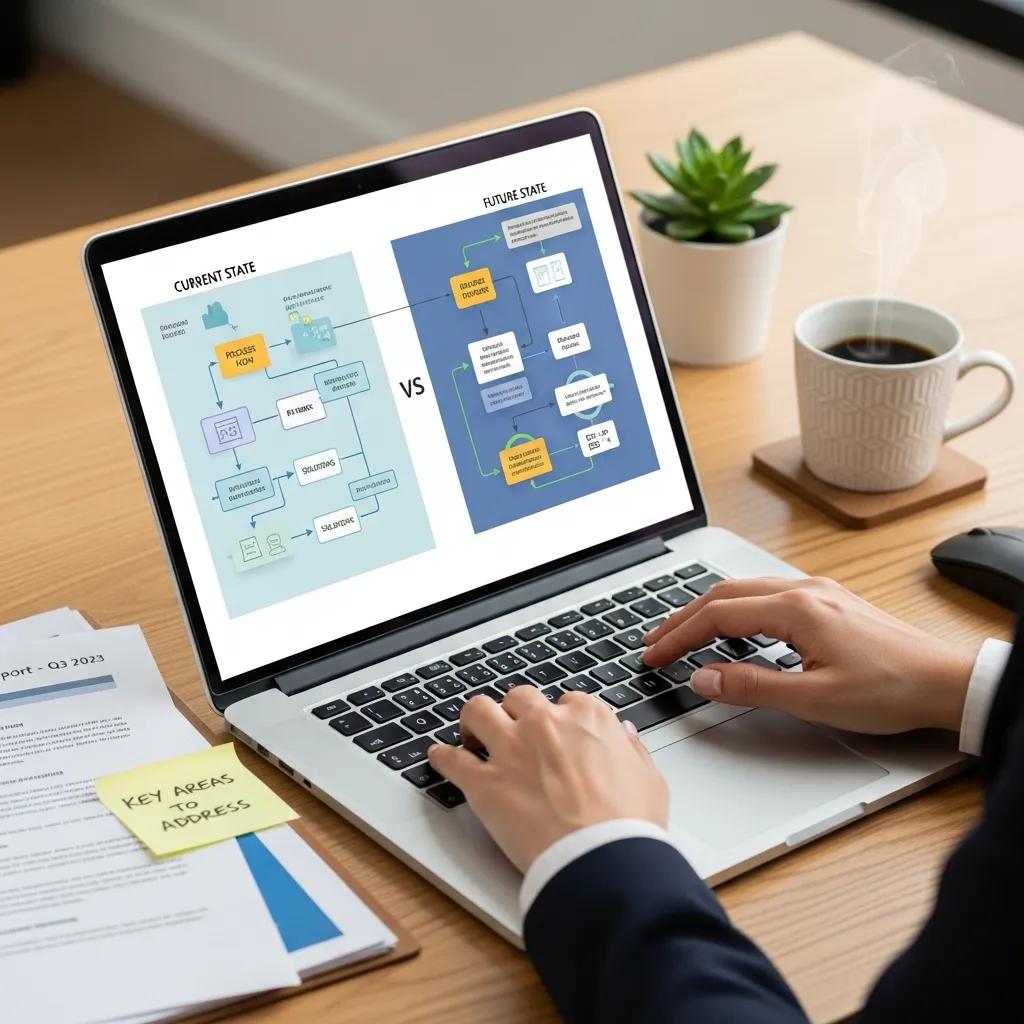
A gap analysis compares your current processes to the target ISO standard and produces a prioritized list of nonconformities and remediation steps that form the project plan. Effective consultants deliver a documentation package — policies, process maps, work instructions, internal audit checklists, and record templates — all designed for traceable evidence. Training is role-specific, from process owners to senior leaders, so everyone knows how to create and keep audit-ready records. These deliverables work together: analysis guides documentation, documentation enforces consistent practice, and training secures adoption — together lowering the risk of repeat findings at certification.
Why Expert Guidance Improves Your Certification Success Rate
Expert advisors focus remediation on root causes rather than cosmetic fixes, so records are complete, linked, and easy to retrieve during an audit. Consultants bring judgement from prior audits, anticipate auditor evidence requests, and structure internal audit cycles and management reviews that catch issues early. That operational foundation typically leads to clearer evidence trails, fewer corrective actions at the external audit, and a higher chance of first-pass acceptance.
With the consultant role clear, many teams ask how to choose the best advisor for their standard and sector — the next section gives a practical vetting framework.
How to Choose the Best ISO Consultant: Essential Criteria and Considerations
Choosing the right consultant means evaluating both standard-specific knowledge and sector experience so the advisor understands technical requirements and your operational context. Ask for demonstrable deliverables — sample audit checklists, process templates, and anonymized case studies showing measurable outcomes — to verify practical skill over theory. Communication style, project methodology, and clarity on timelines and handovers are critical: you want a consultant who prepares teams for a smooth external audit. Use the short checklist below in initial vetting conversations and to compare finalists.
- Relevant Standard Experience: Confirm the consultant has completed projects for your target standard (for example, **ISO** 9001 or ISO 27001).
- Industry Fit: Ensure they understand sector-specific regulations and common risk areas for your industry.
- Deliverables and Artifacts: Request templates, sample checklists, and anonymized case summaries that show practical outputs and results.
This checklist helps separate consultants who can implement an auditable system from those who offer only high-level advice; next we detail how to evaluate experience by standard.
| Selection Criterion | What to look for | Red flags / Positive signals |
|---|---|---|
| Standard-specific experience | Sample audit checklists or completed project summaries for the specific standard | Positive: concrete templates and references; Red flag: vague claims without artifacts |
| Industry knowledge | Evidence of sector controls, compliance references, or anonymized case outcomes | Positive: sector case studies; Red flag: one-size-fits-all approach |
| Communication & delivery | Clear project plan, milestones, and a handover checklist | Positive: documented handover; Red flag: unclear timelines or scope creep |
Use these criteria to structure interview questions and verify competence; the following section explains what to request for each standard.
Evaluating Experience and Expertise Across ISO Standards
Ask for artifacts and references that show practical application of the standard’s requirements. For ISO 9001 expect process maps, control points, and quality objectives linked to measurement methods. For ISO 27001 look for risk assessment matrices, treatment plans, and proof of implemented controls. Specialist labels — for example “ISO 45001 consultant” or “internal audit consultant” — should come with example internal audit reports and evidence of how records map to clauses. Reviewing artifacts verifies the consultant can convert abstract clauses into operational practice and speeds evidence preparation ahead of audit.
Assessing Industry-Specific Knowledge and Proven Track Record
Industry fit matters because compliance and evidence expectations vary across sectors like healthcare, finance, or defense; sector experience reduces rework during audit. Ask targeted questions about prior projects: what unique controls they implemented, how they protected confidential data, and how they coordinated with regulated suppliers. Positive signals include anonymized success metrics, role-based training records, and a clear plan for integrating regulatory needs into the management system. Confirming industry competence ensures templates and audit focus are tailored to your operational risks.
How Can Your ISO Consultant Prepare You for Stratlane’s AI-Driven Auditing Process?
AI-driven audits work best when evidence and processes are organized so automated analytics can quickly validate conformity. Consultants should prioritize digital process optimization, metadata-rich records, and consistent version control so AI tools can find required evidence without manual searching. That preparation makes Stratlane Certification’s AI-enhanced audits faster and more focused. The checklist below lists practical preparatory actions consultants should take to align readiness with AI-enabled auditing.
- Metadata and Naming Standards: Apply consistent file naming, indexing, and metadata tags so evidence is machine-discoverable.
- Document Management Optimization: Implement version control, access logs, and centralized storage to preserve audit trails.
- Process Mapping for Data Flows: Map where evidence is created, stored, and who owns it so AI queries can trace records end-to-end.
This checklist focuses consultant activity on digital readiness; the table below maps data and process areas to consultant actions and expected AI-readiness outcomes.
| Data/Process Area | Consultant Preparatory Action | Stratlane AI-readiness Outcome |
|---|---|---|
| Document storage | Centralize documents with consistent naming and version control | Faster evidence retrieval by AI tools |
| Audit trails | Ensure access logs and change history are maintained | Clear traceability for automated verification |
| Process mapping | Create end-to-end process maps with designated data owners | AI can correlate records to process steps efficiently |
This mapping shows how consultant tasks produce measurable AI audit readiness; the next section explains AI-enhanced audits in practice.
Understanding Stratlane’s AI-Enhanced Certification Audits
Stratlane’s AI-enhanced audits combine automated evidence discovery with professional auditor judgment. The AI layer verifies routine items — document existence, versioning, and traceability — so auditors concentrate on high-risk findings. For clients this usually means shorter on-site time, fewer broad document requests, and a focused audit scope. Preparing for this approach requires digitization and structured evidence so the AI and auditors can work efficiently together.
Consultant’s Role in Data Readiness and Digital Process Optimization
Consultants should focus on high-ROI changes: standardize file naming, enforce retention and access policies, and set up a single source of truth for records. They can build internal audit checklists that mirror likely AI queries, run mock evidence retrievals, and train staff to tag and index records consistently. Often simple document management tools and disciplined processes are enough — the priority is traceability and repeatability, not expensive software. These steps help your organization present a coherent digital evidence set during Stratlane’s AI-driven review and speed certificate issuance when you’re ready.
With data and processes aligned for AI audits, the next question is how consultant deliverables map to the certification steps you’ll follow with Stratlane — we outline that workflow next.
What Is the Certification Journey from Consultant Preparation to Stratlane Audit?
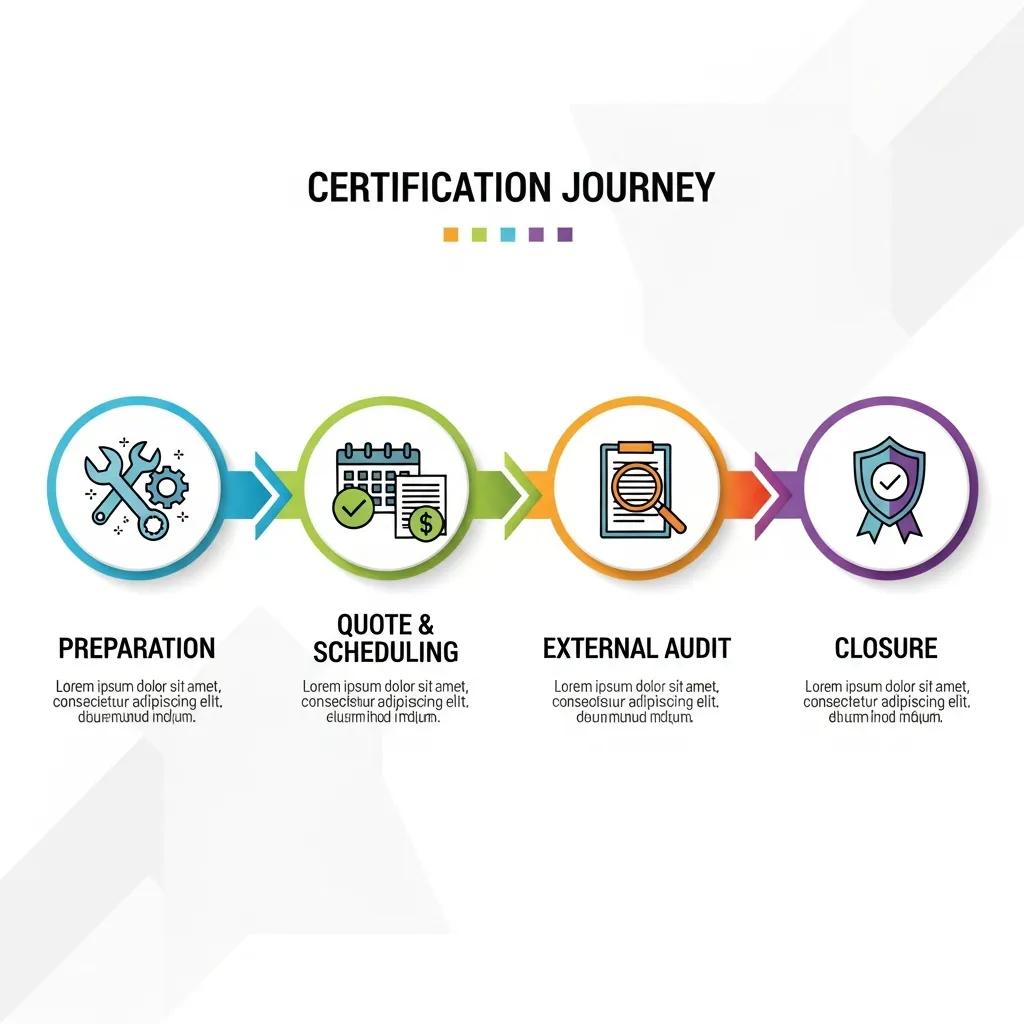
The certification journey is a sequence: consultant-led preparation builds an auditable management system, then the organization requests a quote, accepts the offer, schedules the audit, addresses any nonconformities, and receives the certificate. Clear role definitions — consultant prepares evidence, client implements controls, **certification** body performs an independent assessment — keep the process efficient and auditable. Timelines vary by scope and readiness, but well-structured documentation typically speeds scheduling and reduces repeat audits. The numbered list below outlines common workflow steps toward certificate issuance.
- Preparation: Consultant conducts gap analysis, produces documentation, and runs internal audits.
- Quote & Scheduling: Client requests a quote and schedules the audit with the certification body.
- External Audit: Certification auditors, supported by AI tools, assess system conformity and issue findings.
- Close Nonconformities: Client addresses findings and submits evidence for verification, leading to certificate issuance.
This stepwise flow clarifies responsibilities and decision points; the table below links consultant deliverables to Stratlane’s quote→audit→certificate workflow and suggests where to trigger a transactional action.
| Phase | Consultant Deliverable | Certification Action / Outcome |
|---|---|---|
| Preparation | Gap analysis, documentation package, internal audit reports | Client ready to request a quote |
| Quote & Schedule | Handover pack and readiness statement | Client requests quote and schedules audit (Get a Quote / Request an Audit) |
| Audit | Evidence presentation and auditor liaison | Stratlane conducts AI-enhanced audit and issues findings |
| Closure | Corrective action records and verification evidence | Certificate issued after verification and certificate management steps |
This mapping shows how consultant outputs feed into Stratlane’s workflow and when to request a formal quote or audit; the next section covers handover best practices.
Smooth Transition: From Consultant Guidance to Stratlane’s Certification Audit
A smooth handover starts with a concise Handover Pack: the documentation package, internal audit reports, management review minutes, and a readiness statement that highlights remaining risks. Consultants should provide an indexed evidence list mapped to standard clauses so auditors can locate records quickly and arrange a pre-audit call to set expectations. Clients should confirm access permissions and ensure auditors can view centralized repositories or evidence exports without bottlenecks. These steps reduce back-and-forth and make the verification process more efficient.
Why Stratlane’s Global Accreditation and Efficiency Matter for Your Certification
Stratlane Certification’s accreditation across 27+ countries and auditors in 29+ countries supports global recognition and acceptance of issued certificates — important for organizations with multinational supply chains or cross-border requirements. Their AI-driven audit tools increase efficiency and let auditors focus on substantive risks instead of routine evidence gathering, which shortens cycle times and sharpens audit scope. For clients, this reduces administrative overhead and eases international acceptance of certificates. A well-prepared handover and digital readiness therefore become strategic advantages.
Once certified, organizations display the Stratlane ISO Certification Logo as visible proof that their management system was independently audited and certified. This mark, properly known as the Stratlane Certification mark, is issued and owned by the certification body under defined usage rules, distinct from the ISO emblem itself, and should only be used in ways that accurately represent the scope of certification. Certified organizations agree to comply with all requirements of the Stratlane Certification BV Charter and the relevant accreditation body’s regulations, which govern how the mark may be displayed and how certification status is maintained between audits.
How Much Does Hiring an ISO Consultant Cost and What Value Do They Provide?
Consultant fees depend on scope, standard complexity, number of sites, and baseline maturity. Common pricing models include fixed project fees, day rates, or retainers. Instead of focusing only on sticker price, evaluate the consultant’s impact on time-to-certification, the volume of corrective actions, and the quality of evidence delivered. The table below compares consultant types, typical fees, and likely value outcomes to help match approach to budget and timeline.
Consider these primary cost drivers: project scope (single site vs. multi-site), standard complexity (integrated systems vs. a single standard), and baseline maturity (new system vs. mature practice). The table summarizes consultant types and expected value impacts.
| Consultant Type | Typical Fee Range / Service Included | Cost-effectiveness / Time-to-certification impact |
|---|---|---|
| Independent freelancer | Low-to-moderate fees; focused on templates and coaching | Moderate cost-effectiveness; faster for small scopes |
| Boutique advisory firm | Moderate fees; project management and tailored templates | High cost-effectiveness for multi-site or complex projects |
| Specialist standard consultant | Moderate-to-high fees; deep technical controls for specific standards | High impact on technical compliance and audit readiness |
This comparison helps you match consultant type to organizational needs and budget; the next section offers practical guidance for estimating fees and negotiating scope.
Understanding Consultant Fees and Cost-Effectiveness in Certification Preparation
Request a scoped proposal that breaks down activities: gap analysis, documentation drafting, internal audits, training, and handover support. Negotiate milestones tied to deliverables and acceptance criteria so payments align with measurable progress. In some cases, paying more upfront for a specialist reduces total audit days and corrective actions — producing a faster ROI. Compare expected fee against likely reductions in audit time and follow-up to find the most cost-effective model.
Benefits of Hiring a Consultant: Time Savings, Expertise, and Audit Success
Good consultants shorten readiness timelines by prioritizing critical controls, improve documentation and internal audits, and reduce administrative load on in-house teams. They clarify how records map to clauses, which boosts auditor confidence and lowers ambiguous findings. Over time, structured processes, trained staff, and sustainable controls reduce surveillance issues and streamline recertification. For organizations with limited internal ISO experience, these benefits frequently justify the investment.
Where Can You Find Recommended ISO Consultants for Your Industry and Region?
Start your search in trusted channels: professional networks, industry associations, accredited body directories, and vetted consultant marketplaces. Stratlane’s Find an ISO Consultant resource connects organizations with consultants experienced in certification readiness and AI-aligned practices. Use filters for standard expertise, industry focus, and deliverable examples, then run the vetting steps above to confirm fit. The next section explains how to use Stratlane’s resource effectively.
Accessing Stratlane’s ‘Find an ISO Consultant’ Resource and Networks
Stratlane’s Find an ISO Consultant tool helps you connect with qualified advisors who prepare clients for certification audits. Search by standard and specialty to find consultants who can produce handover documentation aligned to audit requirements. When evaluating candidates, request specific artifacts — gap analyses, internal audit reports, and documentation templates — and ask how they prepare clients for AI-enabled audits. After shortlisting, request a certification quote from Stratlane once readiness is verified.
Choosing Consultants Specialized in Your Industry: SMEs, Corporations, and Defense Sector
Different organization types need different approaches: SMEs benefit from practical, low-overhead templates and coaching; large enterprises require structured project management and multi-site coordination; high-security sectors like defense need strict evidence control and secure handling of classified information. Prioritize consultants with experience at your scale and sector, and confirm their procedures for confidentiality and secure evidence handling. Matching consultant specialization to your context ensures deliverables are fit-for-purpose and reduces friction during assessment.
Where to search and quick vetting tips:
- Search channels: industry associations, professional networks, accredited body directories.
- Vetting questions: ask for templates, sample internal audit reports, and a handover checklist.
- Selection tips: prioritize demonstrable artifacts and references over broad claims.
These steps focus your search and help you identify consultants who will prepare you for a smooth certification engagement with an accredited body.
Frequently Asked Questions
1. What qualifications should I look for in an ISO consultant?
Look for relevant certifications (for example, ISO 9001 Lead Auditor), demonstrable industry experience, and a track record in your sector. Ask for case studies or references and sample artifacts that show practical outcomes. Prioritize consultants who explain standards clearly and translate requirements into day-to-day practices.
2. How long does the ISO certification process typically take?
Time to certification varies by organization size, standard complexity, and baseline maturity. Expect anywhere from a few months to more than a year. Key stages are gap analysis, documentation, internal audits, and the external audit. A knowledgeable consultant can streamline the process by ensuring evidence and documentation are audit-ready before the external assessment.
3. What are the common challenges organizations face during ISO certification?
Common challenges include incomplete documentation, insufficient staff training, unclear process ownership, and resistance to change. Misaligned practices with ISO requirements create gaps that must be fixed before certification. An experienced consultant helps structure the work, deliver training, and ensure documentation meets auditor expectations.
4. How can I ensure my organization maintains ISO compliance after certification?
Maintaining compliance requires ongoing effort: regular internal audits, periodic management reviews, continuous training, and a culture of improvement. Track corrective actions, monitor performance, and schedule refresher training. Periodic consultant check-ins or targeted support can help address emerging issues before surveillance audits.
5. What role does technology play in the ISO certification process?
Technology streamlines evidence management and audit preparation. Document management systems, audit tools, and AI-driven analytics help organize records, automate evidence collection, and surface compliance metrics. Properly structured technology reduces administrative effort and speeds both preparation and the audit itself.
6. How can I prepare my team for the ISO certification audit?
Train staff on roles and responsibilities, document expectations for evidence, and run mock audits to familiarize teams with the process. Clear communication about what auditors will ask for and where evidence lives builds confidence and reduces on-site friction.
7. What should I do if my organization fails the ISO certification audit?
If you receive nonconformities, review the auditor’s report, work with your consultant to develop a corrective action plan, implement fixes, and run internal checks to verify effectiveness before a follow-up audit. Treat the findings as a roadmap for improvement and a chance to strengthen your system.
Conclusion
Hiring a qualified ISO consultant can accelerate your certification journey, improve documentation quality, and reduce audit friction. With focused advisory support you’ll build sustainable processes, train your team, and present clear evidence — all of which shorten time to certificate. Explore Stratlane’s resources and use our Find an ISO Consultant tool to connect with advisors who match your standard and industry. Get started today and move confidently toward certification.