
Meet Stratlane’s Expert ISO Auditors for Your Industry Needs

Meet Stratlane’s Industry-Specific ISO Auditors — Your Practical Guide to AI-Enabled ISO 9001 & ISO 27001 Certification
At Stratlane, our ISO auditors pair deep industry experience with AI-assisted processes to speed certification without compromising compliance. This guide explains who our auditors are, how AI supports ISO 9001 and ISO 27001 audits, the practical steps your team should take to prepare, and why industry context matters for reliable outcomes. Many organizations find it hard to turn documented procedures into consistent operational evidence — the right auditor skillset plus a structured checklist reduces rework and makes remediation priorities clear. Inside you’ll find a map of auditor roles, an end-to-end AI-enabled certification workflow, step-by-step ISO 9001 guidance, the key ISO 27001 control areas, and practical onboarding and post-certification support. Expect actionable lists, concise EAV-style tables to speed preparation, and clear next steps for engaging auditors and managing certificate lifecycles.
Who Are Stratlane’s Industry-Specific ISO Auditors?
Our industry-specific ISO auditors are seasoned professionals who combine sector knowledge with sound audit methodology to assess compliance and operational effectiveness. They evaluate quality management systems (QMS) and information security management systems (ISMS) by mapping documented processes to actual practice, sampling evidence, and identifying the nonconformities that matter in your sector. That focus reduces false positives and concentrates CAPA on systemic risks, producing reports that drive meaningful remediation and a clearer path to certification. Knowing auditor roles up front sets expectations for readiness checks, evidence collection, and final certification recommendations — so teams can allocate resources to the highest-impact work.
What industries do Stratlane’s ISO auditors specialize in?
We audit across sectors where regulatory and operational risk profiles differ, tailoring our approach to each context. Common coverage includes manufacturing (supplier controls and process capability), IT and cloud services (access control and change management), and healthcare & life sciences (patient data protection and traceability). We also support academic and research institutions with attention to research data integrity and records. This sector-aware approach ensures auditors sample the most relevant evidence and assess the right risk indicators, improving the usefulness of findings and shortening time-to-certification.
How does Stratlane ensure auditor expertise and certification?
Auditor qualification is built on verified ISO competence, sector experience, and continuous training in audit techniques and standards interpretation. We prioritize experience with ISO 9001 and ISO 27001 projects and supplement that with ongoing education on emerging topics like secure software supply chains and cloud security. Regular competency reviews, peer reviews of audit outputs, and standardized checklists and evidence templates keep assessments consistent across industries. These governance practices ensure our auditors stay current with standard updates and sector expectations, so clients receive precise, actionable guidance to close gaps and strengthen their management systems.
How Does the AI-Driven ISO Certification Process Work at Stratlane?

Our AI-driven certification blends automated evidence parsing with human auditor judgment to accelerate readiness checks, highlight high-risk findings, and surface patterns that manual review can miss. The workflow typically starts with a gap analysis, then bulk evidence ingestion where AI maps documents to clauses. AI flags anomalies and assigns risk scores so auditors can focus on sampling and contextual interviews. Auditors then synthesize findings into a clear audit report with recommended corrective actions and a certification recommendation, while scoping certificate lifecycle needs for surveillance and renewals.
The AI-enabled workflow in practice:
- Readiness Assessment: Automated clause mapping uncovers obvious gaps and prioritizes areas for manual review.
- Evidence Ingestion: AI parses documents, logs, and records, tagging evidence against relevant clauses.
- Risk Scoring & Anomaly Detection: Algorithms rank controls by risk to guide auditor sampling and interviews.
- Auditor Review & Verification: Industry-specific auditors validate AI-flagged items through observation and targeted tests.
- Reporting & Certification Recommendation: Findings are consolidated into an audit report with prioritized corrective actions.
This sequence shows where AI speeds work and where auditor oversight remains essential — which leads into specific applications for ISO 9001 and ISO 27001.
We pair this workflow with client-facing options to convert readiness into action: request a tailored quote or schedule an initial assessment through Stratlane’s service portal. Those engagements include certificate lifecycle planning and surveillance scheduling so teams move from remediation to sustained compliance.
What role does AI play in streamlining ISO 9001 certification?
For ISO 9001, AI accelerates document triage, maps QMS records to clauses, and spots trends in nonconformity data that signal systemic quality issues. Automated parsing shortens the initial evidence review so auditors can spend more time on observations and interviews where context matters. Pattern detection highlights recurring defects in customer-facing processes, helping prioritize CAPA and reducing repeat findings in surveillance. Combined with targeted auditor sampling, this yields more focused QMS audits and faster resolution of root causes.
How does AI support compliance with ISO 27001 requirements?
In ISO 27001 audits, AI maps technical and organizational artifacts — access logs, configuration snapshots, policy records — to Annex A controls and objectives. Automated sampling and anomaly detection surface unusual access or configuration drift that need deeper investigation. AI also helps prioritize controls based on risk assessment outputs so auditors test the most impactful areas first. This doesn’t replace manual testing or interviews; it sharpens audit scope and reduces time spent on low-risk evidence review.
What Are the Key Steps in the ISO 9001 Certification Process for Businesses?
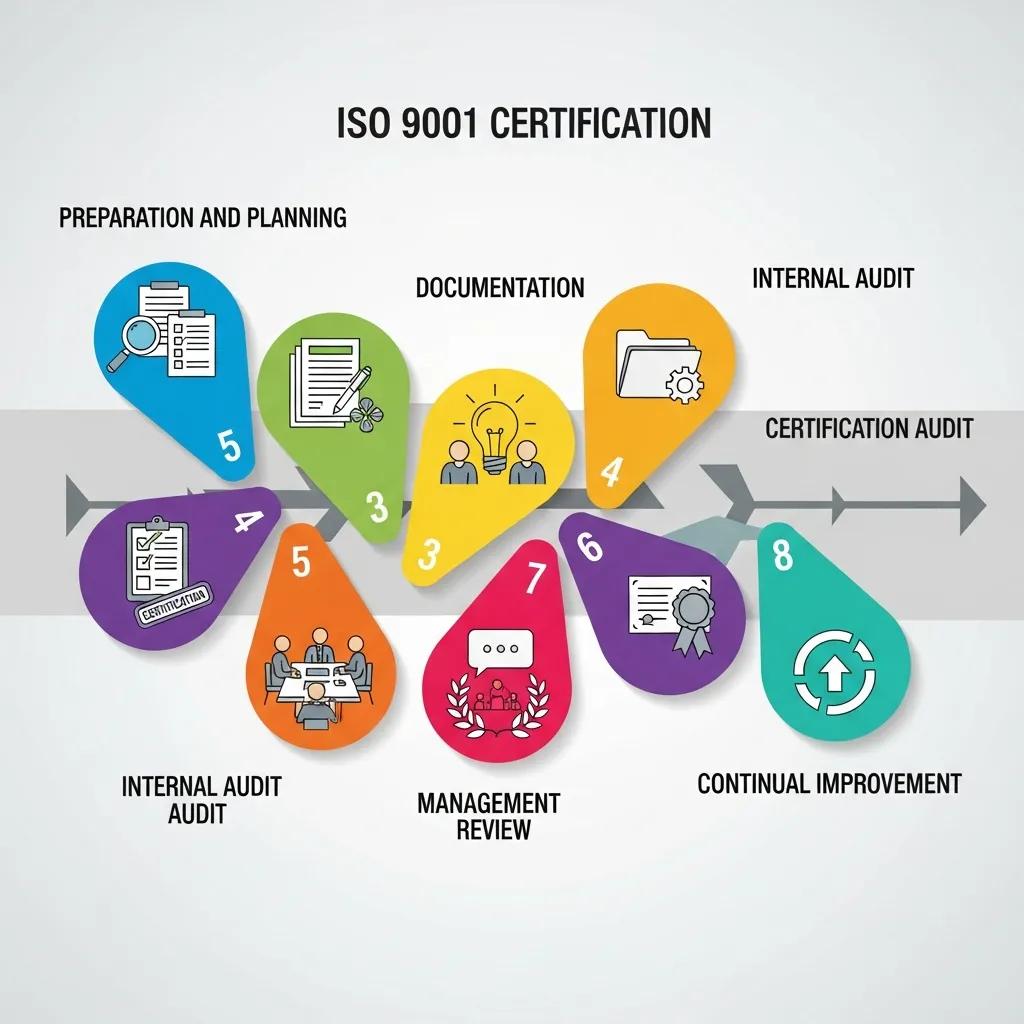
ISO 9001 certification follows a clear progression from readiness to formal audits and ongoing surveillance. Auditors expect an implemented QMS that shows process control, customer focus, documented procedures, internal audits, and management review. The steps below outline how teams can prepare and align activities with auditor expectations.
- Gap Analysis / Readiness Assessment: Identify missing documentation and process shortfalls against ISO 9001 clauses.
- Documentation & Implementation: Finalize QMS documents, procedures, and records; roll out process changes.
- Internal Audit & Management Review: Run internal audits, capture findings, and complete management reviews to confirm system effectiveness.
- Corrective Actions (CAPA): Address nonconformities with root-cause analysis and recorded corrective actions.
- Stage 1 & Stage 2 Audits: Stage 1 checks readiness; Stage 2 is the full certification audit with sampling and interviews.
Auditor expectations at each stage — a quick reference table to help teams prepare targeted materials:
| Step | Auditor focus | Expected evidence / outcome |
|---|---|---|
| Gap Analysis / Readiness | Clause mapping and documented gaps | Gap report, mapped clauses, remediation plan |
| Documentation & Implementation | Procedures and process controls | QMS manual or procedures, process records |
| Internal Audit & Management Review | Effectiveness checks and leadership oversight | Internal audit reports, management review minutes |
| Corrective Actions (CAPA) | Root-cause resolution and prevention | NCR records, CAPA logs, verification evidence |
| Stage 1/Stage 2 Audits | Operational conformity and objective evidence | Audit report, sampled records, auditor findings |
Use this EAV table to align your evidence package with the concrete items auditors expect to see.
How do Stratlane auditors assess quality management systems?
We assess QMS by combining document review, process observation, focused interviews, and evidence sampling to confirm procedures are both implemented and effective. Auditors look for measurable outputs — customer satisfaction metrics, process capability data, corrective action histories — and verify controls are sustained over time. Sampling targets high-risk processes and recent issues to confirm CAPA effectiveness. That mixed-method approach yields reports that prioritize systemic issues and recommend practical CAPA steps before certification audits.
What documentation and evidence are required for certification?
Auditors expect core QMS documents and supporting records that show scope, process controls, and continuous improvement. Typical items include the QMS scope, process procedures or clause mappings, internal audit reports, management review minutes, and records of corrective action. Useful evidence examples are process performance data, customer complaint logs, training records, calibration certificates, and objective records of process outputs. Organizing materials into an evidence package aligned to clause references streamlines review and reduces time-to-certification.
How Does Stratlane Address ISO 27001 Requirements for Information Security?
We assess ISO 27001 by mapping your ISMS, risk assessment results, and technical controls to the standard’s objectives and Annex A controls. Auditors concentrate on scope definition, risk treatment planning, and a mix of technical evidence (logs, configuration snapshots) and organizational evidence (policies, training records). The aim is to confirm risks are identified, controls are implemented and effective, and clear responsibilities for information security exist. Practical prep steps include a focused gap analysis, consolidating evidence, and completing an internal audit cycle before scheduling certification.
Controls reference table: critical control areas, auditor focus, and sample evidence to help prioritize pre-audit work.
| Control area | Control focus | Sample evidence / preparation tip |
|---|---|---|
| Access control | Authentication and least privilege | Access logs, user access reviews, role definitions |
| Asset management | Inventory and ownership | Asset register, classification policies, labeling |
| Incident management | Detection and response | Incident logs, response exercises, post-incident reports |
| Cryptography | Data protection controls | Encryption policies, key management records, implementation evidence |
| Business continuity | Resilience and recovery | BCP plans, test results, backup validation records |
What are the critical controls evaluated by Stratlane auditors?
Key ISO 27001 controls we evaluate include access control, asset management, incident response, cryptography, and business continuity. Auditors confirm access controls through provisioning records, periodic access reviews, and log evidence showing least-privilege enforcement. Asset management requires an up-to-date inventory and ownership assignments. Incident management is reviewed via incident logs, response timelines, and lessons learned. Verifying these controls normally needs both technical artifacts and organizational records to show consistent control operation.
How can businesses prepare for ISO 27001 audits with Stratlane?
Start with a clear scope, a robust risk assessment, and consolidated evidence linking controls to treatment plans. Run internal audits to identify gaps, track remediation with CAPA, and gather logs, policies, training records, and technical snapshots for auditor sampling. A common timeline is to complete an internal audit cycle and confirm remediation before booking the certification audit to reduce findings. Prioritize controls with the highest residual risk so audit effort focuses on the most consequential evidence and lowers the chance of major nonconformities.
Why Choose Stratlane for Industry-Specific ISO Certification?
Stratlane combines sector-focused auditor expertise with AI-driven workflows to cut time-to-certification and make audits more relevant. Clients get targeted evidence checklists, prioritized remediation recommendations, and hands-on support for certificate management and surveillance planning. Compared with traditional providers, our approach emphasizes industry context and analytic prioritization to avoid generic findings and repeat CAPA cycles. The table below links our services to client benefits and typical business outcomes.
| Service | Benefit | Business outcome / KPI |
|---|---|---|
| Industry-specific audits | Focused control assessment | Reduced audit time and fewer irrelevant findings |
| AI-driven evidence analysis | Faster evidence triage | Shorter readiness assessments and prioritized remediation |
| Certificate management support | Lifecycle visibility | Better surveillance planning and on-time renewals |
What benefits do businesses gain from Stratlane’s expert auditors?
Clients gain clearer scope alignment, faster evidence review, and fewer repetitive nonconformities when auditors bring industry expertise plus AI-assisted analysis. That combination reduces uncertainty about acceptable evidence and shortens the cycle from readiness assessment to certification. Operational teams spend less time on low-value documentation and more time on CAPA that prevents recurrence — improving overall QMS and ISMS maturity and delivering a clearer, faster route to certification and ongoing compliance.
How does Stratlane’s approach differ from traditional ISO certification providers?
We augment human auditor judgment with AI analysis and assign auditors who understand your industry context, instead of relying on one-size-fits-all checklists. Traditional approaches often use manual-only reviews and broader sampling that can surface findings irrelevant to your sector. Our AI pre-analysis pinpoints high-risk areas for human verification, and sector knowledge helps auditors interpret evidence against industry norms. The result is a more focused audit, quicker remediation, and a smoother certification experience without sacrificing rigor.
How Can Businesses Get Started with Stratlane’s ISO Auditors?
Getting started follows a simple onboarding flow: discovery, scoped readiness assessment, audit scheduling, and post-certification support with certificate management. The intake process collects the right inputs early — scope, core processes, and evidence repositories — so the readiness assessment can quickly map gaps and outline a remediation roadmap. After certification, we help plan surveillance and manage the certificate lifecycle to sustain compliance. Below are clear steps organizations can follow to engage our auditors and prepare for certification.
- Request a discovery call or quote: Share your scope and objectives so we can provide an accurate initial assessment.
- Complete a readiness assessment: Provide core documents for AI-assisted mapping to highlight gaps.
- Schedule audits and execute remediation: Plan Stage 1 and Stage 2 audits based on readiness findings and remediation progress.
- Post-certification support: Set up certificate management and surveillance schedules to maintain compliance.
These onboarding steps map the path from initial interest to certified status and ongoing management, giving teams a predictable route to certification.
What is the onboarding process for new clients?
Onboarding starts with a discovery call to define scope, regulatory constraints, and business priorities. We follow with a tailored quote and a readiness assessment that maps your documents to standard clauses. Clients typically share core QMS/ISMS documents and representative records; our AI and auditors then produce a prioritized remediation plan and proposed audit schedule. Timelines depend on scope and complexity, but the structured intake focuses auditors on high-impact controls and evidence early. Deliverables include a gap report, evidence checklist, and audit schedule proposal.
How does Stratlane support businesses post-certification?
Our post-certification support centers on certificate management, surveillance planning, and ongoing improvement guidance to keep your management system effective. We provide reminders and tracking for surveillance audits, help organize evidence for periodic reviews, and recommend iterative improvements based on findings and trend analysis. These services reduce the risk of lapses in certificate validity and help you prepare proactively for surveillance, preserving the operational and market value of ISO certification. Organizations that adopt proactive lifecycle practices see fewer surprises during surveillance and sustain compliance over time.
Frequently Asked Questions
What are the common challenges businesses face during the ISO certification process?
Common hurdles include incomplete documentation, low employee engagement, and unclear understanding of ISO requirements. Teams often struggle to align existing processes with the standard, creating compliance gaps. Maintaining consistent quality and information security practices can also be resource-intensive. Overcoming these challenges typically requires targeted training, stakeholder engagement, and expert support to streamline activities and close gaps efficiently.
How can organizations ensure ongoing compliance after achieving ISO certification?
Maintain compliance with a robust internal audit program, regular management reviews, and a culture of continuous improvement. Track corrective actions from audits, make roles and responsibilities clear, and keep staff trained on relevant practices. Stay current with ISO updates and schedule surveillance audits on time. These habits preserve system effectiveness and reduce the risk of nonconformities over time.
What role does employee training play in the ISO certification process?
Training is essential. Well-trained staff understand the standards, their roles, and why controls matter — which improves adherence to procedures and participation in internal audits. Effective training covers ISO requirements, quality principles, and information security practices. Investing in people increases the chance of a successful certification and supports long-term compliance.
How can businesses leverage technology to facilitate ISO certification?
Use software to streamline documentation, evidence collection, and audit management. Tools that automate gap analysis, document control, and CAPA tracking reduce administrative load. AI analytics can surface trends and help prioritize high-risk areas. Integrated technology speeds preparation, improves accuracy, and lets teams focus on remediation that delivers real risk reduction.
What are the benefits of using industry-specific ISO auditors?
Industry-specific auditors deliver assessments tailored to your regulatory and operational context. Their sector knowledge helps them spot relevant risks and recommend actionable fixes. That specificity typically results in a more efficient audit, fewer irrelevant findings, and a shorter path to certification — with controls aligned to industry expectations.
What should organizations do if they fail an ISO audit?
If you fail an audit, start by reviewing the findings to understand each nonconformity. Create a corrective action plan with root-cause analysis and preventive measures, and engage auditors for clarification where needed. After implementing corrective actions, run an internal audit to verify compliance before rebooking the certification audit. Treat the process as a learning opportunity and focus on sustained improvements.
Conclusion
Stratlane’s industry-specific auditors use AI-enabled processes to make ISO certification faster, more relevant, and easier to act on. By combining sector expertise with smart tooling, we deliver clearer findings and a faster route to certification while supporting ongoing compliance. Ready to begin? Request a tailored quote or schedule a readiness assessment to start your ISO certification journey.