
ISO Certification Trends Shaping Emerging Markets in Africa

ISO Certification in Africa: Benefits, Market Dynamics, and the Rise of AI-Assisted Audits
ISO certification is fast becoming a strategic lever for African organisations that want to scale regionally, enter export markets, and strengthen operational resilience into 2024 and beyond. Adoption is rising across manufacturing, services and extractives as regulators, buyers and investors demand clearer standards. At the same time, AI-assisted auditing is starting to cut the time and cost of certification while improving evidence quality. This guide explains why ISO matters across Africa, how adoption varies by country, which standards matter most (ISO 9001, 14001, 27001, 42001), and how modern audit approaches change the economics of getting — and keeping — a certificate. We close with a practical partner pathway that turns readiness into certificates and manageable ongoing compliance. First, let’s look at the core benefits ISO delivers for African organisations.
Key benefits of ISO certification for African organisations
ISO certification creates measurable commercial and operational advantages by giving organisations a recognised management-system framework for quality, environmental performance, information security and AI governance. The mechanics are simple: standards establish repeatable processes, auditable records and continuous-improvement loops that reduce defects, lower compliance risk and remove friction with partners. Benefits differ by organisation type—SMEs typically unlock procurement and export opportunities, corporates strengthen supply-chain assurance and investor confidence, and universities make research governance and collaboration smoother. Together these effects improve market access, reputation, efficiency and regulatory compliance, supporting sustainable growth in emerging African markets. Below we unpack how those outcomes appear in day-to-day operations.
Certification improves market access and reputation because internationally recognised standards reduce buyer uncertainty and simplify procurement qualification. A certificate signals to exporters, multinationals and public tenders that you follow proven processes—often opening contracts that uncertified suppliers can’t compete for. In many value chains across Africa, certified status shortens due diligence and speeds partnerships with global buyers, accelerating cross-border trade. Certification also supports investment readiness by aligning organisations with investor expectations on governance and risk management, preparing firms for larger-scale opportunities.
Different organisation types see distinct gains from ISO adoption. The table below summarises the practical benefits in plain terms.
| Organization Type | Key Advantage | Typical Outcome |
|---|---|---|
| SMEs | Access to procurement and export markets | New contracts and quicker buyer onboarding |
| Corporations | Standardised processes and supplier assurance | Lower supply-chain risk and stronger investor confidence |
| Academia & Research | Clear governance and auditability | Smoother collaborations and grant compliance |
These examples show how the same ISO tools produce different business results depending on an organisation’s role. Knowing those differences helps leaders pick which standard to prioritise and how to frame certification as a growth enabler.
Operationally, ISO delivers efficiency and compliance through process standardisation, measurable KPIs and auditable documentation that reduce variation. Clear procedures lower defects, simplify supplier interactions and create a cycle of continuous improvement that cuts waste and operating costs. From a compliance angle, documented controls and regular internal audits make regulatory reporting easier and reduce the risk of sanctions or contract disputes. Those operational gains feed back into market performance by lowering unit costs and improving delivery reliability—strengthening reputation and access to higher-value markets.
ISO changes are usually rolled out in defined stages: process mapping, KPI selection, control implementation and audit readiness checks—each step generating evidence for internal improvement and external assessment. Those stages also make it easier to adopt modern audit methods—like AI-assisted evidence mapping—that accelerate readiness and lower costs, which we cover later.
How the ISO certification market is evolving across African regions
Certification uptake across Africa is growing as industrialisation, trade integration and policy push standards adoption. Growth is uneven: mature economies with larger formal sectors show higher certification density, while frontier markets are catching up as exporters and procurement rules demand standards. Drivers include private-sector supplier qualification, donor-funded quality programs and multinationals insisting on certified partners. The sections that follow unpack country-level trends and policy levers that are shaping adoption.
ISO certification is gaining traction across Africa, but research also flags persistent barriers that need targeted solutions for broader adoption.
ISO certification growth and barriers in Africa
Adoption of ISO management standards has risen notably in developing countries, including across Africa. Between 2014 and 2015, certifications on the continent increased roughly 20% for ISO 9001 and 19% for ISO 14001. Even with this growth, Africa accounts for only about 1% of global ISO 9001 and ISO 14001 certifications, highlighting both progress and a large opportunity. The study examines barriers to adoption and how standards fit (or clash) with local organisational practices and cultures.
South Africa and Nigeria are the regional leaders in certification demand, driven by manufacturing, mining services and large-scale projects. South Africa’s activity concentrates in manufacturing, mining support services and professional services, where market penetration is relatively high. Nigeria’s demand is led by oil & gas services, infrastructure projects and a growing digital-services sector that needs strong information-security practices. In both countries, certification functions as a de‑risking signal for international buyers.
Country metrics show different adoption drivers and sector hotspots. The table below highlights representative country profiles and what is pushing certification locally.
| Country | Market Focus / Adoption Driver | Key Driver |
|---|---|---|
| South Africa | Manufacturing, mining services | Established industrial base and strict procurement standards |
| Nigeria | Oil & gas services, infrastructure | Large project pipelines and supplier qualification needs |
| Kenya | Agribusiness, logistics | Export-oriented agriculture and regional logistics hubs |
While ISO’s mechanics stay the same, each country’s industrial mix determines which standards and sectors lead adoption. That insight helps organisations prioritise the standards that deliver the fastest commercial lift.
Policy and industrial strategy also matter. Governments that tie standards to procurement rules, subsidised training or export-promotion programmes lower adoption barriers and build local ecosystems—trainers, auditors and accreditation bodies—that reinforce uptake. As more suppliers certify, buyers raise requirements, creating a virtuous cycle that expands incentives for additional firms to pursue certification.
To act effectively, organisations should engage industry associations, map procurement criteria and align certification roadmaps with sector growth plans. Those preparatory steps reduce wasted effort and position firms to capture contract opportunities opened by standards.
The role of AI-driven auditing in reshaping ISO certification across Africa

AI-driven auditing uses automation and intelligent evidence mapping to speed audit preparation, increase consistency and cut the time auditors spend on routine evidence collection. Technologies such as natural language processing, document classification and rules-based checks map organisational records to standard clauses and produce structured audit trails. Key benefits are shorter audit cycles, better accuracy in evidence recognition and improved scalability for remote or multi-site audits—advantages that matter where geography and auditor availability can create logistical bottlenecks. Below we compare traditional and AI-assisted approaches and relate their effects to commercial conversion paths.
Research suggests AI-driven tools can make certification faster, more transparent and more reliable.
AI automation for ISO certification and audit efficiency
AI-driven tools can change certification from a manual, resource‑intensive exercise into a more automated, efficient and transparent process. Automation can strengthen control verification and reduce variability in audit outcomes, aligning well with established frameworks such as ISO/IEC 27001.
AI auditing delivers three operational advantages that make certification more affordable and accessible:
- Faster evidence mapping and pre-audit checks that shorten preparation cycles.
- Greater consistency and fewer human errors in audit findings and reports.
- Better scalability for remote audits across multiple sites or jurisdictions.
These gains directly address common adoption barriers and enable a factual comparison between traditional methods and AI-supported models.
To put that into context, the table below summarises typical outcomes across audit methods.
| Audit Method | Time | Accuracy | Cost | Scalability |
|---|---|---|---|---|
| Traditional audits | Longer; dependent on on-site visits | Variable; reliant on auditor expertise | Higher due to travel and manual effort | Limited by auditor availability |
| AI-driven audits | Shorter via automation | More consistent through evidence mapping | Lower thanks to fewer auditor hours | High; supports remote and multi-site reviews |
| Hybrid (AI + human) | Optimised with targeted on-site validation | High; combines automation with judgement | Moderate; balances savings and validation | High; flexible deployment models |
AI shifts the cost–time–accuracy balance and makes certification viable for more suppliers. In many African contexts the hybrid model—automation plus focused on-site checks—offers the best practical mix of rigour and cost.
Further studies support AI’s potential to lower costs and speed up audits for standards like ISO 27001.
AI for ISO 27001 auditing and cost reduction
This research looks at ISO 27001 auditing and the potential impact of AI-driven solutions. Findings indicate that AI can meaningfully streamline the auditing process and reduce costs for organisations undergoing certification.
Stratlane Certification operates as an accredited certification body that combines AI-enabled audit tools with an experienced auditor network to improve efficiency and reduce audit costs. We offer certification for ISO 9001, ISO 14001, ISO 27001 and ISO 42001, and we operate across more than 27 countries with professional auditors in 29+ jurisdictions. Our certificates are used by universities, corporations and SMEs worldwide.
Typical AI-integrated audit workflows follow a familiar pattern: automated evidence collection, AI-led pre‑scoping and gap identification, targeted human validation and consolidated reporting. This hybrid approach preserves human judgement where it matters while capturing the time and cost advantages of automation. Organisations that adopt AI auditing commonly see faster time‑to‑certification and lower surveillance costs, making standards adoption feasible for smaller suppliers and remote sites.
How Stratlane’s AI audit tool improves efficiency and accuracy
Our AI Audit Tool automates evidence mapping and streamlines pre‑audit readiness so auditors spend less time on manual document review and more time on exception analysis and on-site validation. The tool classifies documents against standard clauses and builds structured evidence sets, supporting consistent audit reports and reducing variability across cycles. That makes it easier to recognise required controls, close gaps faster and reduce nonconformities caused by documentation issues.
The practical result: auditors focus on systemic risks that need judgement, audit quality improves and direct audit costs fall because there’s less on-site time and travel. Organisations therefore convert readiness into issued certificates more quickly and cost‑effectively. The next section explains how case studies capture these benefits and which metrics matter when you evaluate ROI.
Case study framework: measuring AI auditing benefits for African organisations
Where published case studies are limited, use a standard template to capture impact: define the challenge, describe the AI-enabled solution, then measure results across time saved, cost reduction and quality improvements. Useful KPIs include audit hours saved, change in number and severity of nonconformities, and total cost delta for certification. Practical examples often show preparation time falling from weeks to days, or surveillance costs dropping thanks to remote evidence verification.
Reporters of case studies should include both quantitative results and qualitative insights—how teams changed workflows, which governance practices improved, and what implementation steps were required to support AI tools. Publishing clear metrics accelerates trust in markets where AI auditing is still new, and it gives prospective adopters the evidence they need to choose a hybrid path.
Which ISO standards matter most for African industry growth?
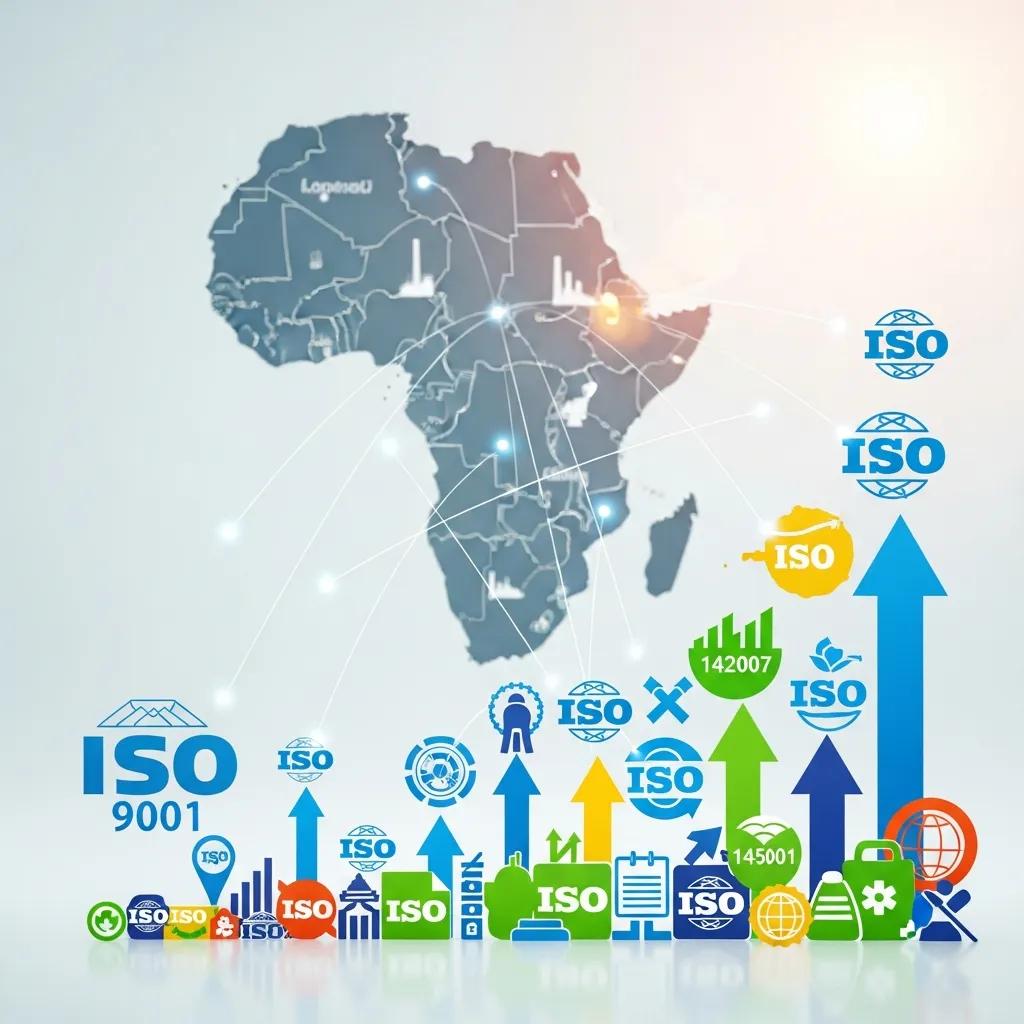
Several ISO standards map directly to common commercial and regulatory needs across African markets. ISO 9001 (quality), ISO 14001 (environment), ISO 27001 (information security) and ISO 42001 (AI governance) each address a distinct risk domain while sharing the same management‑system architecture—making integrated certification practical. Prioritise standards by sector exposure: exporters and manufacturers often start with ISO 9001, while technology firms may prioritise ISO 27001 and ISO 42001. Below we summarise where each standard typically creates the most value.
ISO 9001 helps organisations control product and service consistency, supplier performance and customer feedback. Through defined procedures, KPIs and corrective‑action systems, it reduces defects and improves delivery reliability—direct drivers of customer satisfaction and repeat business. In many African SMEs and larger firms, ISO 9001 is the gateway standard that enables entry into formal supply chains and public procurement. Measured KPIs might include on‑time delivery, defect rates and supplier performance trends that improve after certification.
ISO 14001, ISO 27001 and ISO 42001 each tackle growing priorities for African industry. ISO 14001 helps manage environmental impact and appeals to investors focused on sustainability; ISO 27001 provides a robust framework to protect data and build trust in fintech and digital services; ISO 42001 introduces governance for responsible AI development and deployment. Together, these standards help firms meet buyer expectations in sectors such as mining (environmental compliance), fintech (data protection) and AI services (governance), making certification a strategic competitive asset.
Common challenges to ISO certification in Africa — and practical fixes
African organisations often face four common barrier clusters: cost and resource constraints, limited awareness or cultural fit with formal management systems, geographic and logistical hurdles, and concerns about certifier credibility. Each challenge can be addressed with practical interventions that reduce friction and widen adoption. The sections below explain how targeted actions and modern audit techniques mitigate these barriers.
Cost and resource limits are the main blocker for many SMEs and remote operations—audit fees and internal prep time can feel prohibitive. AI-assisted audits and streamlined pre‑audit mapping cut preparation time and reduce auditor hours, which lowers total cost. Phased certification—starting with gap analyses and incremental improvements—lets organisations spread investment while realising partial benefits early. Subsidised training or coordinated, consortium-based audits (multiple small suppliers audited together) can also reduce per-entity costs.
Stratlane Certification combines accreditation with AI-enabled workflows to lower the resource burden. We provide certification for ISO 9001, ISO 14001, ISO 27001 and ISO 42001 across 27+ countries and work with auditors in 29+ jurisdictions. Our approach aims to make certification more affordable and accessible for a wide range of organisations.
Cultural and awareness barriers require local engagement and education so teams see standards as business tools rather than bureaucratic hurdles. Effective strategies include partnering with industry associations, running tailored training and lead‑auditor courses, and publishing relatable case studies that show ROI for similar organisations. These tactics shift perceptions by demonstrating measurable business outcomes instead of abstract compliance goals.
- Partner with local associations to embed certification into sector norms.
- Invest in training and lead-auditor capacity to build internal capability.
- Publish practical case studies and accreditation details to create social proof for buyers.
These measures build the ecosystem needed to sustain higher certification rates and encourage more firms to adopt standards as part of their growth strategy.
How African organisations can partner with Stratlane for efficient ISO certification
Working with a certification partner follows a clear journey from first enquiry to certificate issue and ongoing surveillance. Modern providers increasingly offer AI-assisted pre‑audits, streamlined formal audits and online certificate management. A transparent partner pathway helps organisations budget, plan timelines and measure the expected benefits. Below we outline a step‑by‑step journey and the value points procurement and compliance teams should evaluate.
A typical certification journey with an AI-enabled partner unfolds in five stages: enquiry and quote, gap analysis and pre‑audit mapping, AI-assisted evidence collection, formal audit and validation, and certificate issuance with online management and surveillance planning. Timelines vary with organisation size, but AI tools commonly shorten pre‑audit and evidence‑gathering from weeks to days. Each stage produces auditable evidence and clarifies responsibilities, improving transparency for buyers and regulators.
- Request and quote: Scope the standard(s) and sites and receive a tailored proposal.
- Gap analysis: A pre‑audit review identifies priorities and a remediation plan.
- AI-assisted pre‑audit: Automated evidence mapping reduces manual searches and prepares auditable sets.
- Formal audit & validation: Targeted on‑site or remote validation verifies controls and closes gaps.
- Certification & ongoing support: Certificates are issued, managed online and surveillance planned.
These steps give teams the predictability they need to align resources and timelines with business objectives.
Why choose an accredited partner with AI capabilities? Look for these core value propositions: credible accreditation, demonstrable AI efficiency gains, a regional auditor network and online certificate management. Prioritise providers that show how automation shortens timelines without weakening rigour and that combine technology with experienced human judgement. That combination is the main differentiator for organisations seeking reliable, cost‑effective certification.
Stratlane Certification is an accredited provider that pairs AI tools with local auditor expertise to improve audit efficiency and reduce recurring costs. We cover ISO 9001, ISO 14001, ISO 27001 and ISO 42001 and operate across 27+ countries with auditors in 29+ jurisdictions. Our certificates are trusted by academia, corporations and SMEs internationally.
When choosing a partner, focus on measurable ROI: time‑to‑certification, audit hours saved and surveillance cost reductions. Those metrics determine whether certification is a sustainable investment rather than a one‑off expense.
Step‑by‑step: the certification journey with Stratlane
We structure the certification process so roles, budgets and timelines are clear. From a scoped enquiry to certificate management and surveillance, AI tools typically accelerate the middle phases. Typical timelines are expressible as ranges—days to weeks for pre‑audit mapping, weeks for formal audits—and realistic plans include buffers for corrective actions and stakeholder alignment.
Breaking the project into phases—enquiry, gap analysis, AI pre‑audit, formal audit and certification—lets teams assign owners, schedule resources and track milestones. Treat certification like any other business project and you’ll reduce surprises, meet procurement deadlines and capture the market benefits described earlier.
Why Stratlane’s accredited, AI‑driven services stand out
When evaluating providers, weigh accreditation, geographic reach, AI-enabled efficiency and the availability of skilled auditors. Accreditation guarantees third‑party recognition; a regional auditor network ensures cultural and practical fit for on‑site validation; AI tools reduce routine audit effort and improve report consistency—creating cost savings that matter for SMEs and dispersed operations. Together, these capabilities deliver a pragmatic, scalable path to credible certification.
Stratlane Certification combines formal accreditation with AI-enabled workflows and a broad auditor network to make certification faster, more consistent and more accessible. We provide ISO 9001, ISO 14001, ISO 27001 and ISO 42001 across 27+ countries and maintain a professional auditor presence in 29+ jurisdictions. Our certificates support universities, enterprises and small businesses around the world.
Use these selection criteria to translate strategic intent into a working provider choice that supports long‑term growth:
- Accreditation: Ensures certificates are recognised and procurement‑eligible.
- AI-driven efficiency: Reduces audit prep time and recurring costs.
- Regional auditor network: Provides cultural fit and effective on‑site validation.
- Certificate management: Simplifies downloads, surveillance scheduling and renewals.
These points help procurement and compliance teams evaluate providers and select the option that delivers practical, sustainable value.
Stratlane Certification pairs accreditation, AI tooling and a regional auditor footprint to lower barriers and make certification a durable part of your growth strategy. We support ISO 9001, ISO 14001, ISO 27001 and ISO 42001 across 27+ countries with auditors in 29+ jurisdictions.
Frequently asked questions
What is the process for obtaining ISO certification in Africa?
The typical process starts with a gap analysis to identify what needs fixing, followed by implementation and documentation of required controls. A certification body then performs the formal audit to assess conformity. Successful organisations receive certification and enter a cycle of periodic surveillance audits. Working with a partner like Stratlane can streamline each phase and shorten timelines.
How can small and medium enterprises (SMEs) benefit from ISO certification?
SMEs gain clearer market access, stronger credibility and operational improvements from ISO certification. Certificates open doors to public procurement and export opportunities, shorten buyer onboarding and help firms improve quality and reduce waste—outcomes that support growth and investor interest.
What common challenges do African businesses face when pursuing ISO certification?
Common hurdles include cost and resource limits, limited awareness of management systems, and logistical challenges tied to geography. Cultural fit with formalised processes and concerns about certifier credibility can also slow adoption. Many of these barriers are reduced by phased approaches, local partnerships, subsidised training and AI-assisted audits.
How does AI technology enhance the ISO certification process?
AI automates evidence collection, speeds pre‑audit readiness and improves consistency in findings. That reduces the time auditors spend on routine tasks, enabling faster certification and lower costs. AI also helps scale audits across multiple sites, which is particularly valuable for dispersed operations.
Which ISO standards should businesses in Africa prioritise?
Priority depends on sector and market demands. Common starting points are ISO 9001 for quality, ISO 14001 for environmental management, ISO 27001 for information security and ISO 42001 for AI governance. Choose standards that align with buyer requirements and the organisation’s risk profile.
What role do governments play in encouraging ISO certification in Africa?
Governments can accelerate adoption by embedding standards into public procurement, offering subsidised training, and running public‑private quality initiatives. These actions lower barriers, build local capacity and create demand that encourages more suppliers to seek certification.
Conclusion
ISO certification is a strategic asset for African organisations: it unlocks market access, strengthens credibility and drives operational improvements. Prioritising standards like ISO 9001, ISO 14001 and ISO 27001 (and, increasingly, ISO 42001) helps firms compete locally and internationally. Partnering with an accredited, AI‑enabled provider such as Stratlane can make the journey faster, more affordable and more predictable. Ready to begin? Explore how our AI-driven audit solutions and regional auditor network can support your certification roadmap.