
Prioritize Site Safety: The Role of ISO in Building Quality
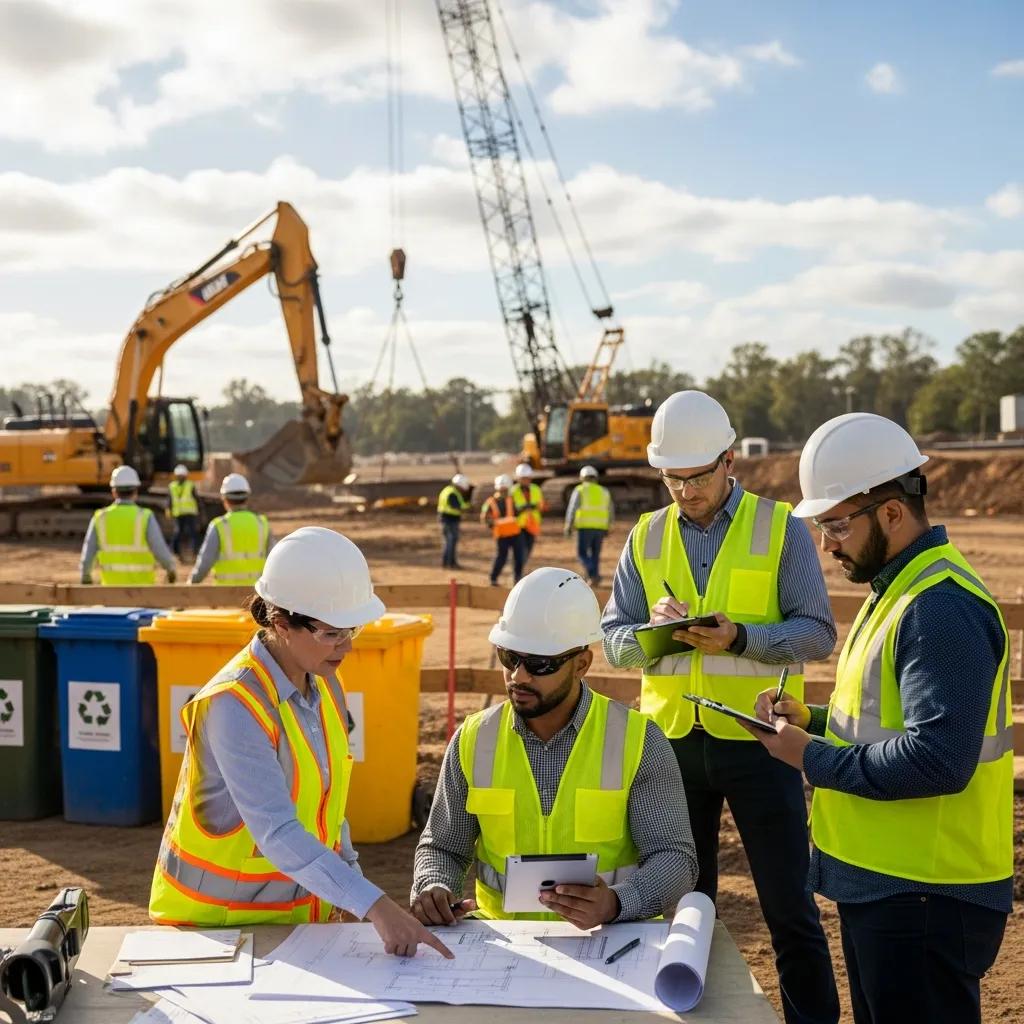
ISO Certification for Quality, Safety, and Environmental Management in Construction: Achieving Compliance with AI-Driven Auditing
Construction projects demand coordinated control of quality, site safety and environmental impact to meet regulatory requirements, client expectations and tender conditions. This guide sets out which ISO standards matter for construction — ISO 9001, ISO 45001 and ISO 14001 — how they interlink, and how AI-augmented auditing speeds compliance while lowering risk. Many contractors still wrestle with inconsistent QA/QC, fragmented safety processes and gaps in environmental monitoring; an integrated ISO approach gives structured procedures, measurable KPIs and audit-grade evidence. You’ll get a clear view of each standard’s role, practical steps to build an integrated management system and where AI adds value for audit accuracy, predictive risk detection and evidence capture. We map standards to common on-site controls, explain how to prepare for an AI-augmented audit, and provide a step-by-step certification pathway construction firms can follow to win tenders and strengthen resilience.
Which ISO Standards Are Essential for Construction Quality, Safety, and Environmental Management?
The three core ISO standards for construction cover distinct but overlapping areas: ISO 9001 sets requirements for Quality Management Systems (QMS), ISO 45001 covers Occupational Health & Safety Management Systems (OHSMS) and ISO 14001 defines Environmental Management Systems (EMS). Together they form a management architecture that standardises processes, cuts defects, prevents incidents and reduces environmental harm via documented policies, risk assessments and continual improvement. For procurement and tendering, clients often require evidence of conformity to one or more of these standards, so understanding each standard’s scope and outputs is essential for project teams. The table below compares the standards side‑by‑side to help compliance and procurement teams decide which certifications to prioritise.
| Standard | Focus / Scope | Typical Benefit / Value |
|---|---|---|
| ISO 9001 | Quality Management System: process controls and supplier governance | Less rework, consistent delivery quality and higher client satisfaction |
| ISO 45001 | Occupational Health & Safety Management: site hazard and risk controls | Fewer incidents, reduced lost‑time injuries and better worker protection |
| ISO 14001 | Environmental Management System: waste, emissions and resource use | Lower environmental liabilities, regulatory compliance and tender eligibility |
That comparison highlights how each standard improves a specific area of project performance while supporting a combined, integrated approach. Understanding these scopes helps teams plan targeted implementation and positions the organisation for combined audits.
What is ISO 9001 and its Role in Construction Quality Management?
ISO 9001 defines a process‑based Quality Management System that helps teams deliver construction work consistently through documented procedures, supplier controls and measurable quality objectives. Key QMS elements for construction include clearly defined scope and processes, control of externally provided products and services, project quality plans, inspection and testing regimes, and management review records that drive continual improvement. Applied on site, ISO 9001 reduces defects and rework by formalising QA/QC steps like material traceability, hold points for inspections and non‑conformance reporting with corrective actions. Typical audit evidence includes contract‑specific quality plans, inspection records, supplier evaluations and management review minutes. Those quality controls also create natural integration points with safety processes under ISO 45001.
How Do ISO 45001 Standards Enhance Construction Site Safety?
ISO 45001 treats safety as a management system centred on hazard identification, risk assessment, operational controls, training, incident investigation and continual improvement to cut occupational injuries on construction sites. Implementation looks like permit‑to‑work systems, toolbox talks, routine safety inspections, equipment checks and structured incident reporting that feed corrective actions and preventive measures. Surveillance and audit evidence commonly show measurable drops in incident frequency and severity when organisations adopt systematic OHSMS processes backed by leadership commitment. Audit documentation typically includes risk registers, training matrices, inspection logs and management review actions that demonstrate both hazard control and ongoing risk reduction. With quality and safety aligned, teams can then extend that systems thinking to environmental risks under ISO 14001.
How Does ISO 14001 Support Sustainable Environmental Practices in Construction?
ISO 14001 provides a framework for identifying environmental aspects, setting targets (waste, emissions, resource use) and implementing controls such as waste segregation, sediment management, fuel and emissions monitoring, and sustainable procurement. The EMS structure—context, planning, support, operation, performance evaluation and improvement—creates a repeatable approach to manage environmental risks from site clearance through commissioning. Construction KPIs often include waste diverted from landfill, fuel consumption per project, spill incidents per 1,000 hours worked and supplier environmental evaluations; these figures support tender responses and regulatory reporting. The next sections outline measurable benefits and practical steps to implement ISO 14001 and show where AI can strengthen monitoring and analytics.
ISO 14001 delivers measurable operational, commercial and reputational gains. Operationally, firms report lower waste volumes and better resource efficiency through measures such as material reuse and supplier engagement. Commercially, certification opens access to environmentally weighted tenders and can reduce regulatory scrutiny when documented controls are in place. Reputationally, certification demonstrates environmental governance to clients and stakeholders and strengthens market position in sustainability‑focused procurement. Core implementation steps include conducting an aspect‑impact assessment, setting objectives and targets, establishing operational controls and assigning responsibility for tracking performance. These steps pair well with technological enablers like AI for continuous monitoring and predictive maintenance.
AI helps meet ISO 14001 requirements by aggregating sensor data, automating logs and flagging anomalies in emissions, runoff or fuel use for quick corrective action. Practical AI use cases include remote sensor fusion for dust and particulates, predictive maintenance alerts to prevent plant leaks, and automated report generation that aligns monitoring logs with EMS records for audits. Feeding AI outputs into EMS documentation reduces manual evidence collection, speeds surveillance readiness and converts raw telemetry into trend analysis and exception reports for management review and continual improvement.
What Are the Advantages of AI-Driven ISO Auditing for Construction Companies?
AI‑driven auditing enhances conventional audit processes by automating evidence collection, recognising patterns across records and inspection reports, and scoring compliance against standard clauses to produce faster, more consistent audit outcomes. For construction firms the practical gains include shorter on‑site audit time, improved detection of recurring non‑conformities and richer audit trails that tie inspections, corrective actions and management review records together. Below are the primary AI auditing benefits, written for busy decision‑makers.
- Faster audits: Automated document parsing and evidence aggregation cut manual review time.
- Greater accuracy: Pattern detection surfaces inconsistencies manual checks can miss.
- Predictive risk: Models flag emerging safety or environmental trends before incidents occur.
- Continuous compliance: Real‑time monitoring keeps management informed between formal audits.
These capabilities support both audit readiness and day‑to‑day management. The following table maps representative AI features to practical construction outcomes to help teams prioritise capabilities.
AI tools work best when they receive structured data—inspection logs, permit records, training matrices and environmental sensor feeds. The table below links common AI audit features to construction benefits to guide adoption decisions.
| Audit Feature | Attribute (What it does) | Benefit / Value (Outcome for construction firms) |
|---|---|---|
| Document automation | Parses contracts, quality records and inspection logs | Faster evidence collection and lower auditor effort |
| Real-time monitoring | Ingests sensor and inspection data continuously | Immediate alerts for environmental or safety excursions |
| Predictive analytics | Identifies patterns and leading indicators | Earlier risk mitigation and fewer recurring non‑conformities |
This mapping shows how AI features translate into measurable audit improvements and stronger operational controls. By automating routine work and surfacing trends, AI helps teams allocate compliance effort where it matters most.
How Does AI Improve Efficiency and Accuracy in ISO Certification Audits?
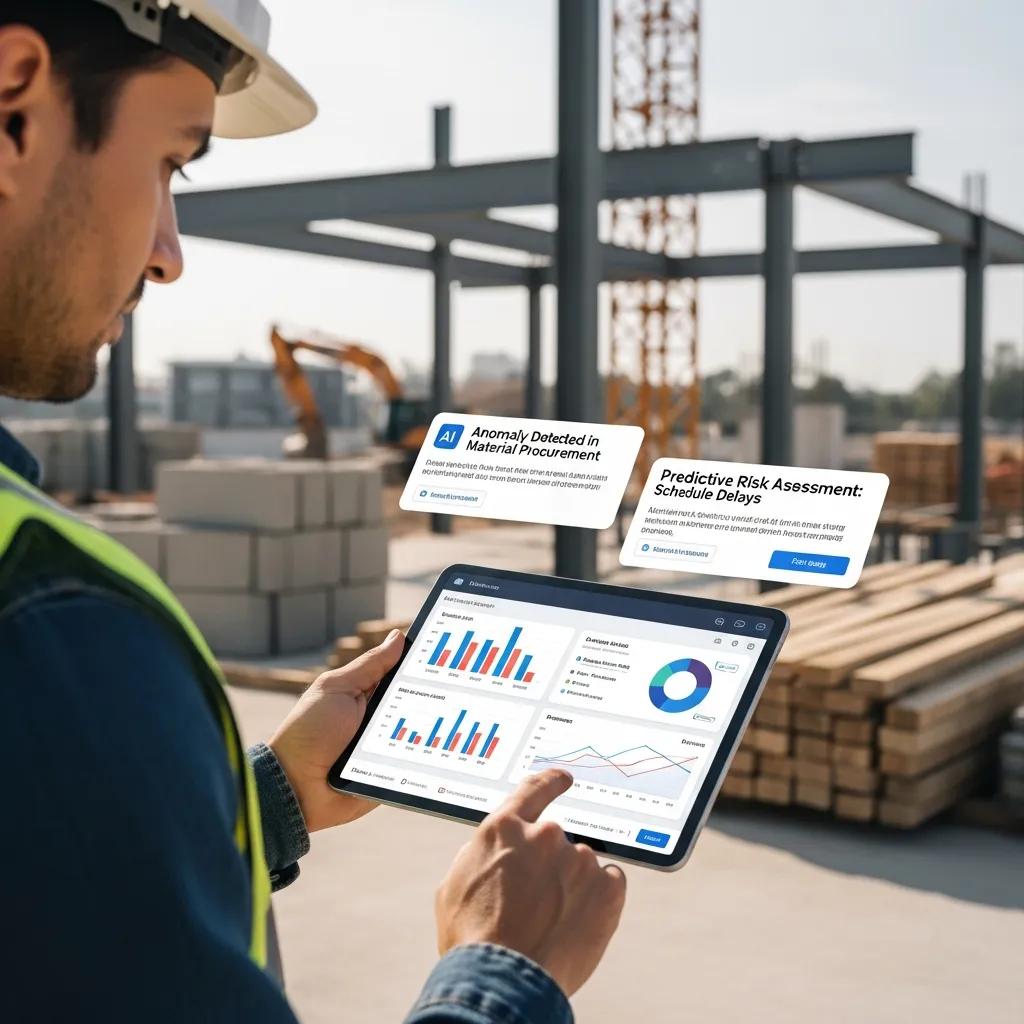
AI speeds audits by extracting and tagging evidence from project documents, photos and sensor feeds so auditors can focus on verification and judgement rather than paperwork. Anomaly detection and pattern recognition reveal issues—such as repeated non‑conformities across sites—faster than traditional sampling and reduce missed findings. In practice, automated pre‑audit collation can significantly cut on‑site preparation time, shortening audit windows without lowering rigour. Faster evidence collation also accelerates corrective action closure, which improves KPIs and strengthens the case presented in tenders and stakeholder reporting.
Can AI Predict and Mitigate Risks in Construction ISO Compliance?
Yes. AI predicts compliance risks by combining data from safety inspections, near‑miss reports, maintenance logs and environmental sensors and applying models to surface leading indicators. The typical workflow is: data ingestion → anomaly and trend detection → prioritised alerts → assignment of corrective actions → verification and closure tracking. For example, repeated near‑miss patterns in a particular trade or location can trigger targeted interventions—training, process change or engineering controls—reducing the chance of escalation to recordable incidents. Linking AI alerts to corrective action registers and KPI dashboards makes outcomes measurable and auditable, closing the loop between prediction and mitigation.
How Can Construction Companies Integrate ISO 9001, 14001, and 45001 into a Unified Management System?

An Integrated Management System (IMS) combines QMS, EMS and OHSMS requirements into one framework to remove duplication, align objectives and enable a single combined audit. IMS integration typically aligns document control, change management, supplier evaluation, incident investigation and management review so one process serves multiple standards. The table below outlines common IMS components, accountabilities and measurable outcomes to show how consolidation converts separate obligations into streamlined controls. IMS principles reduce audit days and simplify evidence management—especially valuable for firms running multiple projects and subcontractor chains.
| IMS Component | Responsibility / Attribute | Measurable Outcome / Value |
|---|---|---|
| Document Control | Centralised procedure for policies and records | Less duplication and faster evidence retrieval |
| Incident & Non-conformance Management | Single workflow for reporting and closure | Quicker corrective action closure and fewer repeat issues |
| Management Review | Combined review of QMS, EMS and OHSMS metrics | Unified strategic objectives and consolidated audit evidence |
What Are the Benefits of an Integrated Management System for Construction?
An IMS drives operational efficiency by reducing parallel processes and centralising evidence, which often leads to fewer audit days and a single dashboard for quality, safety and environmental KPIs. Procurement teams gain because a unified certification footprint simplifies tender submissions and reduces client queries about overlapping systems. Operationally, an IMS encourages shared ownership of controls so site teams can address defects, hazards and environmental risks through aligned workflows rather than siloed responses. Typical measurable outcomes include consolidated KPI dashboards that reduce reporting effort and streamlined corrective action tracking that closes issues faster. Those gains make it easier to layer AI on top for even greater audit efficiency.
How Does AI Streamline Integrated ISO Audits in Construction?
AI streamlines integrated audits by correlating data across QMS, EMS and OHSMS sources to produce unified evidence packages and cross‑standard insights that reveal root causes spanning quality, safety and environment. A sample integrated audit workflow starts with automated ingestion of inspection logs, safety reports and environmental sensor streams, then cross‑correlates to surface incidents with multi‑dimensional causes—for example, equipment failure causing a spill and a safety near‑miss. Dashboards can present combined indicators such as defect rates linked to safety incidents and environmental excursions, helping management prioritise systemic corrective actions. Centralised corrective‑action tracking assigns a single owner and measurable closure, making integrated audits faster and more effective.
What Is the Step-by-Step Process for Obtaining ISO Certification in Construction with Stratlane?
Construction firms pursuing certification can follow a clear five‑step pathway with a provider that uses AI to improve audit efficiency. The process with Stratlane Certification is: request a quote → accept an offer → arrange an audit → close identified issues → receive the ISO certificate. Before engaging an auditor, prepare company and project documentation, assign an audit liaison and gather inspection, training and supplier records to make AI‑augmented evidence review efficient. The numbered list below summarises the core certification steps for teams preparing for certification.
- Request a quote from the certification provider with project scope and the standards you need.
- Accept the offer and confirm audit scope, standards and timelines.
- Schedule the audit and provide required documentation and site access.
- Address any non‑conformities noted in the audit report and submit evidence of closure.
- Receive the ISO certificate after successful verification and schedule surveillance visits.
This sequence reduces uncertainty for procurement and compliance teams and ties directly into the preparatory checklist that follows, which details the information to include when requesting a quote.
How to Request a Quote and Prepare for an AI-Driven Audit?
When requesting a quote, give high‑level company details, the ISO standards required, project types and locations, estimated on‑site headcount and sample documents such as quality plans, safety procedures and environmental permits so the provider can scope the work accurately. Preparing for an AI‑driven audit also means structuring data feeds and records—digitised inspection logs, photo evidence, sensor outputs and document repositories—so automated parsing and evidence tagging work smoothly. Practical pre‑audit steps include appointing an audit liaison, consolidating key records into a shared folder or system, listing site access points and scheduling stakeholder interviews. Timelines vary, but having documentation and access ready in advance shortens on‑site audit time and speeds certification turnaround.
What Happens After the Audit and How to Manage Certification?
After the audit, the provider issues a report with non‑conformities and observations that the organisation must address within agreed timelines via corrective action plans that include root‑cause analysis and verification evidence. Once corrective actions are implemented and evidence submitted, the auditor verifies closure; on positive verification the official certificate is issued and surveillance visits are scheduled per the certification cycle. Ongoing certificate management includes storing certificates, tracking surveillance dates and maintaining evidence of continual improvement for future audits. Organisations should keep a central record of certification status and surveillance history to simplify renewals and demonstrate continuous compliance during tendering.
Why Is ISO Certification Critical for Construction Companies Seeking Competitive Advantage?
ISO certification shows disciplined management of quality, safety and environmental obligations—attributes that directly improve tender success, reduce procurement friction and build trust with clients and regulators. Certified firms can meet common tender prerequisites more easily, present consolidated management evidence and shorten client due‑diligence, which can improve bid competitiveness and speed to contract award. Measurable impacts often include lower defect rates, fewer lost‑time incidents and improved environmental KPIs, all of which reduce perceived project risk and strengthen client confidence. The next section offers tactical tips for using certification in tenders and highlights KPIs that typically improve after certification.
How Does ISO Certification Improve Tender Success and Reputation?
Certification satisfies standard tender clauses that ask for evidence of quality, safety and environmental management, reducing procurement friction and signalling organisational maturity to buyers. Practical tender tips include including a certified scope statement, attaching a concise management system summary and referencing recent surveillance reports or management review highlights to show ongoing oversight. In bids, clear claim language—naming certified standards and summarising relevant KPI improvements—gives evaluators quick, auditable proof. Using certification this way shortens clarification rounds and positions suppliers as lower‑risk partners.
What Are the Measurable Impacts on Quality, Safety, and Environmental Performance?
Common KPIs that improve after implementing ISO standards include defect rate per thousand units of work, lost‑time incident frequency rate, percentage of waste diverted from landfill and average time to close corrective actions. Benchmarks vary, but organisations frequently report double‑digit percentage reductions in defects and incident rates when systems, controls and training are consistently applied. Reporting improvements requires consistent measurement methods, baseline data and transparent dashboards that combine QMS, EMS and OHSMS indicators. By tracking these KPIs and using tender case studies, firms can substantiate performance claims and demonstrate continuous improvement to clients and regulators.
For teams ready to pursue certification, providers that combine experienced auditors with AI‑driven tools can shorten audit windows and improve evidence quality. To request a quote or book an AI‑driven audit, ask your chosen certification partner for a proposal that outlines standards, scope and timelines.
Frequently Asked Questions
What is the difference between ISO 9001, ISO 45001, and ISO 14001?
ISO 9001 focuses on quality management systems to ensure consistent delivery and supplier control. ISO 45001 centres on occupational health and safety to reduce workplace injuries and improve safety practices. ISO 14001 addresses environmental management to limit environmental impact through better resource use and waste management. Together they form a comprehensive framework for managing quality, safety and environmental responsibilities on construction projects.
How can construction companies benefit from AI in ISO certification processes?
AI speeds and strengthens certification by automating evidence collection, improving audit accuracy and providing predictive analytics for risk management. By analysing diverse data sources, AI can reveal patterns and anomalies that indicate compliance issues, leading to faster audits, less manual effort and more reliable outcomes. Continuous monitoring with AI also helps organisations stay aligned with ISO requirements between formal audits.
What are the common challenges faced during ISO certification in construction?
Common challenges include incomplete documentation, limited employee training and the difficulty of integrating multiple ISO standards into a cohesive management system. Fragmented site processes and the changing nature of construction work can create compliance gaps. Overcoming these challenges requires thorough preparation, staff engagement and using technology to streamline records and evidence collection.
How often should construction companies conduct internal audits for ISO compliance?
At minimum, conduct internal audits annually to verify continued compliance with ISO standards. In dynamic environments with frequent personnel or process changes, more frequent audits—quarterly or biannually—can be valuable. Regular internal audits catch non‑conformities early, enable timely corrective actions and reinforce a culture of continual improvement.
What role does employee training play in achieving ISO certification?
Employee training is essential for certification because it ensures people understand the standards and their specific responsibilities. Training should cover ISO 9001, ISO 45001 and ISO 14001 requirements and how the integrated management system works in practice. Well‑trained staff follow procedures, report issues accurately and contribute to continual improvement—boosting the organisation’s overall performance.
Can small construction firms achieve ISO certification, and what are the benefits?
Yes. Small construction firms can achieve ISO certification and gain tangible benefits: increased credibility, improved operational efficiency and access to clients who require certified suppliers. Certification helps small firms compete by demonstrating commitment to quality, safety and environment, and the associated processes often deliver cost savings and better project outcomes.
Conclusion
Adopting ISO standards in construction strengthens quality, safety and environmental management and streamlines compliance when paired with AI‑driven auditing. Integrating ISO 9001, ISO 45001 and ISO 14001 delivers measurable gains in efficiency and tender success. Taking these steps positions companies as dependable partners in responsible project delivery. To move forward, request a proposal from a qualified certification partner and discuss how AI can speed your audit readiness.