
Achieve Global ISO Certification with Local Expert Support

Global ISO Certification, Locally Delivered: AI-powered Audits with On-the-Ground Expert Support
Global ISO certification confirms that an organisation’s management systems meet recognised international standards—helping you maintain consistent quality, security, environmental, or AI governance across borders. This guide explains what global ISO certification means for organisations operating in the US, EU and UK, and how a hybrid model—AI-driven audits supported by local experts—speeds compliant outcomes. You’ll learn how ISO standards are developed and recognised, the tangible business benefits for market access and procurement, and how modern audit approaches reduce time and cost while improving accuracy. The guide walks through standards, AI-enabled audit mechanics, regional considerations and a step-by-step ISO 9001 path so leaders and compliance teams can plan next steps with confidence. Throughout, we highlight the role of accredited bodies that combine AI tooling with vetted local auditors to manage quotes, audits, certificate issuance and ongoing certificate management for multinational operations.
What is Global ISO Certification and Why Does It Matter?
Global ISO certification is an independent attestation from an accredited certification body that an organisation’s management system conforms to a specific ISO standard—enabling consistent practices across jurisdictions. It matters because international standards reduce transactional friction, show partners you control risk, and support eligibility for procurement and academic recognition. For businesses pursuing cross-border trade, certification creates a shared language of assurance that buyers and regulators understand, helping to bridge local documentation differences and trust gaps. The section that follows explains how ISO standards are developed, why they carry international weight, and the practical benefits of applying those standards consistently across sites.
Stratlane Certification partners with organisations by combining AI-driven audit tools and locally based auditors to secure internationally recognised certificates. As an accredited certification body with auditors across 29 countries and a presence referenced in Amsterdam, Stratlane manages the process from initial quote and audit scheduling through certificate issuance and ongoing administration—serving clients primarily in the US, EU and UK. This operational context frames the practical options organisations weigh when planning global ISO programmes and leads into a technical look at AI-enabled audits.
Understanding ISO Standards and Their Global Impact
ISO standards are created through international consensus by technical committees representing industry, government and academia. They codify best practices for management systems—covering quality, environmental, information security and AI governance—and provide neutral frameworks organisations adopt to show consistent processes despite national regulatory differences. Because ISO documents are widely recognised, certificates issued by accredited bodies act as a concise signal of compliance accepted by corporations and academic institutions for supplier checks or partnerships. Knowing that ISO standards are consensus-built explains why certification delivers cross-border credibility and predictable expectations for partners.
Benefits of International ISO Certification for Businesses
International ISO certification drives measurable advantages across commercial, operational and reputational dimensions. It helps organisations access new customers and tenders by meeting buyer requirements, reduces process variation through standardised systems, and builds stakeholder confidence by demonstrating systematic risk management. Certified systems also streamline supplier relationships and due diligence by delivering structured audit reports and certificates third parties can rely on. Together, these benefits lower barriers to entry in regulated markets and strengthen internal controls—setting up how AI-assisted audits can make certification faster and more cost-effective.
- Meets procurement and tender requirements across jurisdictions.
- Standardised management systems reduce inconsistency and waste.
- Certificates act as a trusted signal to partners, regulators and academic collaborators.
These practical benefits explain why organisations include certification in market-expansion strategies. Next, we examine how AI-driven auditing speeds the certification workflow by automating evidence review and directing human expertise to high-risk findings.
Modern ISO Certification: AI-Powered Audits and Local Expertise

AI-driven ISO auditing combines automated data analysis, document parsing and predictive risk scoring to speed evidence collection and prioritise auditor attention on high-risk areas. In practice, automation removes repetitive work—like cross-checking policies against records—while predictive models surface anomalies and continuity risks, enabling more focused on-site or remote checks. This hybrid human+AI approach improves accuracy by identifying likely nonconformities earlier and reduces overall cycle time because auditors spend less time on routine checks and more on judgment-led interviews and contextual assessment. Below we outline core AI features and compare time and cost improvements versus traditional approaches to show how these mechanisms translate into faster certification and simpler certificate management.
The table below compares traditional manual audits with AI-assisted approaches to show typical efficiency gains and workflow differences.
Different audit approaches deliver distinct time and accuracy outcomes.
| Audit Approach | Typical Time per Audit Cycle | Primary Efficiency Gain |
|---|---|---|
| Manual audit | 4–10 days depending on scope | Human-led evidence review; higher on-site time |
| AI-assisted audit | 2–6 days effective cycle time | Automation of document review and risk prioritisation |
| Continuous monitoring + periodic audit | Ongoing analytics with periodic visits | Early issue detection and fewer recurring nonconformities |
This comparison shows how AI-assisted auditing shortens the audit cycle and shifts auditor effort toward analysis and advisory work. The next section describes the specific AI features that deliver these gains and the client benefits they produce.
Key Features of AI-Driven Auditing in ISO Compliance
AI-driven audits rely on a few core capabilities that automate evidence handling and strengthen auditor decision-making. Automated document parsing speeds ingestion and indexing of policies, procedures and records; anomaly detection highlights inconsistent entries or gaps; predictive risk scoring ranks processes by likely nonconformity; and continuous monitoring tracks key indicators between formal audits. Together, these features reduce manual effort, improve finding accuracy and enable earlier corrective action. A short feature-to-benefit map below makes the value more tangible.
Feature mapping shows how technology functions translate into client outcomes.
| Feature | Function | Client Benefit |
|---|---|---|
| Document parsing | Extracts and indexes evidence from records | Faster evidence validation and shorter audit cycles |
| Anomaly detection | Identifies outliers and inconsistent entries | Early flagging of potential nonconformities |
| Predictive scoring | Prioritises audit focus areas | Efficient use of auditor time and fewer audit days |
These capabilities free auditors to focus on high-value interactions—interviews, root-cause analysis and corrective action planning—improving the quality and pace of certification. The next subsection highlights measured impacts from real engagements.
Case Studies Demonstrating AI Audit Effectiveness
Concise summaries of AI-assisted audits show measurable improvements in audit duration, reduced nonconformity rates and faster certification timelines across SMEs and larger organisations. One client saw audit preparation hours fall significantly after automated document parsing and indexing; another used predictive risk scoring to surface systemic issues earlier and reduce follow-up cycles. These examples demonstrate that the human+AI model preserves auditor judgement while improving throughput and accuracy. Detailed case studies are available from accredited certification bodies that combine formal procedures with AI tooling and local auditor networks.
These outcomes lead into a practical catalogue of certifications where AI-driven audits and local support are most commonly applied.
Which ISO Certifications Does Stratlane Offer with Local Expert Support?
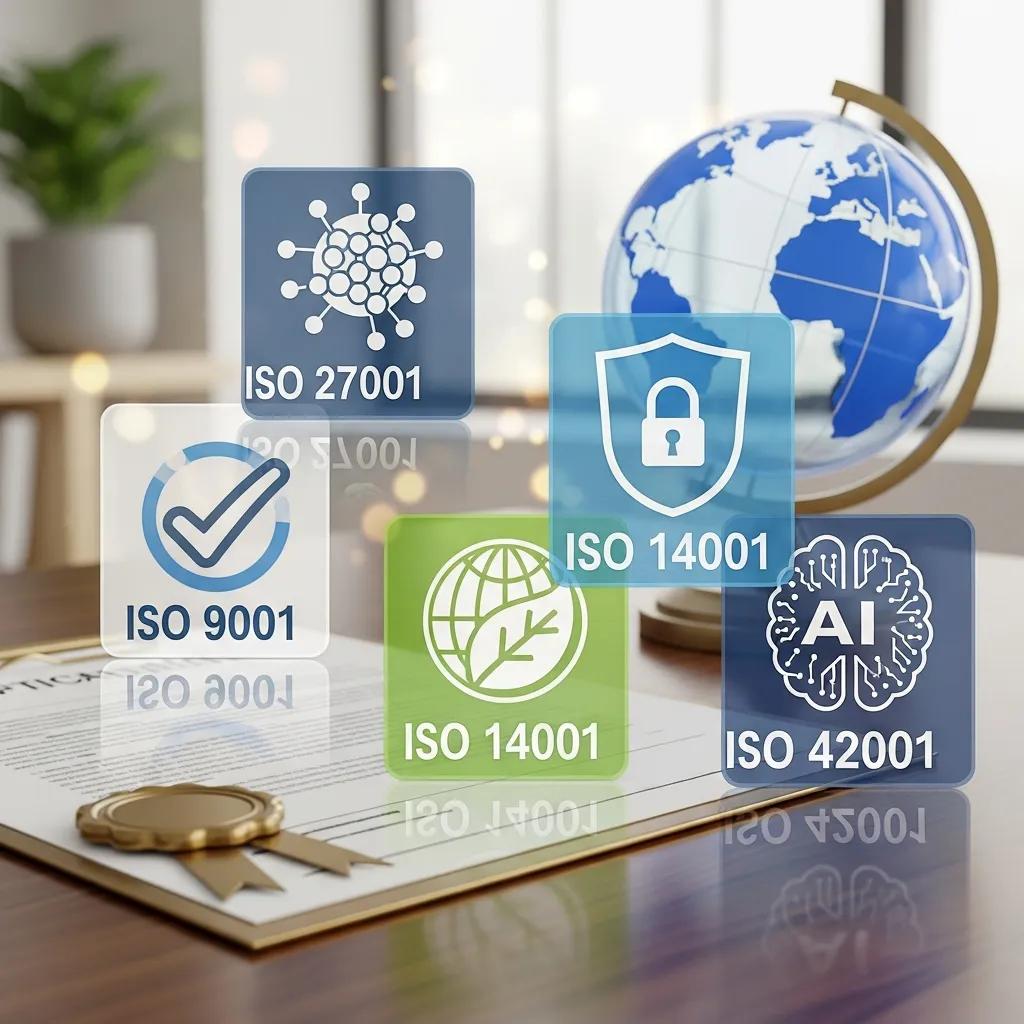
Stratlane Certification delivers global ISO services across several standards, pairing AI-enabled audit workflows with locally based auditors to ensure correct regional interpretation. Primary offerings include ISO 9001 (quality management), ISO 14001 (environmental management), ISO 27001 (information security) and ISO 42001 (AI management systems). Each standard targets a specific management objective, and local experts tailor audit scope and advisory inputs to national regulations and cultural practices in target markets. The table below summarises these standards to help organisations choose the right fit for their strategic priorities.
Compare the standards by focus and typical organisational benefit.
| Standard | Focus | Typical Organizational Benefit |
|---|---|---|
| ISO 9001 | Quality management | Improved customer satisfaction and process consistency |
| ISO 14001 | Environmental management | Better regulatory alignment and sustainability performance |
| ISO 27001 | Information security | Stronger data protection and risk mitigation |
| ISO 42001 | AI management systems | Ethical AI governance and lifecycle controls |
This snapshot helps organisations scan differences and select the standard that best maps to their objectives. The H3 sections that follow describe each standard briefly and explain how local expert support is applied.
ISO 9001 Quality Management Certification Overview
ISO 9001 defines requirements for a quality management system that consistently meets customer and regulatory expectations. Organisations benefit from fewer defects, leaner processes and higher customer satisfaction when systems align with ISO 9001 and are regularly audited. Local auditors add value by assessing records against regional regulatory expectations and supplier ecosystems, and by advising on practical sampling and corrective-action approaches for SMEs and larger enterprises—helping keep certification timelines efficient.
ISO 14001 Environmental Management Certification
ISO 14001 establishes a structured approach to managing environmental responsibilities—covering regulatory compliance, pollution prevention and continual improvement. Certification signals to customers and regulators that an organisation manages environmental impacts systematically and pursues sustainability goals. Local experts are particularly useful for interpreting region-specific environmental rules in the US, EU and UK, advising on permit-related evidence and regional reporting norms. Combining global standards with local advisory reduces noncompliance risk and strengthens public sustainability claims.
ISO 27001 Information Security Management Certification
ISO 27001 sets requirements for an information security management system that protects confidentiality, integrity and availability of information assets. Certification demonstrates robust controls to clients and partners—critical for service providers and organisations handling sensitive data. AI-enabled tools can analyse logs and documents to surface anomalies, while local auditors validate context-specific controls and evidence types required by national regulations. The combination of automated review and human expertise accelerates ISMS assessment and supports continuous monitoring between formal audits.
ISO 42001 Artificial Intelligence Management Systems Certification
ISO 42001 addresses governance, ethics and risk management for AI systems, outlining how organisations should manage AI lifecycle risks and ethical concerns. This emerging standard helps build trust in AI deployments by setting controls for transparency, accountability and risk mitigation. Stratlane’s AI-enabled audit tools are well suited to evaluate AI artefacts—model documentation, training-data handling and related evidence—while local auditors provide governance insight and practical advisory aligned with region-specific expectations. Organisations seeking to show responsible AI practices benefit from technical assessment plus local advisory that align AI controls with international norms.
To understand how these certification options map to your operational scope and request a tailored estimate, organisations usually request a quote and schedule an AI-driven audit with a locally assigned auditor. The next section explains how local support reinforces global standards in practice.
How Does Local ISO Certification Support Benefit Your Business Globally?
Pairing global ISO standards with local certification support delivers practical advantages that centralised approaches can miss. Local auditors offer regulatory and language fluency, interpret documentation practices within cultural norms and provide immediate advisory during on-site checks and follow-ups. This context-sensitive approach speeds issue resolution, reduces misunderstandings with regulators or customers and improves the acceptability of audit reports across jurisdictions. The following H3s outline regional considerations for the US, EU and UK and share practical tips for navigating cultural nuances during audits.
Local expertise complements automated audit processes by ensuring findings and corrective actions are meaningful within the operational and regulatory environment where the organisation operates.
Regional Expertise in the US, EU, and UK Markets
Regional expertise matters because each market has distinct regulatory touchpoints—data protection approaches in the EU, sector-specific compliance frameworks in the US and alignment patterns in the UK—that affect audit sampling and evidence needs. Local auditors bring familiarity with statutory documents, preferred reporting formats and typical regulator expectations, which reduces time spent explaining local context during audits. This regional fluency also supports multi-site coordination by ensuring audit scopes reflect local nuances while preserving a harmonised global management system. Practical coordination tools include localised checklists, language support and escalation pathways that speed corrective-action acceptance.
Navigating Local Compliance and Cultural Nuances
Documentation and cultural norms influence how audit evidence is prepared and presented, making local auditor input essential for smooth audits. Language localisation of procedures, expectations about formal versus informal records and the appropriate level of documentation can vary by country and industry. Local auditors help multinational teams adapt documents and interview approaches to local norms, reducing perceived nonconformities that arise from cultural misunderstandings. Useful steps include preparing bilingual summaries of key procedures, scheduling interviews around local working patterns and using local auditor guidance to pre-validate evidence before formal assessment.
These practical measures lower friction during audits and increase the speed at which certificates are accepted by customers and regulators in target markets. The next section explains the stepwise process and cost considerations for obtaining ISO 9001 certification.
What is the Process and Cost of Obtaining ISO 9001 Certification?
Achieving ISO 9001 follows a structured path from readiness assessment through registrar audit and certificate issuance, with timelines and costs shaped by scope and preparedness. Typical stages include preparation and gap analysis, implementation and internal audit, registrar (certification body) audit, and certification decision followed by surveillance audits. Timelines vary: a well-run programme often completes in several months, while larger or multi-site organisations may take longer. Major cost drivers include company size and complexity, the level of consultancy support, the number of audit days and on-site travel. The table below breaks down common phases, typical durations and representative cost drivers to help with budgeting.
This table clarifies phases, durations and cost influences for ISO 9001 efforts.
| Phase | Typical Duration | Representative Cost Driver |
|---|---|---|
| Preparation & gap analysis | 2–6 months depending on readiness | Internal resource time and consultancy fees |
| Implementation & internal audit | 1–6 months | Training, process changes and internal audit effort |
| Registrar audit & certification decision | 1–4 weeks for audit; decision timeframe varies | Number of audit days and travel expenses |
| Surveillance & recertification | Ongoing (annual surveillance, 3-year cycles) | Annual audit days and continuous monitoring |
Step-by-Step ISO 9001 Certification Journey
Most organisations follow a clear sequence to earn ISO 9001: start with a readiness review and gap analysis to identify missing controls and documentation; implement required processes and run internal audits to confirm system performance and close gaps; then undergo the registrar audit, which typically includes a stage 1 documentation review and stage 2 on-site verification. After the certification decision, surveillance audits confirm ongoing conformity and continual improvement. Preparing a focused checklist—document control, process maps, internal audit records and corrective-action logs—streamlines the registrar audit and shortens the path to certificate issuance.
Factors Influencing ISO 9001 Certification Cost
Several variables materially affect certification cost and should be evaluated early. Company size and complexity determine auditor days and sampling; multi-site operations increase coordination and travel; pre-existing documentation affects preparation time; and hiring external consultants raises upfront costs but can reduce registrar audit days. Travel and language needs add expense when auditors cross borders, and the chosen accredited certification body influences day rates and admin fees. Understanding these drivers lets organisations balance self-preparation and paid advisory to manage total programme cost.
- Company size and complexity increase required audit days.
- External consultancy reduces internal time but adds upfront cost.
- Multi-site audits add travel and coordination expenses.
Planning with these cost drivers in mind supports accurate budgeting and realistic timelines for certification. The final section explains where organisations can access global certification services and how to request a quote.
Where Can You Access Stratlane's Global ISO Certification Services?
Stratlane Certification runs an international auditor network across 29 countries and offers an access model that pairs centralised AI tools with locally vetted auditors to serve organisations primarily in the US, EU and UK. Auditors are assigned by regional expertise and accreditation alignment to support multi-site coordination and consistent certificate issuance accepted by corporations and academia. To start a conversion path, organisations typically provide scope details, site counts and the standards required to request an initial quote, then schedule an AI-driven audit and agree certificate-management preferences. The sections below describe the auditor network and the practical quote-and-scheduling steps.
Overview of Stratlane's International Auditor Network
Our auditor network pairs regional auditors with AI-enabled backend tools to deliver efficient, locally informed audits. Auditors are vetted to meet accreditation requirements and chosen for their ability to interpret local regulatory and industry expectations while applying consistent audit criteria across sites. For multi-site or cross-border audits, coordinators manage sampling, scheduling and evidence collection to minimise disruption and ensure harmonised results. This model gives organisations the benefits of centralised analysis and local expertise at the same time—supporting efficient audits and acceptable certificate issuance across markets.
How to Get a Quote and Schedule an AI-Driven ISO Audit
To request a quote, prepare basic scope details—standards required, number of sites, employee counts and high-level processes in scope—and share representative documentation for a preliminary review. Certification bodies then estimate audit days and propose timelines based on scope and readiness, often offering AI-assisted document review options to reduce on-site time. Response times vary, but you can typically expect an initial proposal and scheduling window within business days after scope submission. Common conversion steps are: request a quote, schedule an AI-driven audit and set up post-certification certificate management and surveillance with the assigned auditor.
If you’re ready to move from planning to action, the practical path is: get a quote, schedule an AI-driven audit, and establish certificate management for ongoing compliance and surveillance. Organisations that combine modern audit automation with local expert support can shorten certification timelines while ensuring regionally appropriate evidence and acceptance by international partners.
Frequently Asked Questions
1. What are the key differences between ISO 9001 and ISO 14001 certifications?
ISO 9001 targets quality management systems and focuses on consistently meeting customer and regulatory requirements to improve customer satisfaction. ISO 14001 centres on environmental management, helping organisations manage environmental impacts and meet sustainability goals. Both improve operational efficiency, but ISO 9001 emphasises product/service quality and process control, while ISO 14001 emphasises environmental risk, compliance and performance. Organisations often choose one or both depending on strategic priorities.
2. How can organizations prepare for an ISO audit?
Prepare by conducting a gap analysis to identify missing controls, implementing required processes, and ensuring documentation is complete and accessible. Train staff on ISO requirements and internal audit procedures, run internal audits to close gaps, and set a realistic timeline for preparations. Involving local auditors early provides useful insights into regional requirements and expectations that reduce surprises during the registrar audit.
3. What role do local auditors play in the ISO certification process?
Local auditors bring regional expertise and practical knowledge of local regulations and cultural practices. They interpret ISO requirements in the context of local laws and industry norms, advise on acceptable evidence and reporting formats, and help resolve misunderstandings that stem from cultural differences. Their input makes audits smoother and more efficient and improves the likelihood of a successful certification outcome.
4. What are the ongoing requirements after obtaining ISO certification?
After certification, organisations must maintain their management system through regular internal audits, corrective actions for any nonconformities and participation in periodic surveillance audits by the certification body. Continuous improvement is expected, and organisations should monitor changes to standards or regulations that could affect compliance. Ongoing record-keeping and management-review activities are also part of maintaining certification.
5. How does AI enhance the ISO auditing process?
AI automates data analysis, document parsing and risk scoring, reducing the time auditors spend on routine tasks. This lets auditors focus on high-risk areas and complex assessments, improving accuracy and efficiency. AI quickly identifies anomalies and flags potential nonconformities, enabling earlier corrective actions. By streamlining evidence collection and prioritising auditor effort, AI-driven audits can shorten certification timelines and improve compliance management.
6. What are the benefits of combining AI-driven audits with local expertise?
Combining AI-driven audits with local expertise increases efficiency and ensures contextually accurate assessments. AI handles routine analysis and indexing, while local auditors apply regulatory knowledge and cultural judgement. This hybrid approach speeds the process, sharpens the quality of findings and corrective actions, and improves acceptance by local stakeholders.
7. Can organizations pursue multiple ISO certifications simultaneously?
Yes. Organisations can pursue multiple certifications at once if they have the resources and commitment. Many integrate management systems to reduce duplication and streamline processes. It’s important to ensure staff are trained and documentation is in place for each standard. Working with experienced auditors helps coordinate multiple certifications effectively.
Conclusion
Global ISO certification backed by local expert support gives organisations a practical, faster route to compliance and stronger market credibility. By combining AI-driven audits with regional insight, businesses can navigate complex regulatory environments while keeping standards high. Leveraging these methods reduces certification timelines and improves management systems. Ready to take the next step? Explore our tailored audit solutions to start your certification journey.