
Achieve ISO Certification for Winning Government Contracts

ISO Certification for Government and Public Sector Bids — Win Contracts with Compliance and Confidence
ISO certification shows that an organisation’s management systems meet globally recognised standards — and in public procurement it becomes a practical proof point for buyers. By defining repeatable processes, risk controls and measurable outcomes, ISO standards map directly to common tender requirements like quality, information security and environmental management. That mapping improves procurement scoring and shortlisting. This guide explains why ISO matters for government and public tenders, which standards matter most, how AI-assisted auditing shortens certification timelines and preserves evidence, and how to present ISO credentials in bids. You’ll find checklists, comparison tables and step-by-step advice for IT, construction, healthcare and defence tenders to help integrate ISO status into pre-qualification strategies. We also cover certificate management and audit readiness so organisations can reduce bid risk and act quickly to improve tender outcomes.
Winning Government Contracts Through ISO Certification
ISO certification matters in public procurement because it gives independent verification of the systems buyers care about: quality, security, environmental stewardship and governance. A certification demonstrates documented processes and third‑party audits, which reduce perceived supplier risk and frequently improve technical and compliance scores. Procurement frameworks increasingly reference ISO standards in eligibility and award criteria, so certification is a practical differentiator for suppliers seeking pre‑qualification or higher evaluation marks. Knowing how certification affects eligibility and scoring is the first step to structuring bids around demonstrable controls and continuous improvement.
ISO standards also support sustainable public procurement — an area of growing focus for government buyers.
ISO 20400:2017 for Sustainable Public Procurement Measurement
A case study by Indonesia’s Ministry of Finance that measures sustainable public procurement against ISO 20400:2017, showing practical application of the standard in government purchasing (2017).
The reasons certification helps bids are practical and measurable.
- Credibility: Third‑party audits substantiate claims and shorten buyer due diligence.
- Compliance: Certification signals alignment with regulatory or policy obligations cited in tenders.
- Risk reduction: Documented processes lower operational and delivery risk for public purchasers.
Those benefits feed directly into procurement scoring models that reward demonstrable controls. The next section explains how certification builds credibility and trust in a bid response.
How Does ISO Certification Enhance Credibility and Trust in Public Sector Bids?
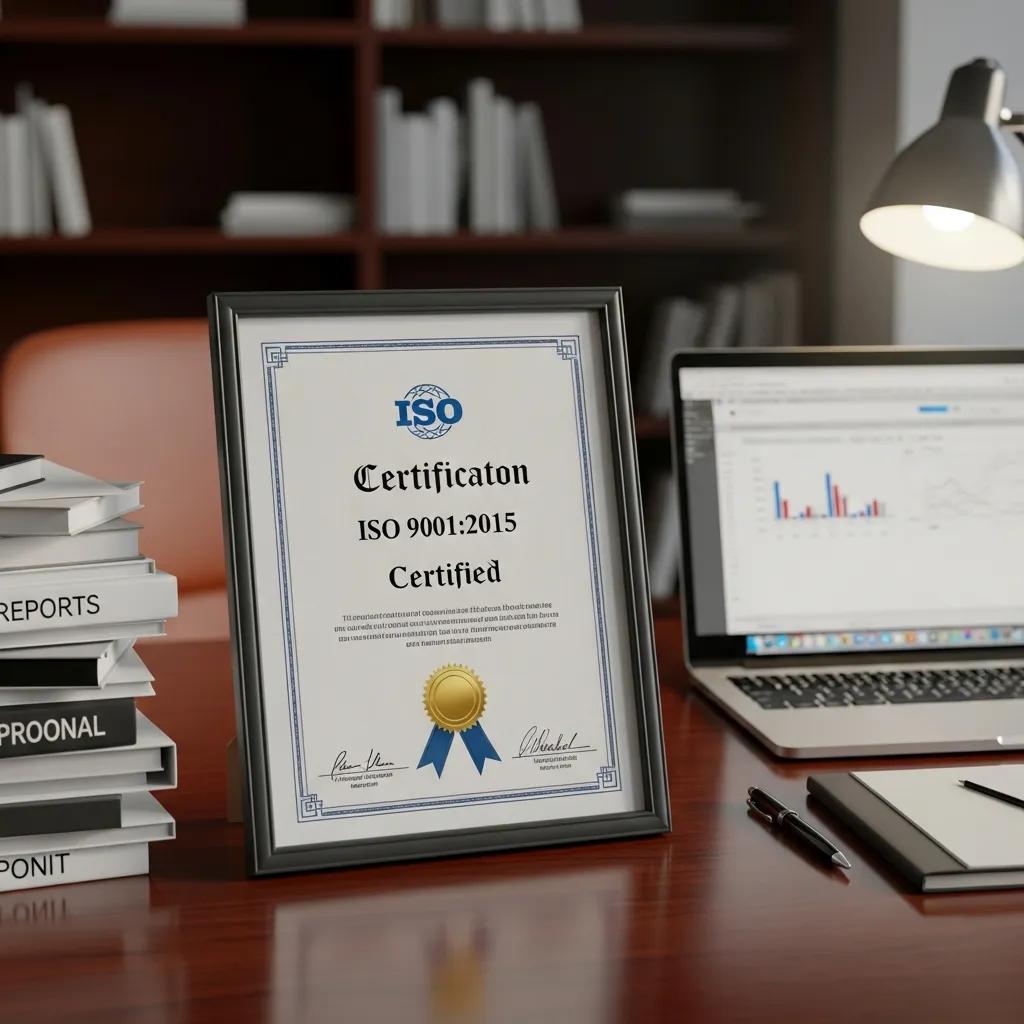
ISO certification provides objective evidence that processes are controlled, monitored and improved through internal audits and management review. Third‑party assessment creates a dependable audit trail — policies, internal audit reports and external certificates — that procurement officers can verify during evaluation and in post‑award checks. When certificate files and supporting evidence are readily available, buyers have less uncertainty about a supplier’s ability to meet service levels and compliance obligations, which often translates into higher technical scores. Strong credibility signals include an accredited certificate scope that covers the contract’s core activities, recent surveillance audit notes, and clear links between documented controls and contractual deliverables.
Those trust-building mechanisms should shape how you present certification in tender documents and evidence packs; the next subsection covers typical compliance requirements.
What Compliance Requirements Do Government Contracts Impose on ISO Certification?
Government contracts usually distinguish mandatory certifications for eligibility from preferred certifications that boost scores. Tender language often specifies whether a certificate must be accredited, whether the scope must cover contract activities, and whether the certificate must be current at award. Common clauses request ISO 9001 for quality, ISO 27001 for information security in data‑sensitive procurements, or ISO 14001 for environmental obligations in infrastructure projects — and these clauses commonly require proof of accreditation and scope alignment. Practical bid tips: ensure certificates explicitly list the contract activities, include surveillance audit dates, and provide a concise compliance table that maps contract clauses to certified controls. Verifying that the accreditation body named in the tender recognises your certification provider is a simple pre‑submission check that reduces disqualification risk.
Confirming accreditation acceptance and documenting scope alignment prepares a bid for buyer verification and leads into which specific ISO standards are most frequently requested.
Stratlane Certification leverages AI‑driven audit tools and industry auditors to provide ISO services. The company is accredited in over 27 countries and has professional auditors in more than 29 countries. Primary certification offerings include ISO 9001, ISO 14001, ISO 27001 and ISO 42001. Key value propositions: AI‑driven auditing, global accreditation, fast quotes and audit booking CTAs, plus a certificate database and download services.
Which ISO Standards Are Essential for Government Procurement Success?
Essential ISO standards create a predictable, auditable foundation for different tender categories by addressing buyer priorities — quality, security, environment, health & safety and AI governance. ISO 9001 sets out quality management practices for consistent delivery and measurable customer satisfaction; ISO 27001 builds an information security management system to protect confidentiality, integrity and availability of data; ISO 14001 covers environmental obligations in public works; ISO 45001 manages health and safety risks for construction and high‑risk operations; and ISO 42001 provides AI management where algorithmic decision‑making is part of the service. Picking the standard that matches a tender’s primary risk domain helps teams prioritise certification and show evaluators direct, measurable benefit.
Research into ISO/IEC 42001 highlights the rising importance of AI governance in public sector contracts.
ISO/IEC 42001: AI Management for Compliance & Competitive Advantage
A 2023 analysis of ISO/IEC 42001 that explores how an AI management system standard supports ethical, transparent and resilient AI practices — and how it complements ISO/IEC 27001 for security and governance.
| Standard | Applies To | Benefit/Value |
|---|---|---|
| ISO 9001 (Quality) | General services, suppliers, contractors | Controls process consistency and measurable quality outcomes that improve scoring on delivery and service criteria |
| ISO 27001 (Information security) | IT, cloud, defence, agencies handling PII | Provides structured controls for confidentiality, integrity and availability to reduce breach risk and meet security clauses |
| ISO 14001 (Environmental) | Infrastructure, construction, facilities | Demonstrates environmental risk management and compliance with sustainability requirements in tenders |
| ISO 45001 (Health & Safety) | Construction, maintenance, high‑risk operations | Shows active management of worker safety risks and statutory compliance that procurement teams expect |
| ISO 42001 (AI management) | AI/ML services, automated decision systems | Establishes governance and risk controls for algorithmic systems to meet emerging public‑sector AI requirements |
This comparison maps standards to procurement intent and helps procurement teams choose certification roadmaps that align with tender evaluation criteria. The following sections look at the tangible benefits of two high‑priority standards — ISO 9001 and ISO 27001 — and how they influence bid scoring.
What Are the Benefits of ISO 9001 Quality Management for Public Sector Contracts?
ISO 9001 helps public sector contracts by standardising key processes to reduce variability, rework and delivery delays — outcomes procurement evaluators reward under quality and service criteria. A certified QMS provides documentation and internal audit reports that can be attached to tender submissions as evidence of repeatable performance. For contracts with SLAs, ISO 9001 supports performance monitoring, corrective action and continual improvement — signals buyers interpret as lower operational risk. Mapping QMS processes such as nonconformance handling and supplier management directly to tender evaluation points helps assessors translate certification into expected contract performance.
Connecting QMS controls to contractual KPIs strengthens a bid narrative and leads naturally to the information security topics covered by ISO 27001.
How Does ISO 27001 Ensure Information Security in Government Bids?
ISO 27001 provides a risk‑based Information Security Management System (ISMS) that identifies assets, applies controls and demonstrates monitored outcomes through audit evidence. For tenders handling personal data, classified information or critical systems, an ISMS documents access controls, encryption, incident response and other measures buyers can verify to reduce cyber and confidentiality risk. Commonly requested evidence includes the scope statement, risk assessment summaries and recent surveillance audit notes showing active management and resilience. Mapping contractual security obligations to ISO 27001 controls improves bid confidence and can be decisive in shortlisting, especially for IT‑centric procurements.
Further research highlights the role of ISO 27001:2022 in building robust information security frameworks for government procurement systems.
ISO 27001:2022 for Government Procurement Information Security
A 2022 study recommending an information security framework for government procurement systems based on ISO 27001:2022, noting the standard’s role in addressing remote access, unauthorised entry and broader cyber risks in procurement platforms.
These standard‑specific benefits lead into how AI‑driven auditing accelerates certification and improves audit evidence quality for government organisations.
How Does Stratlane’s AI-Driven Auditing Improve ISO Certification for Government Contracts?

Stratlane’s AI‑driven auditing speeds up certification by automating evidence collection, surfacing anomalies to prioritise risk, and giving auditors structured data analysis that improves both speed and report quality. AI can index management system documents, cross‑reference internal audit findings against control objectives, and highlight gaps that typically trigger extra audit cycles — reducing on‑site days and administrative overhead. For public sector clients, faster readiness checks and clearer audit reports mean certificates and evidence can meet tight procurement timelines, improving eligibility at bid submission. Combining AI tooling with auditor oversight produces reproducible audit evidence that aligns with tender verification expectations and certificate database requirements.
| Audit Phase | AI Feature | Efficiency/Quality Gain |
|---|---|---|
| Planning | Automated scoping and risk profiling | Faster identification of relevant controls and reduced manual scoping time |
| Evidence collection | Document indexing and automated evidence matching | Lower administrative effort and fewer missing evidence items |
| Analysis & reporting | Anomaly detection and risk scoring | Prioritised findings and consistent, comparable reports |
| Surveillance | Continuous monitoring alerts | Early detection of control drift and reduced surveillance workload |
The table shows how AI shortens timelines and strengthens evidence quality, improving readiness for procurement evaluations. The next sections describe how AI raises audit quality and the process improvements public sector clients experience.
In What Ways Does AI Enhance Audit Quality and Efficiency?
AI improves audit quality through consistent pattern detection, standardised risk scoring and rapid cross‑referencing of controls against evidence — reducing subjective variation between audit teams. By processing large volumes of documentation quickly, AI spots anomalies and weak control links that would otherwise need extensive manual review, enabling earlier remediation and fewer nonconformities at certification. Efficiency gains include less time spent collating evidence, fewer follow‑up audits and more concise auditor reports tailored for procurement needs. These changes make certification timelines more predictable and give procurement teams higher‑confidence evidence at bid time.
Those quality and efficiency gains translate into concrete process changes that streamline certification for public sector clients, described next.
How Does AI Streamline the Certification Process for Public Sector Clients?
AI compresses readiness assessment and evidence submission cycles with automated checklists, evidence matching and templated reports aligned to tender verification practices. Practically, organisations can move from a multi‑month manual readiness period to a shorter cycle where missing documents are flagged, corrective actions prioritised, and certification reports generated with procurement‑friendly summaries. For teams facing tight bid windows, that acceleration reduces the risk of being non‑compliant at award and simplifies post‑award certificate management. The result is a leaner certification timeline with clearer deliverables for suppliers and public buyers.
Stratlane Certification leverages AI‑driven audit tools and experienced auditors to deliver ISO certification services. The company is accredited in over 27 countries and has professional auditors in more than 29 countries. Primary offerings include ISO 9001, ISO 14001, ISO 27001 and ISO 42001. Key value props: AI‑driven auditing, global reach and accreditation, quick quotes and audit booking CTAs, plus a certificate database for downloads.
How Can Businesses Navigate Government Procurement with ISO Certification?
Navigating public procurement with ISO certification means aligning certificate scope and timing to tender cycles, preparing a concise evidence pack for evaluators, and understanding regional procurement nuances that affect which standards are prioritised. Start by mapping contract requirements to certified processes, verifying accreditation acceptance, and assembling a compliance appendix that links tender clauses to certificate sections and internal audit reports. Pre‑qualification often focuses on certificate validity, accreditation body recognition and scope alignment, so early verification prevents disqualification. The table below maps common tender types to recommended ISO standards and practical considerations to help prioritise certification efforts.
| Tender Type | Required/Preferred ISO(s) | Practical Consideration |
|---|---|---|
| IT & cloud services | ISO 27001, ISO 9001 | Ensure the ISMS scope covers hosted services and data processing activities |
| Defence & critical systems | ISO 27001, ISO 9001, ISO 45001 | Confirm accreditation acceptance and supplier chain controls |
| Healthcare & social services | ISO 9001, ISO 27001 | Include patient data controls and service quality evidence |
| Construction & infrastructure | ISO 14001, ISO 45001, ISO 9001 | Align environmental and H&S scopes to contract works and sites |
This mapping clarifies which standards deliver the most procurement value for each tender type and points toward the compliance checklist that follows.
What Are Key Tender Compliance Considerations for ISO Certification?
Key compliance checks include ensuring the certificate scope explicitly covers the contract’s core activities, confirming the accreditation body is accepted by the contracting authority, and checking certificate expiry and surveillance dates before submission. Prepare a concise compliance table that maps each tender requirement to the relevant clause in your management system documentation and attach corroborating internal audit reports or recent surveillance outcomes. Typical documentation requests include the certificate file, scope statement and a summary of recent corrective actions — having these ready avoids last‑minute delays. Preparing this evidence bundle in advance aligns with tender workflows and speeds buyer verification.
Verifying these details across geographies requires awareness of how ISO requirements differ in UK, EU and US procurement frameworks, summarised below.
How Do ISO Requirements Vary Across UK, EU, and US Government Contracts?
Regional procurement frameworks differ in how they reference ISO: some require accredited certificates from national accreditation bodies, while others accept international equivalence or list standards as preferred rather than mandatory. In the UK and EU, tenders often expect accreditation recognition consistent with national schemes; in the US, federal procurements may reference security standards and use supplier vetting portals that favour ISO 9001 or ISO 27001. Practical steps: check the tender’s accreditation references, consult the contracting authority’s procurement notes for accepted accreditations, and use official procurement portals to confirm regional rules. Understanding these variations helps you decide whether to prioritise specific accreditation routes or prepare supplementary evidence for acceptance.
These regional nuances underline the importance of timing and certificate accessibility when aiming to win public sector contracts. The next section shares anonymised success examples.
What Success Stories Demonstrate Winning Public Sector Contracts with ISO Certification?
Case summaries show how timely certification, precise certificate scopes and accessible audit evidence directly influenced contract awards. In one anonymised example, aligning an ISO 27001 scope to a government data processing requirement cleared a security pre‑qualification barrier and allowed the bidder to reach technical evaluation. In another, submitting rapid surveillance audit evidence with the bid resolved buyer concerns about operational continuity and raised the quality score. These outcomes show measurable ROI from aligning certification projects to tender timelines and highlight the role of efficient certificate management in closing procurement gaps.
From these cases come repeatable lessons other bidders can apply; the following sections summarise anonymised client outcomes and practical takeaways.
How Have Stratlane Clients Secured Government Bids Using ISO Certifications?
Anonymised outcomes show that when ISO scope matched contract deliverables and audit evidence was readily downloadable, procurement assessors moved suppliers faster through compliance checkpoints. Clients using AI‑assisted readiness checks shortened time to certification and provided surveillance reports and certificate files at bid submission, directly addressing buyer verification steps. The common factors that enabled selection in competitive procurements were scope alignment, evidence availability and timely certification — producing faster vetting and improved evaluation scores for quality and security.
These outcomes inform the practical lessons bidders should prioritise to achieve similar results.
What Lessons Can Be Learned from Public Sector ISO Certification Success?
Key lessons for bidders: align certificate scope to contract activities early; keep certificate and audit evidence accessible for tender submissions; and schedule certification milestones to precede bid deadlines. Use a compliance appendix that maps tender clauses to certified controls, keep recent surveillance summaries in the evidence pack, and confirm accreditation acceptance with the contracting authority. Avoid expired certificates, mismatched scopes, and missing internal audit evidence. Following these practices reduces procurement friction and increases the chance of winning contracts where certification is a differentiator.
These lessons lead into actionable steps for teams that want to secure certification efficiently, described in the final section on engaging certification providers.
How to Get Certified with Stratlane for Government and Public Sector Excellence?
Getting certified for procurement readiness follows a clear sequence: define scope and documentation, request a quote, schedule and complete the audit, then manage certificates for tendering and post‑award compliance. Practical actions include compiling a scope statement that maps to contract activities, assembling core documentation (policies, procedures, internal audit reports), and using a readiness assessment to identify gaps before external audit. After certification, keeping certificate files accessible and using certificate management tools reduces administrative friction when responding to tenders. The numbered process below outlines the typical engagement flow to help teams plan timelines and expectations.
- Define scope and objectives: Map the contract activities and controls that must be covered.
- Prepare documentation: Gather policies, process maps, and internal audit reports aligned to the scope.
- Request a quote and schedule audit: Obtain a scope‑based quote and book audit dates that meet tender timelines.
- Complete audit and receive certificate: Resolve any nonconformities, set surveillance plans, and secure the accredited certificate.
This stepwise approach clarifies the tasks and timelines needed to achieve procurement‑ready certification. The sections that follow explain what information certification providers need and how certificates are accessed for tendering.
What Are the Steps to Request a Quote and Book an Audit?
When requesting a quote and booking an audit, prepare a concise scope description, list of locations or services included, and an overview of existing management documentation and recent internal audit results. Typical information providers ask for includes the standards required (for example, ISO 9001 or ISO 27001), number of sites or service lines, and details of critical processes to be assessed; providing these up front speeds scoping and reduces estimate cycles. Timelines vary by readiness, but a clear readiness assessment identifies gaps and estimates audit days; include procurement deadlines in the scoping conversation so certificates can be planned before bid submission. This information also establishes expected deliverables such as the audit report, certificate file and surveillance schedule procurement teams will rely on.
Where Can You Access Certificate Management and Downloads?
Certificate management and downloads are usually available via a secure certificate database or client portal where authorised users can retrieve certificate files, scope statements and audit summaries for tender submission. Best practice is to maintain a central repository with clear naming conventions and versioning so procurement teams can attach evidence quickly and consistently. When presenting certificates in tenders, include the certificate name, accreditation reference, scope summary and a short note linking the certificate to the contract activity to speed assessor verification. An accessible certificate management approach reduces administrative delay during procurement checks and supports post‑award compliance audits.
Stratlane Certification leverages AI‑driven audit tools and experienced industry experts to provide ISO certification services. The company is accredited in over 27 countries and has professional auditors in more than 29 countries. Primary certification offerings include ISO 9001, ISO 14001, ISO 27001 and ISO 42001. Key value propositions: AI‑driven auditing, global reach and accreditation, quote requests and audit booking CTAs, plus a certificate database and download services.
Frequently Asked Questions
What is the process for obtaining ISO certification for government contracts?
The process starts with defining the certification scope by mapping contract activities and controls. Prepare documentation — policies, procedures and internal audit reports — then request a quote and schedule the audit. After the audit, resolve any nonconformities and receive the accredited certificate. Keeping documentation and certificates accessible is essential for tender submissions and post‑award checks.
How can businesses ensure their ISO certification aligns with specific tender requirements?
Review the tender to identify required and preferred ISO standards, then map your certification scope to the contract activities. Prepare a compliance appendix linking tender clauses to certified controls and confirm accreditation acceptance with the contracting authority. Regular communication with the buyer can clarify specific accreditation or scope expectations.
What role does AI play in enhancing the ISO certification process?
AI automates evidence collection, highlights risks and improves data analysis. It speeds audit readiness by indexing documents and cross‑referencing internal audits with control objectives, reducing audit time and improving evidence quality. Faster readiness assessments and clearer audit reports help organisations meet tight procurement timelines and improve certification outcomes.
What are the common pitfalls to avoid when preparing for ISO certification?
Avoid relying on expired certificates, submitting documents with mismatched scopes, or lacking internal audit evidence. Also confirm the contracting authority accepts your accreditation body. Preparing required documentation well before submission prevents last‑minute delays and reduces the risk of disqualification.
How can organizations maintain their ISO certification after obtaining it?
Maintain certification through regular internal audits, continual improvement, timely corrective actions and staff training. Schedule surveillance audits with your certification body to demonstrate ongoing compliance. Keep certificates and audit summaries in an accessible management system to speed tender responses and post‑award checks.
What are the benefits of ISO certification for public sector contracts?
ISO certification delivers independent verification of management systems, enhancing credibility, demonstrating regulatory alignment and reducing operational risk. That verification can improve bid scoring and increase the chance of winning contracts. Certification signals commitment to quality, security and environmental management — all priorities for government buyers.
Conclusion
ISO certification strengthens credibility and compliance in government and public sector bids and can directly improve procurement outcomes. Aligning your management systems with recognised standards reduces operational risk and makes bid responses easier to verify. Working with a provider like Stratlane can streamline the path to certification and help ensure you’re ready for tender deadlines. Take the next step toward a stronger position in public procurement by exploring our ISO certification services.