
Elevate Healthcare Quality: Achieve ISO Certification Today

ISO certification for hospitals and healthcare organizations: ensuring quality, safety, and compliance
ISO certification confirms a healthcare facility’s management systems meet international requirements for quality, safety, information security, workplace health, or laboratory competence. This guide explains why certification matters for patient safety, regulatory alignment, operational resilience, and procurement credibility. You’ll find which standards—ISO 9001, ISO 13485, ISO 27001, ISO 45001 and ISO 15189—matter for different clinical settings, how AI-assisted audits are changing the experience, and a practical step‑by‑step route to certification. We highlight controls, measurement approaches, differences between traditional and AI-driven audits, and how certificate management supports ongoing compliance. With a clear roadmap, hospitals and clinics can prioritise standards, prepare documentation, schedule audits, and track KPIs to strengthen outcomes and organisational trust.
Why is ISO certification critical for healthcare organizations?
ISO certification shows an organisation has structured management systems that reduce risk, improve outcomes, and support regulatory obligations. By specifying repeatable processes and measurable indicators, certification helps lower preventable events and improves clinical governance. It also simplifies procurement and partnerships—many payers and partners require evidence of certified quality or security systems during contract evaluations. For teams seeking external validation, certification provides an audit trail and a built‑in mechanism for continual improvement through management review and corrective action.
Healthcare leaders should weigh practical, measurable benefits before choosing a standard and audit partner. The next section explains how certification strengthens hospital quality management through standard QMS practices.
How does ISO certification improve hospital quality management?
ISO certification strengthens hospital quality management by establishing a documented quality management system that standardises processes, measures outcomes, and embeds continual improvement. Consistent procedures reduce variation in clinical and administrative work, lowering error rates and supporting reliable patient pathways. Performance measurement—KPIs, incident reporting, and management review—drives targeted corrective actions and improvement projects that deliver measurable results. Typical activities include standardised surgical checklists, medication reconciliation protocols, and scheduled internal audits that inform leadership decisions and resource allocation.
These gains depend on clear documentation and stakeholder engagement, which naturally leads into how certification supports patient safety and regulatory alignment.
What are the benefits of ISO standards for patient safety and regulatory compliance?
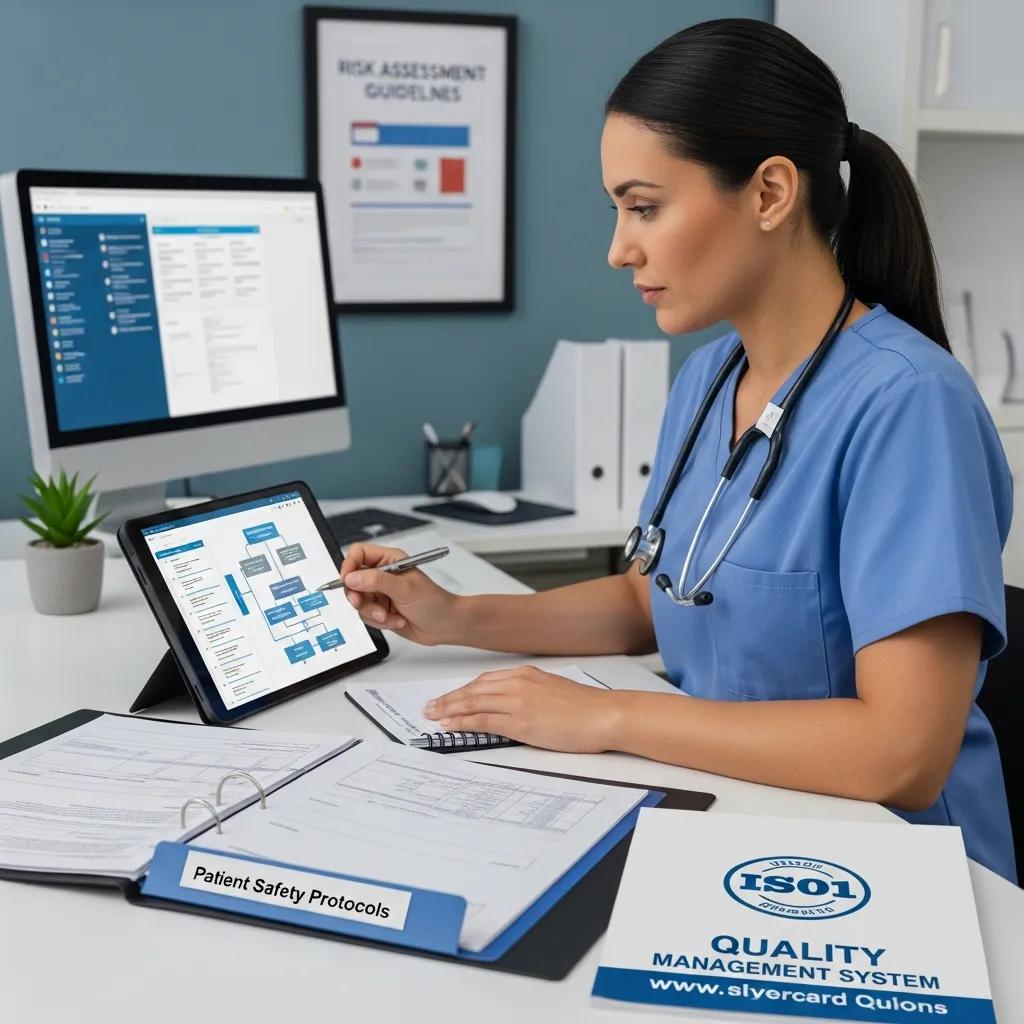
ISO standards convert system‑level controls into concrete patient‑safety improvements by requiring risk assessments, incident reporting, and corrective action processes that reduce adverse events. They also reinforce regulatory compliance: documented procedures and records demonstrate due diligence to inspectors, payers, and accreditors. Certification builds trust with patients and partners through independent validation of safety and quality practices, helping protect reputation and improve competitive positioning. Together, these effects can lower litigation risk, improve clinical outcomes, and preserve eligibility for externally funded contracts.
Knowing which standards map to specific benefits helps hospitals set certification priorities—explained in the section that follows.
Which ISO standards apply to hospitals and healthcare facilities?
Choose standards based on services offered, risk exposure, and regulatory or procurement requirements. Commonly relevant standards include ISO 9001 for overall quality management; ISO 13485 for medical device manufacturers and supply chains; ISO 27001 for information security; ISO 45001 for occupational health and safety; ISO 15189 for medical laboratory competence; and ISO 10001 for patient‑focused service processes. Your priority—clinical quality, device traceability, data protection, staff safety, or lab accuracy—determines the right starting point.
ISO 15189, in particular, is widely recognised for laboratory quality and technical competence among professionals.
ISO 15189 accreditation for laboratory quality and competence
ISO 15189 accreditation has gained traction among laboratory professionals because it provides a clear pathway to demonstrate high standards of laboratory performance and the role of Laboratory Medicine in patient care. It also highlights how individual staff competence directly affects overall laboratory performance and result quality.
ISO 15189 accreditation and competence: a new opportunity for laboratory medicine, A Padoan, 2017
The table below compares core standards, who should consider them, and the primary organisational benefits.
Different ISO standards target distinct healthcare functions and deliver specific operational advantages.
| Standard | Applies to (facility type) | Key benefit |
|---|---|---|
| ISO 9001 | Hospitals, clinics, administrative services | Standardises QMS across clinical and non‑clinical processes |
| ISO 13485 | Medical device manufacturers and hospital suppliers | Ensures device traceability and consistent production controls |
| ISO 27001 | Hospital IT, EHR platforms, telemedicine services | Protects patient data with an ISMS and risk‑based controls |
| ISO 45001 | Hospitals, clinics, long‑term care facilities | Structures occupational health and safety programmes for staff |
| ISO 15189 | Clinical and diagnostic laboratories | Validates laboratory competence, accuracy, and calibration practices |
| ISO 10001 | Patient‑facing services and care pathways | Promotes patient‑centred service quality and expectations |
This comparison clarifies how each standard maps to organisational goals and risk areas, helping teams decide which certifications to prioritise based on clinical needs and regulatory pressure.
Accredited certification bodies issue many of these certificates; Stratlane Certification is an accredited partner that supports organisations across multiple countries with quotes, audits, and end‑to‑end certification support.
What is ISO 9001 and its role in healthcare quality management?

ISO 9001 is a general quality management standard that applies a process approach and a framework for continual improvement. In healthcare, organisations use ISO 9001 to align clinical pathways, administrative workflows, and patient services with measurable outcomes and a patient focus. Typical QMS activities include process mapping, standard operating procedures, audit schedules, and management reviews to maintain operational control and drive improvement. The outcome is reduced process variation, improved patient flow, and clearer accountability across departments.
Evidence from published research supports tangible benefits of ISO 9001 in improving hospital performance and overall healthcare quality.
Impact of ISO 9001 on hospital performance and healthcare quality
This review examined the effects of ISO 9001 and the EFQM model on hospital performance. It included empirical studies that applied ISO 9001 or EFQM to improve healthcare quality and reported on measurable outcomes.
The effect of ISO 9001 and the
EFQM model on improving hospital performance: a systematic review, T Yousefinezhadi, 2015
A QMS aligned with ISO 9001 also eases integration with other governance systems and prepares organisations for specialised standards such as ISO 15189 or ISO 13485 where relevant.
How does ISO 13485 support medical device manufacturers?
ISO 13485 sets requirements for a quality management system where an organisation must demonstrate the ability to provide medical devices and related services that consistently meet customer and regulatory needs. It emphasises risk management, design controls, traceability, and post‑market surveillance to maintain device safety and effectiveness across the product lifecycle. Manufacturers and suppliers use ISO 13485 to meet regulatory frameworks such as the EU MDR and the US FDA QSR.
While primarily aimed at manufacturers, ISO 13485 is also relevant to hospitals that manage procurement and maintenance of medical devices to ensure ongoing device quality and safety.
Frequently asked questions
What is the process for obtaining ISO certification in healthcare?
The certification process starts by selecting the appropriate ISO standard for your services and regulatory obligations. Next, develop and implement a quality management system that meets the standard: document processes, train staff, and run internal audits. When ready, an accredited certification body performs an external audit to verify compliance. If the audit is successful, you receive certification, which you maintain through regular surveillance audits and continuous improvement.
How often do healthcare organizations need to renew their ISO certification?
ISO certificates are typically valid for three years, with annual surveillance audits to confirm ongoing compliance. These audits identify improvement opportunities and verify the QMS remains effective. Continuous improvement and documented evidence are necessary to retain certification and trust with patients and partners.
What role does employee training play in achieving ISO certification?
Employee training is essential: it ensures staff understand the QMS and their specific responsibilities. Training builds a culture of quality, equips teams to follow processes correctly, and supports continual improvement by keeping staff current on best practices and regulatory changes—ultimately improving patient safety and operational performance.
Can ISO certification improve patient satisfaction in healthcare settings?
Yes. Standardised processes and a mature quality management system help deliver more consistent care, reduce errors, and improve service reliability. These operational improvements contribute to better clinical outcomes and a more positive patient experience. External certification also signals quality to patients and referrers, reinforcing confidence in your services.
What are the costs associated with ISO certification for healthcare organizations?
Costs vary by organisation size, operational complexity, and the chosen standard. Typical expenses include training, documentation work, internal audit time, and fees for external certification audits. You should also budget for any changes needed to meet requirements. While there is an upfront investment, many organisations find the long‑term gains in efficiency, risk reduction, and contracting opportunities offset those costs.
How does ISO certification impact regulatory compliance in healthcare?
ISO certification supports regulatory compliance by providing documented processes and controls that align with regulatory expectations. Certified organisations demonstrate a systematic approach to quality and safety, which can simplify inspections and reduce the risk of non‑compliance. The QMS provides evidence to regulators, improving operational credibility and reducing administrative friction.
ISO Certification: Driving Quality and Safety in Healthcare
ISO certification helps hospitals and healthcare organisations strengthen quality, safety, and compliance—leading to better patient outcomes and more efficient operations. By selecting relevant standards and following a structured certification pathway, facilities can build trust with patients and partners and demonstrate ongoing commitment to improvement. Take the first step with expert guidance to navigate certification efficiently and confidently.