
Mastering Your Stratlane Logo: ISO Certification Guidelines
Guidelines for Using Your Stratlane ISO Certification Logo: Displaying and Leveraging Your Certified Mark
The Stratlane ISO certification logo is the visual proof that an organization’s management system has passed a Stratlane audit and meets an ISO standard. This guide explains what the Stratlane mark is, why following the rules matters for legal and brand reasons, and how to use the mark across digital and printed materials to build trust and stay compliant. Common problems—like inconsistent placement, product-level claims, and unclear certificate-number presentation—are addressed with straightforward rules, real examples, and monitoring tips. You’ll find a quick definition, a comparison with the ISO emblem, concrete specifications for color, clear space and permitted edits, plus ready-to-use templates, governance checklists, and marketing guidance that responsibly highlights our AI-assisted audit capabilities. Tables, do’s and don’ts, and verification instructions are included for quick reference.
What Is the Stratlane ISO Certification Logo and Why Is Correct Usage Important?
The Stratlane ISO certification logo is a certification-body mark issued to organizations whose management systems have been audited and certified by Stratlane Certification. As a brand asset, it signals independent assessment and differs from the ISO emblem in ownership, permitted uses, and legal limits. Using the mark correctly avoids misleading claims about scope (system vs. product), protects accreditation relationships, and preserves stakeholder trust with customers and partners. Teams that follow these rules reduce the risk of non-compliance, corrective actions, and reputational harm while creating consistent recognition across channels. The table below maps common logo variants to the standards they cover and shows recommended uses so teams can pick the right asset for each application.
| Logo Variant | Applies To Standard | Correct Use |
|---|---|---|
| Stratlane Certification Mark (full-color) | ISO 9001, ISO 14001, ISO 27001, ISO 45001 | Use on your website, certificate facsimiles, and marketing materials to indicate a certified management system |
| Stratlane Certification Mark (monochrome) | Any certified standard | Use when color reproduction isn’t available; do not change proportions or add visual effects |
| Certification Number Label | Unique certificate identifier | Place beside the logo according to sizing rules so viewers can verify the certificate without implying product certification |
This mapping makes the available assets and their permitted contexts clear, and it prepares you for a short comparison between the Stratlane mark and the ISO emblem to avoid common errors.
What Defines the Stratlane Certification Logo Compared to the ISO Logo?
The Stratlane certification logo is owned and issued by the certification body and denotes that an organization’s management system has been audited and certified by Stratlane Certification. The ISO emblem, by contrast, is owned by the International Organization for Standardization and is not a certification mark. Ownership controls who can provide and how each mark may be used: certification bodies supply their mark to certified clients under defined rules, while ISO use is limited and managed separately. In practice, you can display the Stratlane mark to show system certification, but you must not use the ISO emblem in ways that imply direct ISO endorsement or mislead stakeholders about the certification’s nature. Common correct and incorrect examples: displaying the Stratlane mark on an About or leadership page is appropriate; placing the mark on an individual product label to suggest product-level certification is not.
How Does Proper Logo Usage Protect Brand Integrity and Compliance?
Consistent, correct logo use preserves visual identity and legal accuracy, which keeps stakeholders confident and prevents claims of false representation. Misuse—such as stretching the mark, placing it on uncertified products, or removing the certification number—creates regulatory exposure and damages market trust. Organizations with governance around logo use reduce audit findings and strengthen relationships with customers, partners, and procurement teams. If misuse occurs, act quickly: remove the incorrect item, notify Stratlane when appropriate, and document corrective actions in your management system. Those steps lead naturally into the practical display rules to apply across your organization.
What Are the General Rules for Displaying Your Stratlane ISO Certification Logo?
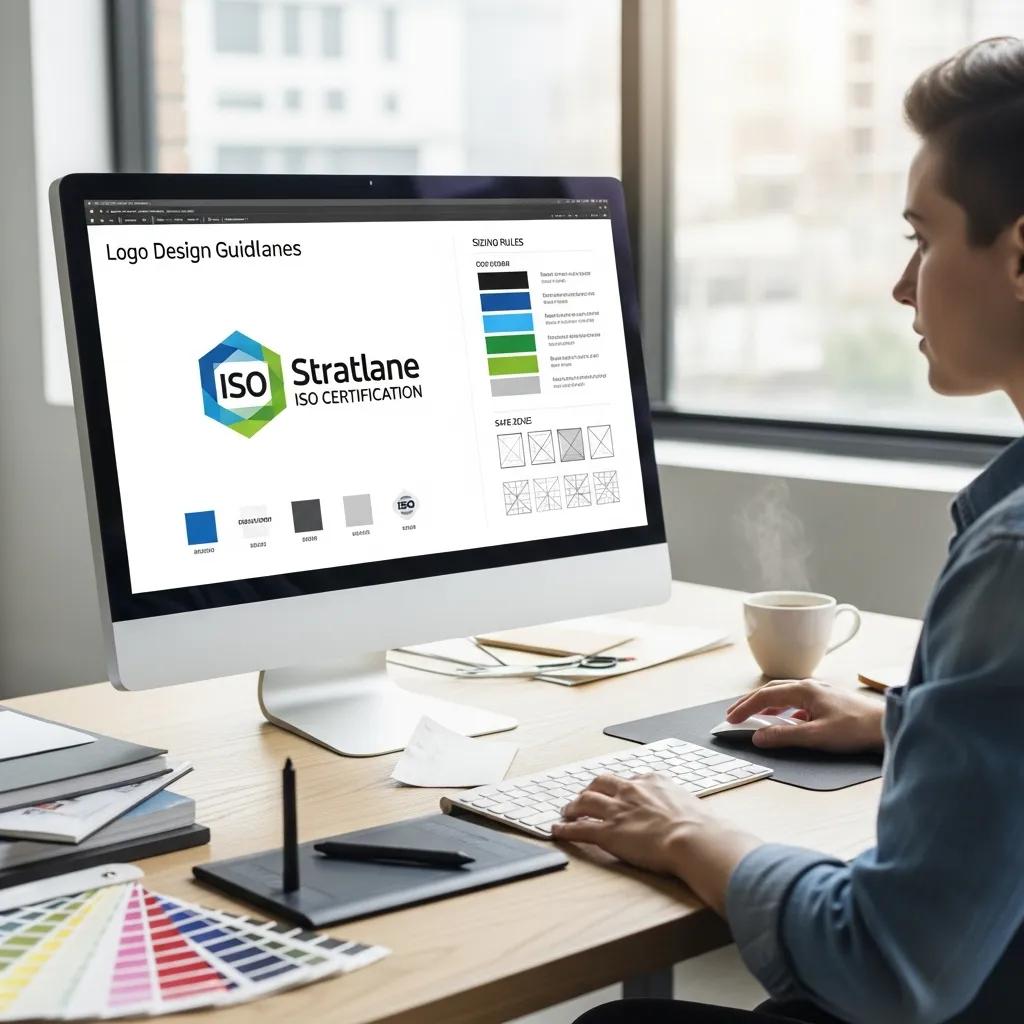
These general rules cover permitted colors, sizing, clear space, and file formats so the mark stays legible and unambiguous across media. Use only the approved full-color, greyscale, or single-color variants; never change the aspect ratio, add drop shadows, or crop the mark. Minimum clear space is measured from the mark’s baseline element — maintain that space on all sides to prevent visual clutter. For print, supply vector files; for responsive web use, use SVG or PNG. Minimum-size rules prevent pixelation and ensure legibility on small items. The table below lists the key technical attributes designers and vendors must follow.
| Attribute | Requirement | Rule / Value |
|---|---|---|
| Permitted Colors | Full-color, greyscale, single-color | Use approved brand colors; use greyscale for black-and-white reproduction |
| Clear Space | Minimum margin | Maintain clear space equal to X (logo height unit) on all sides |
| Minimum Size | Digital/Print minimums | Respect the minimum width to preserve legibility; use vector files for scaling |
| File Formats | Recommended formats | Provide EPS/SVG for print and PNG/SVG for digital; avoid low-resolution JPGs |
This table makes the technical rules explicit for designers and third-party vendors and sets up the practical guidance on color, proportions, and certification numbers that follows.
What Are the Permitted Colors, Proportions, and Modifications for the Logo?
Permitted options are the approved full-color palette, neutral greyscale, and a single-color variant for constrained production. Designers should apply exact color values from the approved files; if full-color printing isn’t available, use the single-color variant rather than recoloring the full mark. Always scale the logo uniformly — do not stretch — and never rotate or apply graphic filters (glow, bevel, drop shadow). For print, use CMYK or vector formats; for screens, use sRGB PNG or SVG. These controls keep the mark recognizable and prevent unauthorized changes that could weaken its authority.
How Should You Include Your Certification Number with the Logo?
When required, present the certification number close to the logo, clearly formatted (for example, “Certificate No: XXXX”) and sized for legibility relative to the mark. Acceptable placements include a right-aligned label or a line beneath the logo; in every case maintain the minimum font size and clear space so the number is readable at the intended scale. The certification number is necessary when a certification claim is specific or when procurement or regulators request verification. If space is limited, include a short verification statement directing viewers to your certificate management resources. Consistent number formatting reduces ambiguity, supports external verification, and links the visual mark to the authoritative certificate.
How Can You Apply the Stratlane Logo Across Different Marketing Materials?
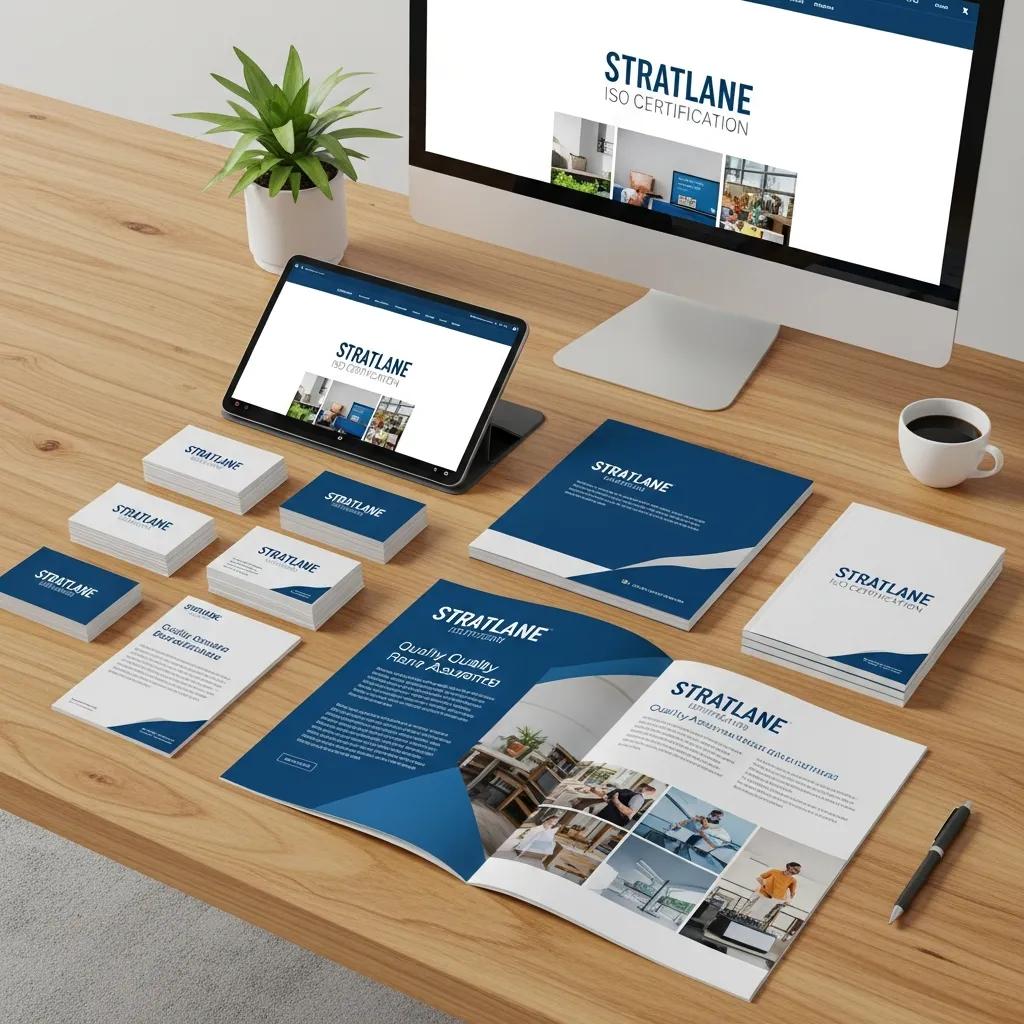
Applying the Stratlane mark requires adapting placement, size, and supporting text for each material so the certification is communicated clearly and accurately. On websites and digital channels, place the mark on an About or Compliance page with descriptive alt text and a link to certificate verification. In print, position the mark consistently on letterhead, brochures, and business cards with appropriate bleed and margins. For special use cases — packaging, signage, vehicles — use monochrome or vector files and respect minimum size and clear-space rules so the mark remains legible at scale. The table below lists common materials with placement recommendations and simple do/don’ts to guide designers and marketing teams.
| Material Type | Placement Recommendation | Example / Do-Don’t |
|---|---|---|
| Website | About/Compliance page, footer with certificate note | Do: Include descriptive alt text and a verification link; Don’t: Use on product pages in a way that implies product certification |
| Business Cards | Lower-right quadrant or back panel | Do: Keep at minimum legible size; Don’t: Reduce below the legibility threshold |
| Packaging | Near company identification, not on individual product claims | Do: Use the single-color variant when needed; Don’t: Place on product labels to imply product certification |
This material-specific guidance helps teams apply the mark consistently across channels and leads into detailed web and print rules.
What Are the Guidelines for Using the Logo on Websites and Digital Media?
On websites, use descriptive filenames and clear alt text that identify the mark and the certified standard (for example, “Stratlane Certification mark – ISO 27001″). Keep the logo on a compliance or About page and provide a verification path such as certificate downloads or a verification statement. Ensure responsive sizing so the mark remains legible on mobile screens and avoid embedding the mark inside interactive elements that could mislead users. Address accessibility by providing accessible text and meeting contrast requirements so the mark and any adjacent certification number are readable for all users. These practices support discoverability and make verification straightforward online.
How Should the Logo Be Placed on Business Cards, Letterheads, and Brochures?
For stationery and printed materials, reserve a consistent placement zone — for example, the header or lower-right corner — and respect minimum size and margin rules to maintain visual balance. Supply vector files (EPS/SVG) to print vendors and specify CMYK color values to ensure color fidelity across runs. Business cards must preserve legibility at small sizes; letterheads should keep the mark clear in header and footer positions; brochures require consistent placement across panels and folds. Give print vendors the approved file set and a short usage checklist to prevent inadvertent changes during production. These steps ensure your printed materials communicate certified status clearly and professionally.
How Do You Maintain Compliance and Monitor Proper Use of Your Stratlane Logo?
Maintaining compliance requires a governance framework that assigns responsibility, trains staff, and uses monitoring workflows to detect misuse. Establish clear brand-asset ownership, appoint approvers for external materials, and create a simple approval checklist covering logo variant, certification-number format, and verification references. Regular audits — manual reviews of key materials and automated monitoring of web use — help spot deviations quickly and guide remediation. When certification status changes or expires, follow a documented process to remove or update the mark across all assets. These governance practices protect legal compliance and the credibility of your certification claims over time.
- Asset Ownership: Designate a single team or role to approve logo usage across channels.
- Approval Workflow: Require pre-publication approval for external materials that include the mark.
- Update Procedure: Keep an inventory of where the mark appears and update it whenever certification changes.
A clear monitoring program reduces risk and enables fast corrective action when needed. The governance steps above lead into the training content your staff should receive.
What Training Should Your Team Receive on Logo Usage Rules?
Training should cover permitted uses, prohibited claims, certificate verification, and correct formatting and placement of the certification number. Offer quick reference cards for designers, short e-learning modules for marketing and procurement, and periodic refreshers tied to audit cycles. Invite marketing, legal, procurement, partner managers, and external vendors who reproduce the mark. Use before-and-after examples of correct and incorrect usage and include a sign-off step to confirm understanding. Practical, well-timed training builds consistent execution across departments and reduces accidental misuse.
How Can You Monitor and Audit Your Logo Usage Effectively?
Combine automated web alerts with scheduled manual reviews of printed materials and partner assets. Use brand-monitoring tools to surface unauthorized online use and conduct quarterly manual checks of procurement listings, partner sites, and sales collateral. Track KPIs such as time-to-remediate and misuse incidence to measure program performance, and define escalation steps that include correction, notification, and root-cause actions within your management system. Link monitoring results to certificate management so any change in certified scope is reflected across all uses. These practical steps support sustained compliance and simplify certificate maintenance.
How Can You Leverage Your AI-Assisted Stratlane Certification Logo for Marketing Success?
Stratlane uses AI-assisted audit tools to enhance consistency and efficiency in our certification services. We certify to ISO 9001, ISO 14001, ISO 27001, and ISO 45001. Stratlane is accredited in over 27 countries, works with professional auditors in 29+ countries, and our certificates are accepted by corporations, academic institutions, and SMEs worldwide. Resources such as Certificate Downloads and Logo Usage Rules are available on our website. These facts strengthen the marketing value of the Stratlane mark: AI-assisted auditing and broad accreditation support repeatable, scalable assessments that stakeholders recognize as rigorous.
Use the following messaging principles to boost credibility while staying compliant:
- Clear Scope: State the certified management system and standard explicitly (for example, “Certified to ISO 27001 management system”).
- Verification: Tell readers the certificate can be checked via certificate downloads or your compliance page.
- AI-Assisted Claim: Describe audit efficiency and consistency in neutral terms — don’t overpromise.
These guidelines turn the technical benefit of AI-assisted processes into clear trust signals for customers and partners. Note that AI supports auditors and improves data handling; it does not replace professional judgment.
What Credibility Does AI-Assisted Auditing Add to Your Certification Mark?
AI-assisted auditing improves consistency and evidence capture, helping reduce routine errors and speeding up standard assessments while keeping professional oversight in place. Benefits include faster certificate issuance and clearer audit trails that support transparent claims. When you communicate this advantage, do so conservatively: explain that AI tools assist auditors and streamline data handling rather than replace human judgment. Use phrasing like “AI-assisted audit processes” and point stakeholders to verification resources to corroborate claims. That approach highlights technological differentiation without risking misrepresentation.
What Case Studies Demonstrate Successful Branding with Stratlane Certification?
Short, anonymized case summaries show how consistent logo use and clear verification improved procurement outcomes and stakeholder confidence. Examples often cite measurable results such as faster vendor approvals, clearer RFP responses, and stronger trust in security or environmental claims. When documenting results, focus on tactics that worked: consistent placement on compliance pages, inclusion of the certification number, and messaging that clarifies system scope and verification steps. Key takeaways are governance, visible verification links, and measured messaging to turn certification into commercial value.
- Procurement Efficiency: Consistent presentation and easy verification reduced vendor evaluation time.
- Market Differentiation: Balanced messaging about AI-assisted audits positioned organizations as modern and transparent.
- Stakeholder Trust: Readily accessible certificate downloads increased buyer confidence during due diligence.
These tactics are reproducible and help teams convert certification into measurable market advantage while staying fully compliant with usage rules.
Frequently Asked Questions
What are the consequences of misusing the Stratlane ISO certification logo?
Misusing the Stratlane logo can have serious consequences: legal action, loss of certification, and reputational damage. Misrepresenting certification status may trigger regulatory review and fines, and stakeholders may lose trust in your organization. To avoid these outcomes, follow the logo rules closely and ensure relevant staff are trained on compliance requirements.
How can organizations verify their certification status with Stratlane?
Certification status can be verified through the certificate management resources on the Stratlane website. Typically, you’ll find a dedicated section for certificate downloads and verification. Enter the certification number to confirm validity and currency. This transparent process helps customers and partners validate your certified status quickly.
What types of marketing materials are best suited for displaying the Stratlane logo?
The Stratlane mark works well on websites, business cards, brochures, and packaging. Online, place it on a compliance or About page with alt text and a verification link. In print, position it consistently (for example, the lower-right corner of business cards or on letterheads) and respect size and clear-space rules to keep the mark readable and professional.
How often should organizations conduct audits of their logo usage?
We recommend auditing logo usage at least quarterly. Regular checks—combining manual reviews of print materials with automated web monitoring—help identify misuse early and allow timely corrective action. A consistent audit cadence supports your certification’s credibility and keeps marketing assets accurate.
What training resources are available for teams regarding logo usage?
Training resources typically include short e-learning modules, quick reference guides, and periodic refreshers. Topics should cover permitted uses, prohibited claims, certification-number formatting, and verification steps. Involving marketing, legal, and procurement teams — plus external vendors — ensures consistent, compliant use across the organization.
Can the Stratlane logo be used on social media platforms?
Yes. Social media use is allowed but must follow the same guidelines: correct proportions, approved colors, and required clear space. Provide context in posts (for example, a short description of the certification and a link to verification resources) so viewers understand the scope of the certification. Proper social use can boost visibility while maintaining compliance.
Conclusion
Used correctly, the Stratlane ISO certification logo strengthens credibility and shows compliance with international standards. Follow these guidelines, train your teams, and audit usage regularly to avoid misrepresentation and protect trust with stakeholders. Start by reviewing your most visible assets and applying the rules in this guide to get the full value from your certification mark.