
The Role of Technical Committees in ISO Standard Development

How ISO International Standards Are Developed — A Practical Guide
ISO international standards are the result of a deliberate, consensus-based process that turns industry needs and technical know‑how into internationally accepted requirements. This guide breaks down how that process works, who’s involved at each stage, and why those mechanics matter for organisations preparing for certification and market access. We cover the six core stages — Proposal, Preparatory, Committee, Enquiry, Approval and Publication — explain the roles of technical committees, working groups and national standards bodies, and outline the lifecycle and review mechanisms that keep standards current. You’ll also get a clear view of how voting and comment resolution operate in practice and what those steps mean for certified organisations and auditors. Finally, we describe how an accredited certification body using AI-assisted auditing can align certification workflows with the standards lifecycle to reduce risk and streamline compliance.
What Are the Key Stages in the ISO Standard Development Process?
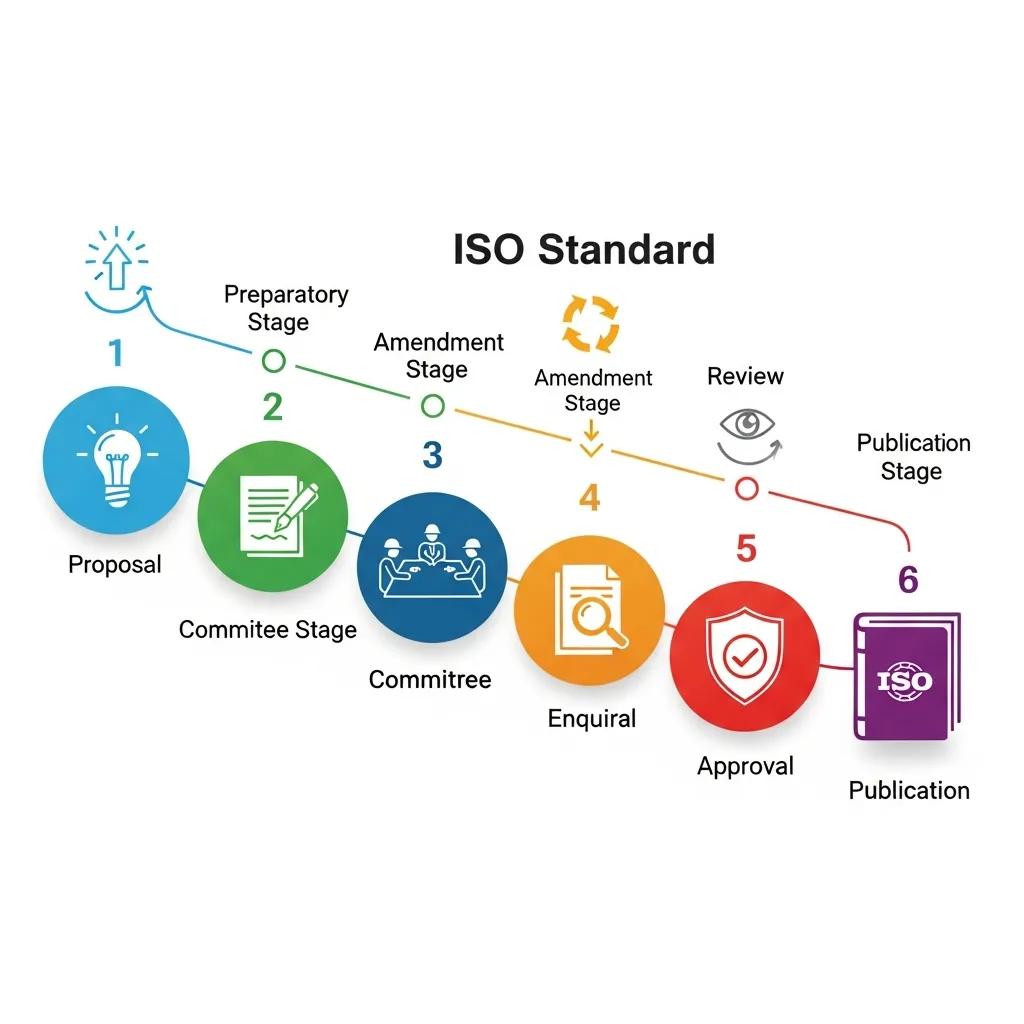
The ISO development path follows six formal stages that take a recognised need through drafting, national consultation and final publication. Each stage refines the work: a Proposal establishes the project, the Preparatory stage builds working drafts, the Committee stage consolidates technical input, the Enquiry stage gathers national comments on a Draft International Standard, the Approval stage finalises the wording in a Final Draft International Standard, and Publication makes the text official. Common outputs you’ll see include WD (Working Draft), CD (Committee Draft), DIS (Draft International Standard), FDIS (Final Draft International Standard) and IS (International Standard). Knowing these stages helps organisations plan timelines and collect the evidence auditors look for.
The six canonical stages:
- Proposal: Start a New Work Item and confirm the market or regulatory need.
- Preparatory: Produce Working Drafts and form Working Groups.
- Committee: Consolidate Committee Drafts and resolve technical issues.
- Enquiry: Circulate the DIS for national comments and voting.
- Approval: Vote on the FDIS and complete editorial finalisation.
- Publication: Publish the International Standard for global use.
This sequence clarifies the path from idea to publication and sets realistic expectations for typical timelines and deliverables.
Different stages create different artifacts and involve distinct stakeholders. The summary below makes that clear at a glance.
| Stage | Purpose | Key Participants | Typical Outputs |
|---|---|---|---|
| Proposal (NWIP) | Confirm need and set scope | National Standards Bodies (NSBs), TCs | Decision on New Work Item Proposal |
| Preparatory (WD) | Draft initial technical content | Working Groups (WGs), subject experts | Working Drafts (WD) |
| Committee (CD) | Refine drafts and resolve issues | Technical Committee (TC) members | Committee Drafts (CD) |
| Enquiry (DIS) | National consultation and comment | NSBs, wider stakeholders | Draft International Standard (DIS) with comments |
| Approval (FDIS) | Final vote and editorial checks | NSB voting members | Final Draft International Standard (FDIS) |
| Publication (IS) | Official release and distribution | ISO Central Secretariat | International Standard (IS) |
Use this table to spot when you should engage and which evidence you’ll need as you move toward certification.
What Happens During the Proposal Stage to Initiate a New ISO Standard?
The Proposal stage starts when an NSB or ISO committee flags a gap and files a New Work Item Proposal (NWIP) that sets scope and justification. The NWIP outlines the problem, explains why an international standard helps, and usually proposes a project leader or secretariat. Triggers can include regulatory changes, industry petitions or technical innovation. NSBs vote on the NWIP; a positive vote moves the topic into the Preparatory stage and the formation of working groups. Timelines vary, but the Proposal stage is the moment to influence scope: early technical evidence and national comments often shape the drafting brief.
Watching NWIPs and contributing national input is the most effective way to shape a standard before drafting begins.
How Do the Preparatory and Committee Stages Shape the Draft Standard?
In the Preparatory stage, appointed Working Groups create working drafts that gather technical details, validate use-cases and align terminology. WG editors compile evidence, compare existing standards (for example, development histories like ISO 9001 or ISO 27001) and iterate drafts to resolve disagreements. The Committee stage brings the draft to the full Technical Committee for broader review, formal comment resolution and consolidated Committee Drafts that reflect wider expertise. Chairs and secretariats guide discussions, document decisions and ensure traceability. Resolving technical issues here is essential before the DIS circulation and national scrutiny.
Thorough drafting at these stages builds the technical backbone of the standard and reduces friction later in the process.
Who Are the Main Participants in Developing ISO International Standards?
ISO standards are made by a network of bodies that combine technical skill, national representation and stakeholder input. Key participants are Technical Committees (TCs) that set scope and governance, Working Groups (WGs) of subject-matter experts that draft the text, and National Standards Bodies (NSBs) that coordinate national consultation and ballots. Other contributors — industry, government, consumer groups, academia and liaising organisations — supply data, use-cases and regulatory perspectives. Together they form the consensus ecosystem that balances regional differences and keeps standards practical and implementable. Knowing each actor clarifies where to submit evidence, nominate experts or track progress for certification planning.
The table below shows typical roles and responsibilities so organisations can prioritise where to engage.
| Entity | Role | Example Responsibilities |
|---|---|---|
| Technical Committee (TC) | Governance and scope | Set scope, approve WGs, resolve high-level technical disputes |
| Working Group (WG) | Drafting and technical input | Draft working papers, test methods, propose technical solutions |
| National Standards Body (NSB) | National coordination and voting | Run national consultations, submit votes/comments, nominate experts |
| Stakeholders (industry/government/consumers) | Domain expertise | Provide data, case studies, impact assessments and practical use-cases |
That mapping helps you decide where to invest time and who to contact to influence or prepare for a standard in development.
Next, we explain how votes and comments are handled to reach international acceptance.
What Is the Role of ISO Technical Committees and Working Groups?
Technical Committees provide governance: they define scope, agree objectives and steer the approval path. Working Groups do the hands‑on drafting, testing and iteration of technical text. TCs appoint chairs and secretariats, manage liaising with other committees, and arbitrate disputes that affect scope or normative requirements. WGs bring practitioners together to author drafts, validate approaches and apply experimental or normative practice where relevant. Decisions combine consensus-building, editorial control and formal voting to ensure technical robustness. Strong TC/WG collaboration yields coherent drafts that work in practice and across regions.
Clear, well-documented WG outputs make national enquiry and approval smoother.
How Do National Standards Bodies Contribute to the Consensus Process?
NSBs bridge national stakeholders and the ISO system. They run domestic consultations, coordinate ballots and present a national position in votes. Typical domestic steps include surveys, expert panels and regulatory checks to collate input and produce a national vote of approve, abstain or disapprove (often with comments). During Enquiry and Approval, NSB votes determine whether a draft meets ISO’s acceptance thresholds; substantive negative votes trigger comment resolution and possible rework. NSBs also nominate experts to WGs and TCs, ensuring national experience informs drafting. For organisations, engaging via your NSB is the primary, practical route to influence scope and technical detail before publication.
The section that follows explains how ballots and comments are managed during Enquiry and Approval to secure consensus.
How Does the ISO Consensus Process Ensure Global Acceptance of Standards?

ISO’s consensus system combines formal circulation, ballots and recorded comment resolution so a draft can gain broad technical acceptability. At Enquiry, the DIS is sent to all NSBs for comment and vote within a set period; those comments are logged and returned to the TC/WG for resolution. At Approval, the FDIS is balloted as a yes/no vote (typically without new technical changes) to confirm editorial readiness. Consensus doesn’t mean unanimity — it means no sustained, unresolved technical objections and meeting ISO’s voting thresholds. Transparency, documented rationale and iterative revision are the procedural tools that produce international acceptance.
Here’s a concise summary of the key steps used to secure acceptance during DIS and FDIS.
- DIS Circulation: NSBs submit comments and votes during the enquiry window.
- Comment Resolution: TC/WG reviews substantive comments and records responses.
- FDIS Vote: A final yes/no vote verifies readiness for publication with no new technical changes.
- Thresholds & Objections: Voting rules and recorded objections guide any necessary rework.
These steps show how technical validation and national endorsement combine to create internationally recognised standards.
What Are the Voting and Commenting Procedures in the Enquiry and Approval Stages?
During Enquiry (DIS), the draft is open for formal national voting and detailed comments; NSBs have a defined period to submit editorial and technical inputs that the TC must address. Comments are classified — editorial, technical, substantive — and each needs a documented response. Major disagreements can lead to redrafting and another DIS circulation. At Approval (FDIS), the vote is generally yes/no with only minor editorial fixes permitted; it confirms whether prior comment resolution produced an acceptable final text. Failure to meet thresholds or persistent technical objections triggers further revisions, which preserves the integrity of the consensus process. Clear timelines and transparent records are essential to reaching defensible outcomes.
This clarity in procedure is how diverse national inputs are reconciled into a single international document acceptable to most stakeholders.
How Is Consensus Achieved Among Diverse Stakeholders?
Consensus is built from technical evidence, negotiated compromise language and transparent decision records — not from unanimous agreement. TCs and WGs use editors and liaison roles to synthesise conflicting comments into compromise wording that preserves technical intent while widening applicability. Where disputes persist, technical justification (data, test results or established practice) serves as the arbiter; in some cases mediation or escalation to parent committees is used. Voting thresholds ensure minority but material objections are addressed, and recorded responses show how comments were considered. This layered approach — evidence, editorial synthesis and formal voting — lets standards achieve practical global acceptance despite varied stakeholder positions.
Those techniques protect technical quality while enabling adoption across sectors and regions, and they feed into the maintenance and review mechanisms after publication.
What Are the Lifecycle Stages of an ISO Standard After Publication?
After publication, an ISO standard enters a lifecycle that includes scheduled reviews, possible amendments, full revisions or withdrawal depending on relevance and technical currency. Typically, standards are reviewed every five years: TCs recommend confirmation, revision, amendment or withdrawal based on industry developments, technological change or regulatory shifts. Amendments address targeted updates; full revisions reopen substantive technical work to rebuild consensus. For organisations, these lifecycle events can affect certification scope, surveillance plans and internal controls — so proactive monitoring of review decisions and NWIPs helps certified organisations anticipate changes and prepare for updates.
The following list outlines common review outcomes and what they mean for certified organisations.
- Confirm: The standard remains current — certification continues under existing requirements.
- Amend: Specific clauses change — organisations may need to show updated controls during surveillance.
- Revise: Full technical update — certification scopes may be re‑evaluated against new requirements.
- Withdraw: The standard is removed — transitional rules or replacement standards determine next steps.
These outcomes shape how organisations plan compliance activities and audits across a standard’s lifecycle.
How Are ISO Standards Reviewed and Revised Over Time?
The five‑year review is the main mechanism for checking whether a published standard remains fit for purpose. TC secretariats prepare recommendations based on stakeholder input and market signals; NSBs and stakeholders can propose amendments or full revisions, often triggered by innovation, regulation, incidents or interoperability needs. If a revision is approved, the draft cycle restarts — working drafts, committee drafts and enquiry ballots — until a revised International Standard is published. Smaller corrections can be issued as amendments or corrigenda to avoid a full revision. For auditors and certified organisations, tracking review outcomes and participating in NSB consultations is key to managing transitional obligations and planning audit scope changes.
Early engagement in review phases can influence revision scope and reduce downstream compliance effort.
Why Is Continuous Improvement Important for ISO Standards?
Continuous improvement keeps standards aligned with technology, safety expectations and international trade needs, maintaining their value for interoperability and risk reduction. By building regular review cycles and stakeholder feedback into the system, ISO preserves technical accuracy and market relevance and reduces the risk of obsolescence. For organisations, continuous improvement means ongoing surveillance, refreshed controls and periodic reassessment of risk treatments — all of which strengthen operational resilience. Certification bodies and auditors translate updated normative language into practical audit criteria, helping organisations implement changes without disrupting business.
This cycle ties back to why inclusive drafting and early stakeholder input matter when a standard is created.
How Are ISO Standards Created to Meet International Market Needs?
ISO standards are written to solve concrete market problems by combining input from industry, regulators and technical experts into globally applicable requirements. Market signals come from NSB proposals, industry petitions, regulatory drivers, incident analyses and liaison feedback; these feed NWIPs that set scope and priority. TCs and WGs then craft technical content with cross‑region applicability, favouring performance‑based requirements, clear definitions and appropriate normative tests. Multi‑stakeholder input — manufacturers, service providers, governments and consumer advocates — helps balance feasibility with safety and market access. The goal is a document that lowers trade barriers while allowing national adaptation where necessary.
Common signal sources used to prioritise new standards or revisions include:
- Industry petitions and consortium proposals highlighting practical needs.
- Regulatory changes or gaps that require harmonised technical requirements.
- Incidents, market failures or technological shifts that signal urgency.
Identifying these drivers helps NSBs and organisations prioritise inputs that will most effectively steer standards development.
How Are Market Demands and Industry Needs Identified for New Standards?
Market demands are spotted through formal and informal channels: NSB consultations, industry associations’ submissions, regulator requests, incident reports and market research. NSBs gather national stakeholder views and may submit NWIPs when a gap affects trade, safety or interoperability; those proposals usually include impact analysis and evidence of need. TCs use liaison relationships with other international organisations to widen the signal and avoid duplication. Prioritisation weighs potential impact, cross‑border relevance and the feasibility of reaching international agreement. Clear, evidence‑based proposals move forward more quickly.
That front‑end identification is crucial because it sets scope and helps ensure the published standard meets international market requirements.
What Is the Importance of Multi-Stakeholder Collaboration in Standard Creation?
Multi‑stakeholder collaboration brings legitimacy, technical depth and real‑world practicality to standards by ensuring diverse perspectives shape scope, requirements and tests. Inclusion reduces regional bias, increases uptake and helps spot unintended consequences early. Inclusion mechanisms include the DIS public enquiry, NSB consultations, liaison organisations and expert nominations to WGs. In practice, collaboration improves acceptance and smooths implementation, supporting trade and regulatory alignment. Engaging across stakeholder groups is therefore essential to produce standards that are technically sound and widely adoptable.
Research further details how different stakeholders — and industry in particular — influence standard development.
Stakeholder influence in ISO standard development
An empirical study examined how multiple stakeholders influence standards development, using comments submitted during the ISO 26000 process for social responsibility. The analysis found no large differences in the acceptance ratio of comments across stakeholder groups, but industry stood out because of the volume of its input. The study also identified common stakeholder strategies: (1) removing controversial issues; (2) linking the draft to other documents and standards; (3) seeking consensus by proposing further dialogue or highlighting exclusions; (4) reinforcing priority issues; and (5) improving the standard’s substance.
Stakeholders’ influence and contribution to social standards development: The case of multiple stakeholder approach to ISO 26000 development, MA Balzarova, 2012
When stakeholders engage early and constructively, standards are more robust, implementable and resilient in fast‑changing markets.
How Does Stratlane Certification Support the ISO Standard Development and Certification Process?
Stratlane Certification is an accredited certification body that aligns services to the ISO lifecycle so organisations can turn standards into certified systems reliably and efficiently. Our service flow starts with quote requests, moves through audit scheduling and uses AI‑assisted audit tools to improve speed and accuracy, and continues with certificate issuance and centralized certificate management to support ongoing compliance. We operate auditors across Europe and the UK and issue certificates in 27+ countries with auditors in 29+ countries, enabling multi‑jurisdictional audit planning that mirrors ISO’s international scope. By mapping certification tasks — scoping, evidence collection, audit planning and surveillance — to the stages of standard development and review, we help organisations anticipate changes, align controls to normative intent and manage certificates through revision cycles.
This mapping highlights practical benefits for organisations preparing for certification or tracking standard revisions.
| Service | Feature/Technology | Business Benefit |
|---|---|---|
| Quote Requests | Streamlined intake workflow | Faster budgeting and planning for certification |
| Audit Appointments | Scheduling across Europe/UK auditors | Efficient coordination for single or multi-site audits |
| AI-driven Auditing | Automated document analysis & risk scoring | Shorter audit time and more consistent findings |
| Certificate Issuance & Management | Centralised certificate lifecycle handling | Simplified compliance tracking and renewals |
What Is the Role of AI-Driven Auditing in Enhancing ISO Certification?
AI-assisted auditing automates routine evidence review, extracts relevant clauses and flags anomalies so auditors concentrate on the highest risk areas. Typical use cases include document analysis for scope verification, anomaly detection in process records and predictive risk scoring to guide targeted sampling during on‑site or remote audits. These capabilities reduce audit cycles, improve consistency across audit teams and produce data‑driven insights for surveillance and continual improvement. The conservative result is efficiency gains and increased accuracy in findings — both important when standards evolve.
Leveraging AI tools makes certification workflows more resilient to standard changes and better suited to continuous compliance models.
How Does Understanding the Development Process Add Value to Certification?
Auditors and clients who understand the ISO development process can interpret clause intent, predict likely revision directions and design controls that map to current and probable future requirements. That insight improves gap analysis accuracy, informs risk‑based sampling and cuts rework when standards change. Certification partners who counsel organisations on these dynamics help integrate surveillance with business planning, smoothing transitions during review cycles. Stratlane’s advisory experience — grounded in knowledge of technical committees, enquiry procedures and lifecycle mechanics — helps clients reduce compliance risk and align internal controls to normative expectations.
Seen this way, certification becomes an active tool for risk management rather than a one‑time compliance check.
If you’re ready to assess your certification needs, Stratlane accepts quote requests, schedules audits and supports AI‑assisted audit workflows through certificate issuance and ongoing certificate management to keep you compliant as standards evolve.
- Request a Quote: Start by requesting a tailored quote to define scope and timelines.
- Book an Audit: Schedule audits with auditors experienced across Europe and the UK.
- Certificate Management: Use centralised management to track issuance and renewals aligned with standard reviews.
Following these steps makes it easier to align certification services with the standards lifecycle and respond to revisions without disruption.
Frequently Asked Questions
What is the significance of stakeholder engagement in the ISO standard development process?
Stakeholder engagement ensures standards reflect real‑world needs and practical expertise. When industry, government, consumers and experts contribute, drafts capture a wider range of perspectives, spot potential issues early and reduce regional bias. That broader input improves technical quality and increases the likelihood of global acceptance and smooth implementation.
How can organisations influence the ISO standard development process?
Organisations influence standards by engaging with their NSB, joining national consultations, submitting evidence and comments, and nominating experts to technical committees or working groups. Timely, evidence‑based input and participation in public enquiries are the most effective ways to shape scope and technical detail before publication.
What are the implications of ISO standard revisions for certified organizations?
Revisions can require updates to processes, documentation and controls and may affect certification scope. Organisations should assess how changes impact compliance, plan staff retraining where needed and update records. Staying informed and participating in review phases helps reduce the effort of adapting to revisions.
How does the ISO standard lifecycle affect compliance management?
The lifecycle dictates when standards are reviewed and updated, so organisations must monitor review cycles, amendments and revision notices. Proactive lifecycle management — subscribing to NSB updates, attending industry forums and running internal gap analyses — helps avoid certification lapses and keeps practices aligned with current norms.
What role does technology play in the ISO standard development process?
Technology speeds coordination and transparency across the development process: document platforms, comment tracking and electronic ballots streamline collaboration. For certification, AI‑assisted tools accelerate document review, surface risks and improve audit consistency, helping organisations adapt to evolving requirements faster.
How can organisations prepare for changes in ISO standards?
Prepare by setting up a monitoring system for relevant standards, subscribing to NSB and ISO notifications, participating in consultations and conducting regular internal audits and gap analyses. A culture of continuous improvement and clear change‑management processes makes it easier to implement updates without disrupting operations.
Conclusion
Understanding how ISO standards are developed and maintained lets organisations plan certification with confidence. By engaging early, aligning controls to clause intent and monitoring review cycles, you reduce compliance risk and respond smoothly to revisions. Proactive participation improves both the quality of standards and your readiness for market demands. Ready to start? Explore our services and expert guidance to map certification to your business goals.